
Arnold Newman Biography Quotes 4 Report mistakes
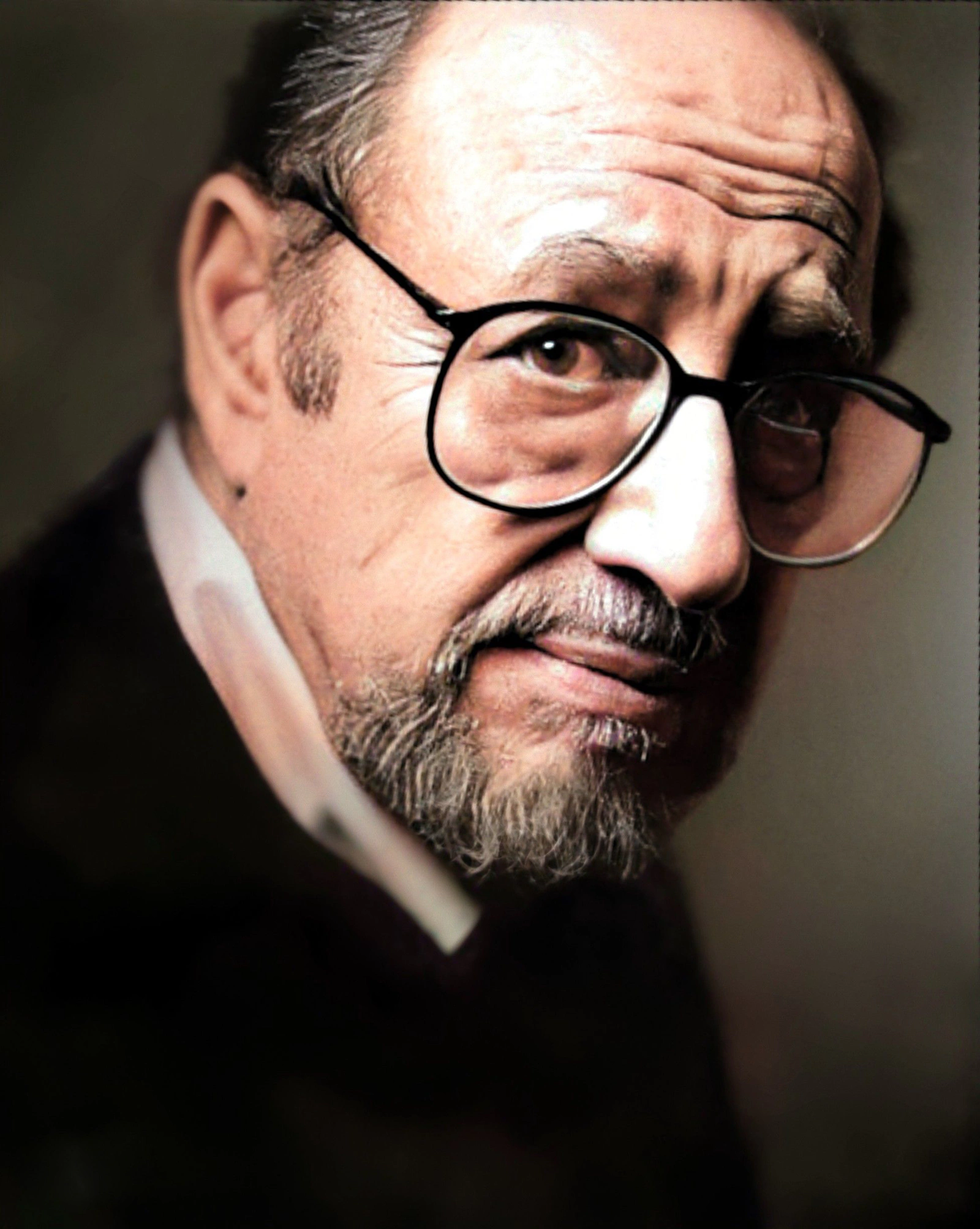
| 4 Quotes | |
| Born as | Arnold Abner Newman |
| Occup. | Photographer |
| From | USA |
| Spouse | Eleanor Butters |
| Born | March 3, 1918 Manhattan, New York, U.S. |
| Died | June 6, 2006 Mt. Sinai Medical Center, New York City, U.S. |
| Cause | Stroke |
| Aged | 88 years |
| Cite | |
Citation Formats
APA Style (7th ed.)
Arnold newman biography, facts and quotes. (2026, February 11). FixQuotes. https://fixquotes.com/authors/arnold-newman/
Chicago Style
"Arnold Newman biography, facts and quotes." FixQuotes. February 11, 2026. https://fixquotes.com/authors/arnold-newman/.
MLA Style (9th ed.)
"Arnold Newman biography, facts and quotes." FixQuotes, 11 Feb. 2026, https://fixquotes.com/authors/arnold-newman/. Accessed 28 Mar. 2026.
Early Life and Background
Arnold Abner Newman was born on March 3, 1918, in New York City, into a Jewish family whose prospects were repeatedly tested by the economic volatility of the interwar years. His early childhood unfolded amid the citys clamor and the expanding visual culture of magazines, movie palaces, and storefront photography. That environment mattered: Newman would grow into a portraitist who treated modern life itself - design, industry, and architecture - as part of the human story.When the Great Depression tightened, the family relocated to Atlantic City, New Jersey, where Newman came of age watching tourism, labor, and aspiration collide along the boardwalk. Money pressures were not an abstraction; they shaped his pragmatic temperament and sharpened his eye for how people inhabit the worlds they build. Even before he became known, he was attentive to surfaces - light on plaster, the geometry of rooms - and to the way ambition or weariness registers in posture.
Education and Formative Influences
Newman studied painting at the University of Miami, but financial strain forced him to leave, a turning that redirected his hand from brush to camera. He learned photography in the working world, in commercial portrait studios where deadlines, clients, and the discipline of lighting were unforgiving teachers. At the same time he absorbed modernist ideas circulating through American art in the 1930s and 1940s - Bauhaus-inflected design, the belief that form carries meaning, and the conviction that a portrait could be an argument, not a souvenir.Career, Major Works, and Turning Points
In the early 1940s Newman began exhibiting and publishing, and his approach quickly distinguished him: the sitter was not isolated against a void but placed in a charged environment that revealed vocation, class, and temperament. This "environmental portrait" method brought him major assignments for magazines such as Life and for editorial and corporate clients hungry for images of cultural authority. His most famous and controversial portrait, Alfred Krupp (1963), made in Germany, used hard light and industrial setting to suggest moral chill - a postwar reckoning compressed into a single frame. Newman photographed a panorama of twentieth-century eminence in the arts and letters, including Igor Stravinsky (1946), whose stark interplay of figure and piano lid became an icon of photographic modernism, and later figures such as Pablo Picasso and Marilyn Monroe, each interpreted through the spaces they controlled or endured. By mid-century he was a central name in American portrait photography, balancing commissioned work with an increasingly coherent personal vision.Philosophy, Style, and Themes
Newman treated portraits as social documents written in light. For him, the sitter could not be understood apart from the century that produced them: “The subject must be thought of in terms of the 20th century, of houses he lives in and places he works, in terms of the kind of light the windows in these places let through and by which we see him every day”. That sentence is also a psychological confession. Newman distrusted the myth of the timeless genius; he looked for the pressures that make a personality, and he staged those pressures as architecture, tools, and ambient glare. The result was not mere context but character under tension - an artist dwarfed by his own instrument, an executive sharpened by metal and shadow.Yet Newman was never naive about photographic truth. “Photography, as we all know, is not real at all. It is an illusion of reality with which we create our own private world”. His portraits therefore operate like arguments: the camera does not discover essence so much as propose it. This awareness freed him to compose with daring asymmetry and to use space as rhetoric, but it also imposed an ethical burden - especially in images like Krupp - where visual inference can become judgment. Newman embraced intuition over formula: “You have to compose by the seat of your pants”. The remark captures his working temperament: meticulous in preparation, quick in decision, and willing to risk discomfort in pursuit of an image that felt psychologically exact.
Legacy and Influence
Newman died on June 6, 2006, in the United States, leaving a template that reshaped modern portraiture. His environmental method became a baseline for magazine and documentary portrait photography, influencing generations who learned to read rooms as biographies and to treat design, labor, and power as visible forces. Beyond stylistic imitation, his deeper legacy is a twentieth-century moral intelligence: the belief that a portrait can be beautiful without being flattering, descriptive without pretending to be neutral, and that the spaces people make - studios, factories, stages, offices - are inseparable from who they are.Our collection contains 4 quotes written by Arnold, under the main topics: Art.
Arnold Newman Famous Works
- 1992 Arnold Newman's Americans (Book)
- 1986 Arnold Newman: Five Decades (Book)
- 1974 One Mind's Eye: The Portraits and Other Photographs of Arnold Newman (Book)
Source / external links