
Arnon Nampa Biography Quotes 8 Report mistakes
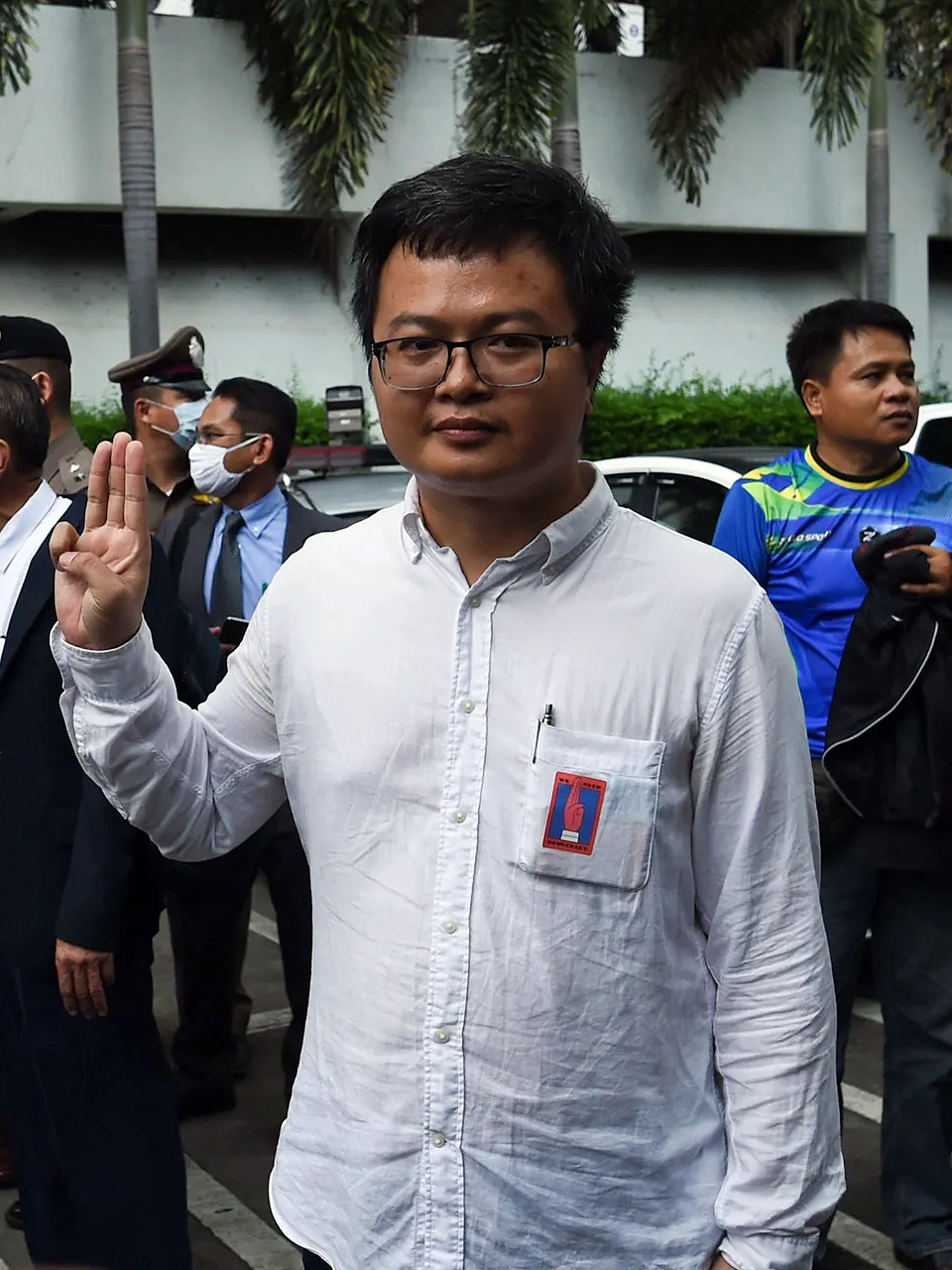
Attr: TIME
| 8 Quotes | |
| Native name | อานนท์ นำภา |
| Occup. | Lawyer |
| From | Thailand |
| Born | September 18, 1984 Bangkok, Thailand |
| Age | 41 years |
| Cite | |
Citation Formats
APA Style (7th ed.)
Arnon nampa biography, facts and quotes. (2026, March 9). FixQuotes. https://fixquotes.com/authors/arnon-nampa/
Chicago Style
"Arnon Nampa biography, facts and quotes." FixQuotes. March 9, 2026. https://fixquotes.com/authors/arnon-nampa/.
MLA Style (9th ed.)
"Arnon Nampa biography, facts and quotes." FixQuotes, 9 Mar. 2026, https://fixquotes.com/authors/arnon-nampa/. Accessed 9 Mar. 2026.
Early Life and Background
Arnon Nampa, born in 1984 in Thailand's northeast, emerged from a region long marked by economic inequality, military oversight, and a strong culture of rural political participation. He grew up in the broad social world often described as Isan - a landscape where class, distance from Bangkok, and state power shaped daily life as much as family or school. That background mattered. Many of the lawyers, activists, and elected politicians who later challenged Thailand's central institutions came from similar provincial settings, where the promises of constitutional rule were felt less as abstractions than as immediate questions of dignity, land, livelihood, and voice.His adulthood unfolded during one of the most polarized periods in modern Thai history. The 2006 coup, the rise and suppression of the Red Shirt movement, the 2010 military crackdown, and the 2014 coup all widened the gap between official legality and democratic legitimacy. Arnon became known not merely as a lawyer in court but as a public figure willing to cross the line that many Thai professionals, out of fear or caution, would not cross: he defended dissidents, criticized emergency power, and eventually called for open discussion of the monarchy's political role. That transformation made him one of the defining legal activists of his generation - both an advocate for clients and a protagonist in the constitutional crisis itself.
Education and Formative Influences
Trained in law, Arnon entered the profession at a time when Thai courts were increasingly central to political conflict. The legal system promised order, but repeated coups and expansive security laws taught a harsher lesson: law could be both shield and weapon. His formative years as an attorney were shaped by representing people charged under sedition, computer crime, and lese-majeste provisions, especially after the National Council for Peace and Order seized power in 2014. Work with rights-oriented legal networks and close contact with students, activists, and ordinary defendants gave him a practical education deeper than doctrine. He saw pretrial detention used as punishment, bail repeatedly denied, and procedure bent by political fear. That experience converted legal training into a moral vocation - not faith in institutions as they were, but insistence that they be forced to answer to rights, transparency, and public reason.Career, Major Works, and Turning Points
Arnon first gained wide notice as a human rights lawyer defending anti-junta activists, election campaigners, and dissidents targeted by military courts and national security statutes. He became associated with the post-coup legal resistance that tried to keep constitutional language alive under authoritarian conditions. His great turning point came in 2020, when youth-led protests broke a long taboo around the monarchy. At a rally in Bangkok in August that year, he delivered a historic speech calling for public discussion of monarchical power and reform within a constitutional framework. It was a pivotal intervention: measured in tone, radical only by Thailand's enforced silence, and immediately consequential. The state answered with repeated arrests, charges of sedition and lese-majeste, periods of detention, hunger-strike-era prison politics around bail, and a sustained attempt to make his prosecution exemplary. Yet prison did not erase him. It enlarged his symbolic role, turning him into a touchstone for debates about political prisoners, judicial independence, and whether Thai citizenship includes the right to speak openly about sovereign institutions.Philosophy, Style, and Themes
Arnon's public philosophy joins legal constitutionalism to ethical plainness. He is not a romantic revolutionary in the classic sense; his language has usually been careful, civic, and grounded in the duties of citizenship. Again and again he framed dissent not as desecration but as responsibility. “With the greatest respect for the monarchy, I think that this problem must be officially discussed in order to collectively find a solution”. That sentence captures his central method: respect without silence, reform without euphemism, loyalty redirected from persons to the public good. In a culture where reverence had been weaponized to prohibit analysis, he insisted that discussion itself was a constitutional act. Likewise, “I speak today out of great concern for the country. I speak about the problems that have arisen from the expansion of the monarchy's royal prerogative as a citizen. I do not have any other intention”. The psychology here is revealing - neither reckless nor timid, but almost forensic, as if he were drafting a brief to history while knowing the court before him might already be hostile.His style also carries an intimate moral urgency. “I want my daughter to grow up in a society where she can enjoy her freedom, her liberties, and live in a society with equality”. That appeal moves his politics beyond abstract rights into inheritance, family, and the fear of handing repression to the next generation. Even his acts of defiance often sound less like self-assertion than refusal to collaborate in public lying. He became compelling because he fused the lawyer's discipline with the protester's willingness to absorb punishment. The result was a political voice at once procedural and existential: law as argument, sacrifice as evidence, truth-telling as a test of whether a constitutional monarchy can remain constitutional.
Legacy and Influence
Arnon Nampa's legacy lies in how he altered the boundaries of permissible speech in Thailand and exposed the cost of doing so. He helped connect student protest, rights lawyering, and broader democratic critique into a single field of struggle. For younger activists, he offered a model of professional courage - someone who used legal expertise not to rise above politics but to defend those crushed by it. For observers of Thailand, his life illuminates the country's unresolved contest between electoral legitimacy, royal authority, military guardianship, and judicial power. Whether seen as dissident, reformer, or conscience of a wounded constitutional order, he stands as a figure who forced Thailand to confront a question it had long deferred: can a society preserve stability by forbidding truth, or does stability begin only when truth can be spoken openly?Our collection contains 8 quotes written by Arnon.
Source / external links