
Arthur Ashe Biography Quotes 30 Report mistakes
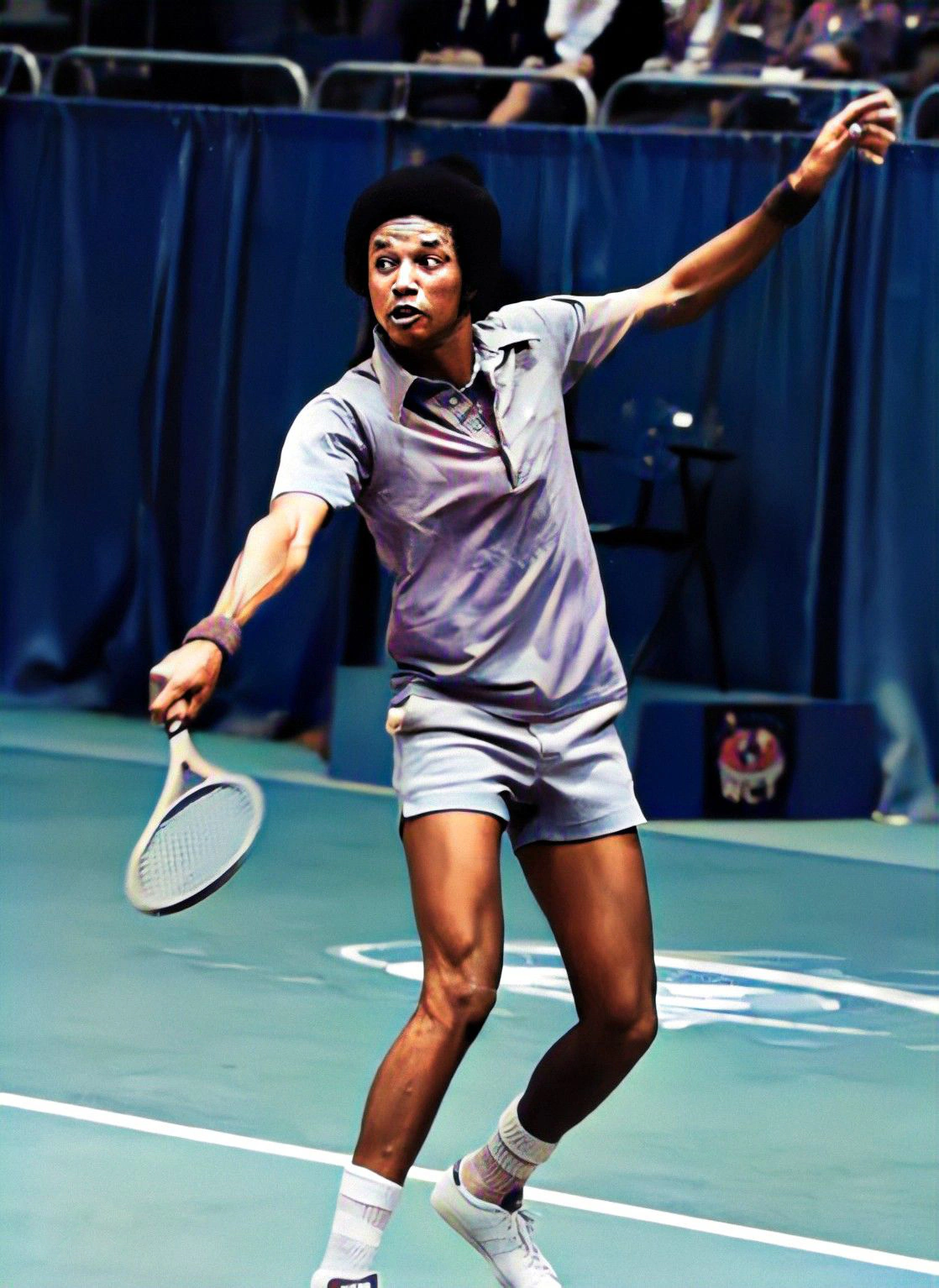
| 30 Quotes | |
| Born as | Arthur Robert Ashe Jr. |
| Occup. | Athlete |
| From | USA |
| Spouse | Jeanne Moutoussamy-Ashe |
| Born | July 10, 1943 Richmond, Virginia, USA |
| Died | February 6, 1993 New York City, New York, USA |
| Cause | AIDS-related pneumonia |
| Aged | 49 years |
| Cite | |
Citation Formats
APA Style (7th ed.)
Arthur ashe biography, facts and quotes. (2026, February 11). FixQuotes. https://fixquotes.com/authors/arthur-ashe/
Chicago Style
"Arthur Ashe biography, facts and quotes." FixQuotes. February 11, 2026. https://fixquotes.com/authors/arthur-ashe/.
MLA Style (9th ed.)
"Arthur Ashe biography, facts and quotes." FixQuotes, 11 Feb. 2026, https://fixquotes.com/authors/arthur-ashe/. Accessed 27 Mar. 2026.
Early Life and Background
Arthur Robert Ashe Jr. was born on July 10, 1943, in Richmond, Virginia, a city where Jim Crow was not an abstraction but a daily map of where one could sit, swim, learn, and dream. He grew up in the tight, disciplined world of Brook Field, a segregated public-housing community adjacent to a large park, where his father, Arthur Ashe Sr., worked as caretaker and insisted on order, restraint, and immaculate manners. Ashe was slight as a boy and learned early that composure could be both shield and strategy - a way to move through a hostile landscape without giving opponents the satisfaction of visible fear.His mother, Mattie Cordell Cunningham Ashe, died when he was six, a loss that pressed gravity into his childhood and deepened the quiet seriousness observers later mistook for coldness. In Richmond, tennis itself was divided: white clubs controlled courts, coaching, and competition, while Black players made do with limited facilities and the guidance of a few determined mentors. That imbalance shaped Ashe's inner life - ambitious, self-critical, and wary of spectacle - and taught him that excellence alone would not erase the color line, but it could force openings where none were offered.
Education and Formative Influences
Ashe attended Richmond's Maggie L. Walker High School and found a decisive guide in Dr. Robert Walter Johnson, the Virginia physician-coach who also mentored Althea Gibson and ran a rigorous training program for Black juniors in Lynchburg. Under Johnson and later coach Ron Woods, Ashe refined a classical, efficient game and the habits of a professional long before tennis paid him like one. He went on to UCLA, where he balanced college life, national competition, and the widening horizon of the civil rights era, learning to translate personal discipline into public responsibility while preparing for a sport still governed by country-club gatekeepers.Career, Major Works, and Turning Points
Ashe broke through internationally in the early 1960s, representing the United States in Davis Cup and becoming the first Black man to play on a U.S. Davis Cup team. In 1968, the first year of the Open Era, he won the US Open, defeating Tom Okker while still technically an amateur and unable to accept full prize money - an irony that exposed tennis's shifting economy and its moral lag. His peak competitive moment came at Wimbledon in 1975, when he used calm tactics and a deliberately varied pace to upset Jimmy Connors, becoming the first Black man to win the title. Turning points followed off-court as well: a long battle with South Africa's apartheid bureaucracy over entry visas, a 1973-74 campaign that helped force his eventual admission and sharpened his global activism; later, a 1979 heart attack and the beginning of repeated cardiac surgeries; and in the early 1980s, his transition from champion to elder statesman, author, commentator, and institutional reformer within the sport.Philosophy, Style, and Themes
Ashe's playing style mirrored his temperament: economical footwork, a precise serve-and-volley tradition adapted to modern pace, and a preference for thinking opponents into mistakes rather than bludgeoning them. He studied patterns, conserved emotion, and treated nerves as part of the cost of competing at the edge. He was unusually frank about the body's betrayal under pressure, insisting that choking was not moral failure but physiology and circumstance, a realism that protected him from both arrogance and despair.Underneath that poise was a moral imagination trained by segregation and enlarged by travel. He framed achievement as process, not trophy, and resisted the idea that winning excused cruelty or indifference: “Success is a journey, not a destination. The doing is often more important than the outcome”. When illness and public scrutiny tightened around him, he turned the same discipline inward, refusing self-pity without denying pain: "If I were to say, "God, why me?" about the bad things, then I should have said, "God, why me?“ about the good things that happened in my life”. And as he moved from private excellence to public service, he crystallized a credo that linked dignity to obligation rather than celebrity: “From what we get, we can make a living; what we give, however, makes a life”.
Legacy and Influence
Ashe died on February 6, 1993, in New York City, after complications from AIDS contracted through a blood transfusion during heart surgery; in revealing his diagnosis, he forced a conversation about stigma, medicine, and compassion at a time when silence was common and cruelty was easy. His influence endures in multiple arenas: as a pioneer who widened tennis's talent pipeline and made its institutions answer to ideals of inclusion; as a writer and historian of Black athletic experience (including his ambitious three-volume project A Hard Road to Glory); and as a model of activist leadership that refused both rage-for-show and accommodation-for-comfort. The main stadium of the US Open bears his name not simply because he won there, but because his life argued that sport, at its best, is a public language for courage, restraint, and responsibility.Our collection contains 30 quotes written by Arthur, under the main topics: Motivational - Wisdom - Friendship - Mortality - Learning.
Other people related to Arthur: Yannick Noah (Athlete), John McPhee (Writer)
Source / external links