
Arthur Balfour Biography Quotes 8 Report mistakes
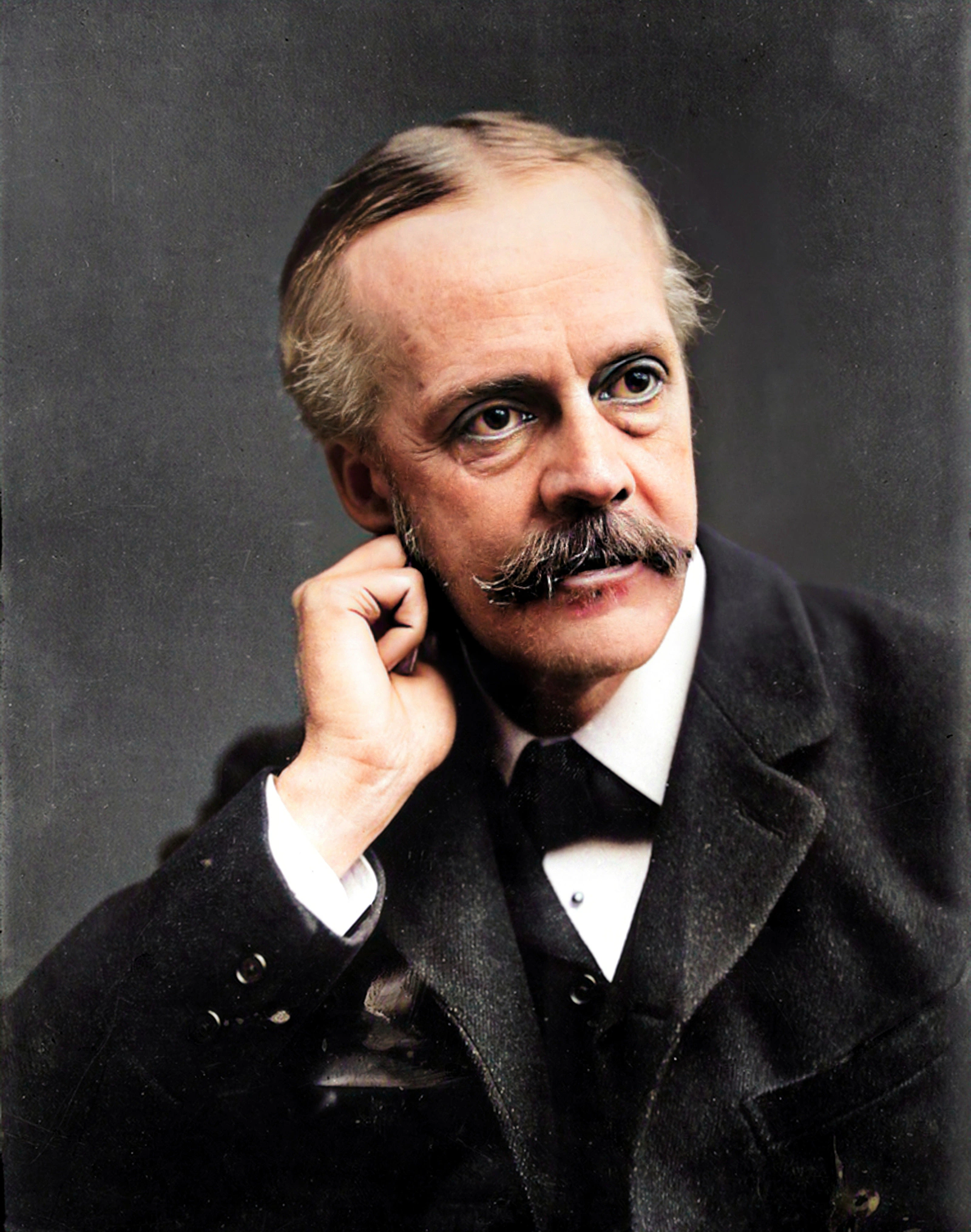
| 8 Quotes | |
| Born as | Arthur James Balfour |
| Occup. | Statesman |
| From | United Kingdom |
| Born | July 25, 1848 East Lothian, Scotland |
| Died | March 19, 1930 Fisher's Hill, Surrey, England |
| Cause | Natural causes |
| Aged | 81 years |
| Cite | |
Citation Formats
APA Style (7th ed.)
Arthur balfour biography, facts and quotes. (2026, February 11). FixQuotes. https://fixquotes.com/authors/arthur-balfour/
Chicago Style
"Arthur Balfour biography, facts and quotes." FixQuotes. February 11, 2026. https://fixquotes.com/authors/arthur-balfour/.
MLA Style (9th ed.)
"Arthur Balfour biography, facts and quotes." FixQuotes, 11 Feb. 2026, https://fixquotes.com/authors/arthur-balfour/. Accessed 5 Mar. 2026.
Early Life and Background
Arthur James Balfour was born on July 25, 1848, at Whittingehame House in East Lothian, Scotland, into a wealthy and politically connected branch of the Scottish landed elite. He grew up amid the long Victorian confidence of the British state, when empire, Anglican moral certainty, and inherited rank still seemed to harmonize. His father, James Maitland Balfour, died when Arthur was young, leaving the household dominated by his mother, Lady Blanche Gascoyne-Cecil, sister of Robert Cecil, later the 3rd Marquess of Salisbury. That uncle became both model and patron, shaping Balfour's sense that government was a duty conducted by an educated class rather than a vocation pursued by popular performance.Balfour never married, and contemporaries often read in him a coolness that was more complicated than mere detachment. Privilege insulated him from certain urgencies, but it also pressed him into a role - heir to a political tradition and to an idea of Britain that felt embattled as democracy widened. His temperament, described as languid, witty, and private, could appear almost allergic to melodrama; yet he was not idle. He cultivated friendships in philosophy and society, played golf, and moved through salons and Cabinet rooms with the same controlled ease, as if the world were to be handled rather than confessed to.
Education and Formative Influences
He was educated at Eton and then at Trinity College, Cambridge, where he absorbed the intellectual self-confidence of late Victorian liberal education while resisting its certainties. Cambridge exposed him to debates about science, religion, and knowledge that he would later treat not as abstractions but as political problems: what could be known, who could claim authority, and how social order could survive the erosion of shared belief. The discipline of classical and philosophical study also sharpened his characteristic style - epigrammatic, skeptical, and more comfortable with argument than with emotional appeal - while his family network drew him early toward Conservative public life.Career, Major Works, and Turning Points
Entering Parliament in 1874 as a Conservative MP, Balfour rose under Salisbury's wing and became Chief Secretary for Ireland (1887-1891), a defining and controversial post. In Ireland he combined coercive security measures with limited reforms, earning the nickname "Bloody Balfour" from opponents even as he argued he was preserving order against agrarian violence and nationalist challenge. He served as First Lord of the Treasury and Leader of the House of Commons, and in 1902 became Prime Minister, steering Britain through the aftershocks of the Boer War and the strains of modernization. His premiership was undone by the Tariff Reform split and the 1906 landslide that shattered Conservative dominance, yet he remained party leader until 1911 and returned to high office in wartime. As Foreign Secretary (1916-1919) in Lloyd George's coalition, he issued the 1917 Balfour Declaration supporting a "national home for the Jewish people" in Palestine, a short letter with vast consequences. Later he represented Britain at the Paris Peace Conference, served as Lord President of the Council, and culminated a long public life with the 1926 Balfour Declaration of the Imperial Conference, recognizing the Dominions as autonomous communities within the Commonwealth - an elegant constitutional pivot away from imperial centralization.Philosophy, Style, and Themes
Balfour's inner life combined patrician duty with a philosopher's doubt. His intellectual work - notably A Defence of Philosophic Doubt (1879) and The Foundations of Belief (1895) - tried to show that reason alone could not ground the moral and social assumptions on which civilization depends. That argument made him a Conservative of temperament rather than mere interest: if societies live by inherited habits and unproved beliefs, then abrupt ideological reconstruction is reckless. He could sound like a man watching politics from slightly outside it, a stance summed up in his famous reduction of urgency: “Nothing matters very much, and few things matter at all”. In practice, this was less nihilism than emotional economy - a way of refusing panic, and perhaps a way of protecting a private self from the harsh exposures of mass democracy.His public style was fastidious, ironic, and often devastatingly light. He distrusted collective fervor even while knowing it to be politically necessary, and he warned that the energies that animate reform can also corrupt truthfulness: “It is unfortunate, considering that enthusiasm moves the world, that so few enthusiasts can be trusted to speak the truth”. That sentence captures the ambivalence at the core of his statesmanship - admiration for moral energy paired with fear of its propaganda. He also understood reputation as a battlefield, not a shrine, and his remark “Biography should be written by an acute enemy”. reveals a psychology that preferred adversarial clarity to affectionate myth-making. In Cabinet, as in prose, he favored precision and understatement, treating politics as a contest of arguments and institutions rather than of theatrical sincerity.
Legacy and Influence
Balfour's legacy is simultaneously constitutional, diplomatic, and contested. He helped modernize Conservative leadership for a more democratic age, even as he struggled to master its populist rhythms; he also helped redefine the empire into a Commonwealth of equal status, a transition later generations often took as inevitable but that required deliberate language and restraint. Internationally, the Balfour Declaration made him a central figure in the modern history of Zionism and the Middle East, praised as visionary by some and condemned as a foundational injustice by others because it promised a national home without the consent of the Arab majority. His intellectual reputation endures as that rare thing in British politics: a prime minister who published serious philosophical argument and tried to align skepticism with governance. The enduring image is of a man who wielded detachment as both shield and instrument - a statesman for whom ideas were not ornaments, but explanations for why power must be handled with coolness, caution, and an eye on what belief can and cannot bear.Our collection contains 8 quotes written by Arthur, under the main topics: Witty One-Liners - Motivational - Justice - Learning - Meaning of Life.
Other people related to Arthur: Lord Curzon (Statesman), Joseph Chamberlain (Politician), Augustine Birrell (Author), Henry Campbell-Bannerman (Politician)
Source / external links