
Arthur Boyd Biography Quotes 9 Report mistakes
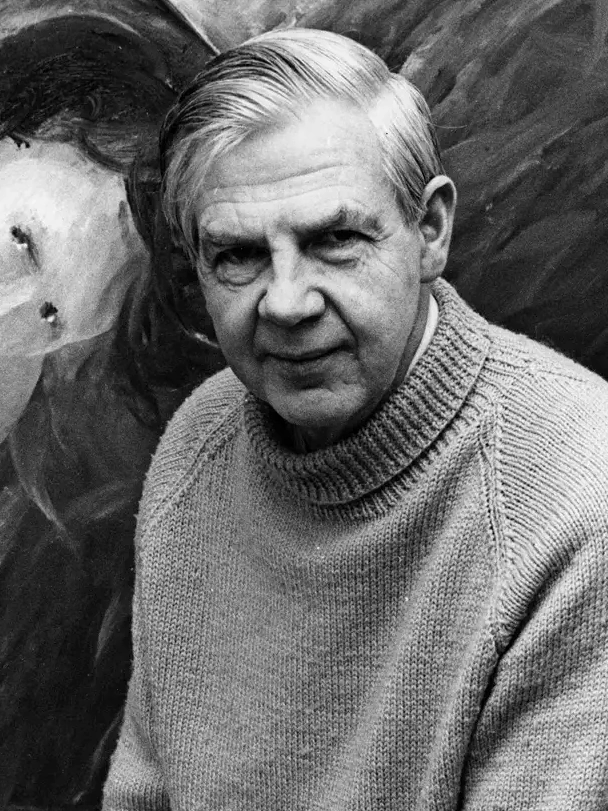
Attr: britannica.com
| 9 Quotes | |
| Occup. | Artist |
| From | Australia |
| Born | July 20, 1920 |
| Died | April 24, 1999 |
| Aged | 78 years |
| Cite | |
Citation Formats
APA Style (7th ed.)
Arthur boyd biography, facts and quotes. (2026, February 11). FixQuotes. https://fixquotes.com/authors/arthur-boyd/
Chicago Style
"Arthur Boyd biography, facts and quotes." FixQuotes. February 11, 2026. https://fixquotes.com/authors/arthur-boyd/.
MLA Style (9th ed.)
"Arthur Boyd biography, facts and quotes." FixQuotes, 11 Feb. 2026, https://fixquotes.com/authors/arthur-boyd/. Accessed 3 Mar. 2026.
Early Life and Background
Arthur Merric Boyd was born on July 20, 1920, at Murrumbeena, a semi-rural edge of Melbourne that still carried paddocks, creeks, and the heat-haze of open ground. He arrived into one of Australia's most consequential artistic dynasties: the Boyd family, with painter Emma Minnie a'Beckett Boyd and writers and artists circulating through the household. In that setting, art was not an abstraction or a career ladder but a domestic weather system - talk, argument, materials on tables, and the expectation that feeling could be made visible.Boyd's childhood was marked by a mixture of privilege and unease: cultural abundance alongside the instability of the interwar years and his own sense of being out of step with conventional schooling. The Depression and the looming violence of the 1930s formed the ambient soundtrack of his adolescence, while the bush around Murrumbeena provided a private theater for imagination. That early collision - beauty with threat, innocence with knowledge - would recur throughout his work as a lifelong moral tension rather than a solved problem.
Education and Formative Influences
He attended Murrumbeena State School and later other Melbourne schools, but his most durable education came through family studios and galleries rather than classrooms: drawing, looking, and absorbing the permissive seriousness of a household that treated art as essential labor. He studied at the National Gallery of Victoria Art School in the late 1930s and encountered European traditions filtered through Australian institutions, while also responding to the modernist temperature of Melbourne. World War II interrupted any straightforward development; Boyd served in the militia and worked in camouflage, experiences that sharpened his sense of how images can conceal as well as reveal.Career, Major Works, and Turning Points
After the war he consolidated his reputation quickly, moving between Melbourne and Sydney and working restlessly across painting, ceramics, and printmaking. His breakthrough came with the "Bride" series of the 1950s - luminous, disturbing tableaux of a pale bride menaced in a harsh, sensual landscape - which made explicit his preoccupation with sexuality, cruelty, and the thin social veneer over violence. In 1959 he married artist Yvonne (often known as "Bunny") and settled at Bundanon on the Shoalhaven River in New South Wales, a site that became both subject and refuge. From 1968 he lived largely in London, producing large-scale works that folded Australian memory into a broader, often apocalyptic imagination, before returning his focus to Bundanon in later decades; in 1993 he gave Bundanon to the Australian people, a culminating act that joined land, art, and public responsibility. He died on April 24, 1999, leaving a body of work that resisted neat stylistic periods in favor of recurring moral weather.Philosophy, Style, and Themes
Boyd painted as if conscience had a landscape, and the landscape had a conscience. The Australian bush and river country in his work are rarely pastoral; they are charged spaces where myth, desire, and guilt play out in public. He framed this as an insistence on place as more than scenery: “I stress the uniqueness of the Australian landscape and its metaphysical and mythic content”. For Boyd, the land was not a national emblem to be owned but a psychic field, capable of holiness and of accusation, especially when human figures enter it with entitlement.His style braided figurative distortion with lyrical color, often using Biblical or classical scaffolding to hold modern brutality. Yet he distrusted the fantasy of art as direct remedy. “Art doesn't alter things. It points things out, but it doesn't alter them. It can't, no matter what a painter wants to do”. That skepticism did not make him quiet; it made him exacting, as if the artist's task were witness without self-deception. Late in life his environmental urgency hardened into a kind of moral pragmatism: “Everything I do is the environment”. Read against Bundanon - its floods, light, and fragile ecosystems - the line becomes less slogan than confession, suggesting that for Boyd the personal, the aesthetic, and the ecological were one continuous obligation.
Legacy and Influence
Boyd endures as a central figure in 20th-century Australian art because he made beauty carry moral weight without collapsing into propaganda: the seduction of paint remained, but it never excused what he showed. His "Bride" paintings and later river and fire visions continue to shape how artists imagine the Australian landscape - not as neutral nature but as history, psychology, and contested belonging. The Bundanon gift institutionalized his belief that place makes culture and that culture must answer to place; it now supports residencies and public access, extending his ethic into practice. Boyd's influence persists in the permission he gave Australian art to be simultaneously lyrical and accusatory, local in geography yet mythic in ambition.Our collection contains 9 quotes written by Arthur, under the main topics: Art - Nature - Equality - Humility - War.