
Arthur C. Nielsen Biography Quotes 7 Report mistakes
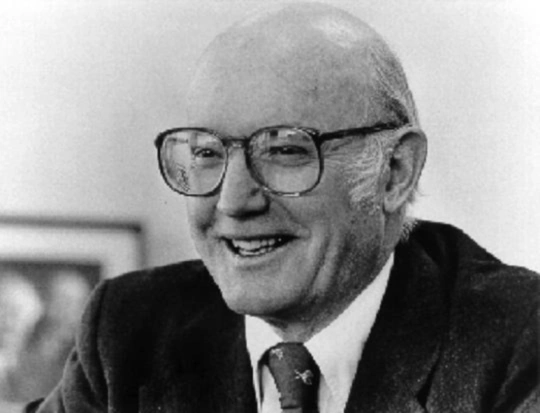
| 7 Quotes | |
| Born as | Arthur Charles Nielsen, Sr. |
| Occup. | Businessman |
| From | USA |
| Born | September 5, 1897 Chicago, Illinois |
| Died | June 1, 1980 Chicago, Illinois |
| Aged | 82 years |
| Cite | |
Citation Formats
APA Style (7th ed.)
Arthur c. nielsen biography, facts and quotes. (2026, February 11). FixQuotes. https://fixquotes.com/authors/arthur-c-nielsen/
Chicago Style
"Arthur C. Nielsen biography, facts and quotes." FixQuotes. February 11, 2026. https://fixquotes.com/authors/arthur-c-nielsen/.
MLA Style (9th ed.)
"Arthur C. Nielsen biography, facts and quotes." FixQuotes, 11 Feb. 2026, https://fixquotes.com/authors/arthur-c-nielsen/. Accessed 12 Feb. 2026.
Early Life and Background
Arthur Charles Nielsen, Sr. was born on September 5, 1897, in Chicago, Illinois, into a city remaking itself through railroads, mail-order commerce, and the new mathematics of scale. The Midwestern industrial environment mattered: Chicago was a laboratory where manufacturers, grocers, and advertisers could see that intuition was no longer enough. Nielsen grew up watching business shift from shopkeeper judgment to systems - inventories, standard costs, and the first glimmers of statistical control.That early proximity to factories and fast-growing consumer markets formed an inner disposition that colleagues later recognized as both exacting and service-driven. He was not a showman; he was a measurer. In an era when salesmen could dominate boardrooms with charisma, Nielsen gravitated toward verifiable claims, the kind that could survive audit and repetition. His temperament fit the Progressive Era faith that data, properly gathered, could restrain waste, bias, and self-deception.
Education and Formative Influences
Nielsen studied engineering, training that sharpened his preference for instruments, calibration, and repeatable procedures, and he came of age intellectually as American management absorbed Frederick Winslow Taylor and the broader efficiency movement. The First World War and its logistical demands helped legitimize quantitative planning, while the 1920s advertising boom made measurement newly valuable. Nielsen absorbed a conviction that numbers were not decorations for executives - they were tools for making decisions, assigning responsibility, and exposing hidden costs.Career, Major Works, and Turning Points
He began in industrial and cost analysis, then in the early 1920s founded a practice that became A.C. Nielsen Company in 1923, initially focused on retail auditing - physically checking store inventories and sales to map what consumers were actually buying. This was a turning point in American commerce: Nielsen professionalized the idea that market facts could be independently verified rather than supplied by interested parties. During the Depression, when margins tightened and accountability hardened, the demand for trustworthy measurement increased, and Nielsen expanded his services. After World War II, as national brands, supermarkets, and mass media consolidated, his firm helped standardize the language of market share, distribution, and consumer reach. The postwar leap into audience measurement - including the development and spread of television ratings - extended his central insight from store shelves to living rooms, making Nielsen metrics a quiet infrastructure of modern advertising.Philosophy, Style, and Themes
Nielsen built a moral system around measurement, and it was stricter than mere technique. For him, accuracy was not simply a feature of good work; it was an ethical posture against the temptations of salesmanship and the self-serving narrative. His internal rules repeatedly emphasized method - not as bureaucracy, but as protection for the client and for truth itself. "Watch every detail that affects the accuracy of your work". That sentence captures his psychology: a vigilance that borders on asceticism, as if any overlooked decimal were also a lapse in character.His service ideal was similarly uncompromising, treating the client relationship as a fiduciary-like responsibility rather than a transaction. "Be influenced by nothing but your clients' interests. Tell them the truth". In a business culture that often rewarded agreeable reporting, Nielsen insisted on candor even when it risked losing the account. He also guarded trust as a competitive and moral necessity in an information business. "Keep the problems of clients and prospects confidential. Divulge information only with their consent". Taken together, these principles reveal a man who managed anxiety about error and misuse by constructing procedures - confidentiality, verification, disciplined reporting - that could make truth durable under commercial pressure.
Legacy and Influence
Arthur C. Nielsen died on June 1, 1980, but his influence persists wherever markets are treated as measurable realities rather than stories. He helped normalize third-party measurement as the referee between sellers and buyers of advertising, and he shaped the expectation that executives should answer to independent data. The strengths and controversies of modern metrics culture - the power of a single number to allocate budgets, validate creative work, or distort behavior - trace back to the Nielsen premise that what cannot be measured is easily mismanaged. Yet his deeper legacy is not just a set of ratings or audits; it is the ethical framework he attached to them: accuracy, confidentiality, and truth-telling as the disciplines that make information worth paying for.Our collection contains 7 quotes written by Arthur, under the main topics: Work Ethic - Customer Service - Privacy & Cybersecurity.