
Arthur Calwell Biography Quotes 1 Report mistakes
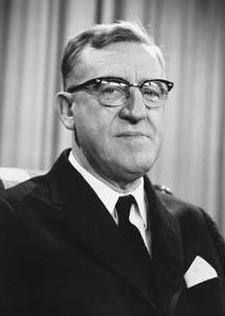
| 1 Quotes | |
| Born as | Arthur Augustus Calwell |
| Occup. | Politician |
| From | Australia |
| Born | August 28, 1896 Melbourne, Victoria, Australia |
| Died | July 8, 1973 |
| Aged | 76 years |
| Cite | |
Citation Formats
APA Style (7th ed.)
Arthur calwell biography, facts and quotes. (2026, February 11). FixQuotes. https://fixquotes.com/authors/arthur-calwell/
Chicago Style
"Arthur Calwell biography, facts and quotes." FixQuotes. February 11, 2026. https://fixquotes.com/authors/arthur-calwell/.
MLA Style (9th ed.)
"Arthur Calwell biography, facts and quotes." FixQuotes, 11 Feb. 2026, https://fixquotes.com/authors/arthur-calwell/. Accessed 29 Mar. 2026.
Early Life and Background
Arthur Augustus Calwell was born on 28 August 1896 in Melbourne, Victoria, into a large Irish Catholic family whose sense of duty, parish life, and working-class respectability left a lifelong imprint. The Australia of his childhood was newly federated, anxious about wages and employment, and dominated by the "White Australia" consensus that connected national identity to border control. Calwell absorbed that era's assumptions early, along with an abiding belief that politics was a moral vocation rather than a career.He came of age as the old certainties of empire collided with the brutal arithmetic of modern war and industrial society. Like many in his generation, he learned to read events through the lens of sacrifice, loyalty, and grievance - themes that later surfaced in his fierce parliamentary style. Personal piety did not make him soft-spoken; instead it sharpened his inner ledger of right and wrong, and it helped explain why he could be both empathetic to the disadvantaged and uncompromising, even punitive, toward those he believed threatened social cohesion.
Education and Formative Influences
Calwell was educated at Catholic schools in Melbourne and entered the workforce young, building his skills as a communicator and organizer in an era when newspapers, ward meetings, and union rooms were the principal engines of political formation. He moved in Labor circles shaped by the aftershocks of conscription debates, the hard edges of class politics, and the rise of mass party discipline. Those environments rewarded memory, rhetoric, and stamina - traits Calwell cultivated into an identity as a tribune who could argue policy as if it were a matter of conscience.Career, Major Works, and Turning Points
Elected to the House of Representatives for Melbourne in 1940, Calwell became a prominent voice of the Australian Labor Party through the Second World War and the reconstruction years, culminating in his role as Minister for Immigration in Ben Chifley's government (1945-1949). In that office he drove the postwar nation-building program that dramatically expanded population through assisted migration, while also defending the White Australia policy - a stance consistent with his time but increasingly out of step with later Australia. As Leader of the Opposition (1960-1967), he battled Robert Menzies and then Harold Holt, and his defining turning point came with his opposition to conscription for the Vietnam War, a lonely position at first that helped reframe Labor's moral language even as it contributed to electoral defeat in 1966. In 1966 he survived an assassination attempt by Peter Kocan at The Mosman town hall, an ordeal that hardened his sense of political conflict as personal trial, before he handed the leadership to Gough Whitlam and remained an influential elder statesman until his death on 8 July 1973.Philosophy, Style, and Themes
Calwell's politics were structured around an austere moral calculus: truth over expediency, solidarity over fashion, and the belief that a representative owed courage to the powerless. He expressed that inner discipline with aphoristic bluntness, and his most revealing maxim captures the psychology of a man who would rather endure humiliation than compromise his self-image as an honest fighter: “It is better to be defeated on principle than to win on lies”. The sentence is not mere rhetoric; it discloses a temperament that treated politics as a test of character, and it helps explain why he often preferred sharp, prosecutorial argument to soothing ambiguity.Yet the same certainty that made him a persuasive opponent of war conscription also underwrote positions that later generations judged harshly, particularly in immigration and racial policy. Calwell could be tender toward battlers and ferocious toward perceived threats, a duality rooted in his era's fear of economic insecurity and cultural dilution. His style was combative, dense with statistics and indignation, and powered by the conviction that betrayal was worse than defeat - a worldview that enabled long resistance but sometimes limited coalition-building when Australia began to change faster than his assumptions.
Legacy and Influence
Calwell's legacy is inseparable from Australia's mid-century transformation: he helped engineer mass migration and the modern population program, even as his defense of White Australia marks the limits of the political imagination of his time. In opposition he helped legitimize a more principled critique of conscription and foreign entanglements, planting moral language that later Labor leaders would refine. Remembered as stubborn, eloquent, and sometimes wrongheaded, he remains a case study in how conscience can both elevate and constrain a political life - and how a nation's values can outgrow even its most sincere advocates.Our collection contains 1 quotes written by Arthur, under the main topics: Honesty & Integrity.
Other people related to Arthur: Harold Edward Holt (Politician), Robert Menzies (Statesman)
Source / external links