
Arthur Cayley Biography Quotes 6 Report mistakes
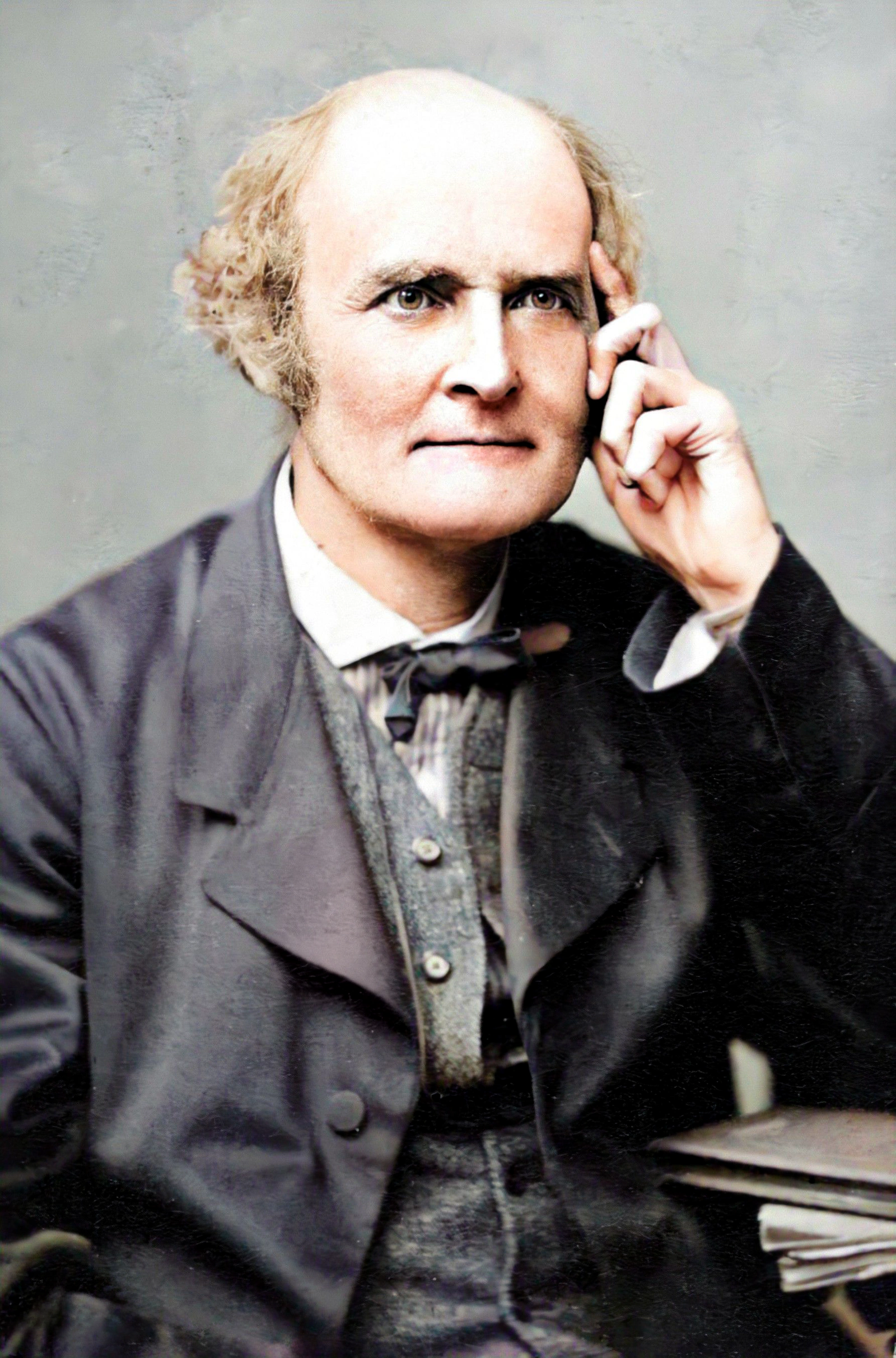
Attr: Herbert Beraud (1845–1896), Public domain
| 6 Quotes | |
| Occup. | Mathematician |
| From | United Kingdom |
| Born | August 16, 1821 Richmond, Surrey, UK |
| Died | January 26, 1895 Cambridge, England |
| Cause | Natural causes |
| Aged | 73 years |
| Cite | |
Citation Formats
APA Style (7th ed.)
Arthur cayley biography, facts and quotes. (2026, February 11). FixQuotes. https://fixquotes.com/authors/arthur-cayley/
Chicago Style
"Arthur Cayley biography, facts and quotes." FixQuotes. February 11, 2026. https://fixquotes.com/authors/arthur-cayley/.
MLA Style (9th ed.)
"Arthur Cayley biography, facts and quotes." FixQuotes, 11 Feb. 2026, https://fixquotes.com/authors/arthur-cayley/. Accessed 27 Mar. 2026.
Early Life and Background
Arthur Cayley was born on 16 August 1821 in Richmond, Surrey, into a mobile commercial family shaped by the circuits of the British Empire. His father, Henry Cayley, was connected with trade and finance, and the family spent part of Arthur's childhood in St Petersburg, where British mercantile houses operated amid the cosmopolitan pressures of post-Napoleonic Europe. That early experience of living between languages, currencies, and bureaucracies left Cayley with an instinct for abstract structure - a sense that systems could be translated without losing their inner logic.Returning to England, he grew up during the decades when Victorian Britain was building institutions as quickly as it was laying rails. Mathematics in that world was both a tool of engineering and a badge of intellectual seriousness. Cayley was temperamentally unsuited to the public drama of politics, yet he absorbed the era's faith in disciplined work and in learned societies as engines of national prestige. His later life would be spent largely in libraries, lecture rooms, and the quiet administrative routines that make scientific culture durable.
Education and Formative Influences
Cayley entered Trinity College, Cambridge, and rapidly distinguished himself within the Mathematical Tripos, becoming Senior Wrangler in 1842 and first Smith's Prizeman shortly after - the standard Victorian markers of mathematical dominance. Cambridge at mid-century still trained analysts through Newtonian mechanics and algebraic technique, but it was also beginning to open to continental ideas. Cayley read widely, corresponded with leading mathematicians, and found an intellectual ally in James Joseph Sylvester; together they helped shift British mathematics from narrow applied problem-solving toward a modern emphasis on invariants, transformations, and abstract form.Career, Major Works, and Turning Points
After Cambridge, Cayley chose stability over a precarious academic life, entering Lincoln's Inn and practicing as a barrister for more than a decade while producing a torrent of mathematics in his spare hours - a striking proof of how intensely internal the work had become for him. In 1863 he accepted the Sadleirian Professorship of Pure Mathematics at Cambridge, a turning point that gave him institutional authority and time to consolidate his ideas. His contributions were foundational across several emerging fields: the creation of matrix theory as a systematic algebra (including the Cayley-Hamilton theorem), the early development of group theory through the study of permutations and algebraic structures, and major advances in invariant theory and algebraic geometry. He also helped create modern projective geometry and introduced what is now called the Cayley-Klein approach to non-Euclidean geometry through metric ideas derived from projective invariants. Over his lifetime he wrote hundreds of papers, and his collected works would later fill many volumes, making him less a single-book author than an architect of a new mathematical landscape.Philosophy, Style, and Themes
Cayley wrote in a style at once austere and quietly expansive: definitions, computations, and transformations presented without theatrics, as if the symbolic world were self-justifying. Yet behind that restraint lay a distinct psychology - a man who valued impersonal rigor but also craved a kind of intellectual intimacy with his chosen problems. When addressing colleagues, he framed his duty not as entertaining them but as giving them the most honest version of his own attention: “But be that as it may, I think it is more respectful to you that I should speak to you upon and do my best to interest you in the subject which has occupied me, and in which I am myself most interested”. The sentence reads like self-portrait: respect equals seriousness; sincerity equals depth; the inner life is located in the subject itself.His mature outlook combined devotion to classical exactness with openness to new geometries and new algebraic entities. He insisted that Euclid remained internally correct even if physical space might not be Euclidean: “Not that the propositions of geometry are only approximately true, but that they remain absolutely true in regard to that Euclidean space which has been so long regarded as being the physical space of our experience”. This is characteristic Cayley - careful about language, unwilling to discard a system merely because experience might demand additional systems. In aesthetics he was equally disciplined, claiming that the mathematician's sense of elegance is real but irreducible: “As for everything else, so for a mathematical theory: beauty can be perceived but not explained”. That belief justified his lifelong pursuit of formal beauty in invariants, canonical forms, and geometries where transformation, not measurement, is the primary reality.
Legacy and Influence
Cayley died on 26 January 1895 in Cambridge, having helped redefine what "pure mathematics" could mean in Britain: not a decorative pastime but a creative, generative discipline with its own internal standards. His influence runs through linear algebra, modern algebra, representation theory, algebraic geometry, and the language of symmetry used by physics and chemistry; even when later mathematicians revised his methods, they worked in a world he helped name and organize. More subtly, he modeled a Victorian ideal of intellectual character - private, exacting, and institution-building - and showed that abstract thought could be both conservative in its respect for established truths and radically innovative in the structures it dared to imagine.Our collection contains 6 quotes written by Arthur, under the main topics: Ethics & Morality - Truth - Wisdom - Leadership - Knowledge.
Frequently Asked Questions
- Cayley graph: A Cayley graph is a graphical representation used in group theory to visualize the structure of groups, using nodes for group elements and edges for group operations.
- Cayley-Hamilton theorem: The Cayley-Hamilton theorem is a fundamental result in linear algebra stating that a square matrix satisfies its own characteristic polynomial.
- Arthur Cayley pronunciation: Arthur Cayley is pronounced as 'AR-thur KAY-lee'.
- Arthur Cayley fun Facts: Cayley was a trained lawyer and practiced law for 14 years before fully dedicating himself to mathematics.
- How did Arthur Cayley die: Arthur Cayley died from natural causes in Cambridge, England, on January 26, 1895.
- Arthur Cayley family: Cayley was born to Henry Cayley, a merchant, and Maria Antonia Doughty, and he had an elder brother, William Henry Cayley.
- Arthur Cayley matrix theory: Cayley was a pioneer in matrix theory, developing the Cayley-Hamilton theorem, which states that every square matrix satisfies its own characteristic equation.
- Arthur Cayley contributions to mathematics: Arthur Cayley made significant contributions to algebra, geometry, and matrix theory, and was instrumental in the development of group theory and invariant theory.
- How old was Arthur Cayley? He became 73 years old
Arthur Cayley Famous Works
- 1876 An Elementary Treatise on Elliptic Functions (Book)
- 1860 A Treatise on the Analytic Geometry of Three Dimensions (Book)
- 1858 A Memoir on the Theory of Matrices (Book)
- 1845 On the Theory of Linear Transformations (Book)
Source / external links