
Arthur Erickson Biography Quotes 52 Report mistakes
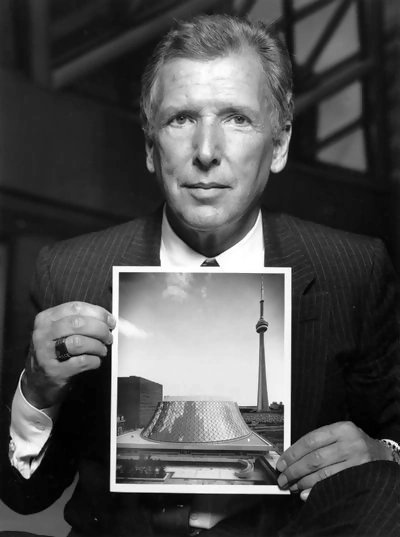
Attr: The Canadian Press
| 52 Quotes | |
| Born as | Arthur Charles Erickson |
| Occup. | Architect |
| From | Canada |
| Born | June 14, 1924 Vancouver, British Columbia, Canada |
| Died | May 20, 2009 Vancouver, British Columbia, Canada |
| Aged | 84 years |
| Cite | |
Citation Formats
APA Style (7th ed.)
Arthur erickson biography, facts and quotes. (2026, February 11). FixQuotes. https://fixquotes.com/authors/arthur-erickson/
Chicago Style
"Arthur Erickson biography, facts and quotes." FixQuotes. February 11, 2026. https://fixquotes.com/authors/arthur-erickson/.
MLA Style (9th ed.)
"Arthur Erickson biography, facts and quotes." FixQuotes, 11 Feb. 2026, https://fixquotes.com/authors/arthur-erickson/. Accessed 25 Mar. 2026.
Early Life and Background
Arthur Charles Erickson was born on June 14, 1924, in Vancouver, British Columbia, a port city whose mountains, rain, and dense forests press nature and settlement into constant negotiation. The Pacific Rim outlook of interwar Vancouver - outward-looking, yet geographically hemmed in - left him with a lifelong sense that buildings must be read against climate and landscape rather than against imported formulas.His youth unfolded through the Depression and the Second World War, eras that hardened North American faith in efficiency while also exposing its costs. Erickson served in the Royal Canadian Navy during the war, an experience that widened his horizon beyond provincial Canada and pushed him toward questions of collective life: how people move, gather, remember, and endure. Those questions would later reappear as an architectural ethic, not a mere aesthetic preference.
Education and Formative Influences
After the war he studied at the University of British Columbia, then traveled extensively before earning his architecture degree at McGill University in Montreal (1950). Travel - especially through the Mediterranean and Asia - became less a grand tour than a private schooling in how civilizations shape space, light, and ritual. He returned to Canada convinced that modern architecture could be humane and place-specific, but only if it absorbed lessons from older urban and sacred traditions rather than treating them as museum pieces.Career, Major Works, and Turning Points
Erickson established a Vancouver practice and rose to international prominence in the 1960s and 1970s as a leading voice of Canadian modernism. Major works include Simon Fraser University in Burnaby (1965), conceived as a monumental acropolis-like campus; the Museum of Anthropology at UBC in Vancouver (1976), where concrete, glass, and First Nations context meet in choreographed procession; Robson Square and the Law Courts complex in downtown Vancouver (1979-83), a terraced civic landscape stitched into the city; and the Canadian Chancery in Washington, D.C. (1989). He also worked abroad, including projects in the Middle East. A late-career downturn - tied to financial strain and shifting architectural economics - did not erase his reputation, but it sharpened the public contrast between the grandeur of his civic ambitions and the precariousness of architectural practice.Philosophy, Style, and Themes
Erickson treated architecture as an art of experience before it was an art of objects. “Space has always been the spiritual dimension of architecture. It is not the physical statement of the structure so much as what it contains that moves us”. This conviction explains the ceremonial sequencing in his best buildings: long approaches, compressed passages, sudden releases into courts or luminous halls. In the Museum of Anthropology, the visitor is guided toward a calm, almost liturgical encounter with light, timber, and the presence of carved forms; at Robson Square, the city itself becomes the interior, with roofs turned into gardens and stairs functioning as social amphitheaters.His modernism was never purely technological; it was skeptical of standardization as a cultural default and wary of a North American tendency to treat all problems as engineering problems. “Our incapacity to comprehend other cultures stems from our insistence on measuring things in our own terms”. The line reads as autobiography: Erickson learned by refusing to flatten difference, then tried to translate that respect into Canadian institutions. Yet he was also a romantic about architecture's rarity and emotional stakes - “Great buildings that move the spirit have always been rare. In every case they are unique, poetic, products of the heart”. The psychology beneath these statements is consistent: he sought intensity, wholeness, and meaning in a profession increasingly pressured toward speed, specialization, and predictable returns.
Legacy and Influence
Erickson died on May 20, 2009, in Vancouver, leaving a body of work that helped define the civic image of late-20th-century Canada and gave Vancouver a global architectural language rooted in topography and public life. His best projects remain touchstones in debates about preservation, concrete modernism, and the role of architecture in shaping democratic space. More than a stylist, he endures as a builder of sequences and atmospheres - an architect who insisted that cities need places that do more than function: they must enlarge the inner life of their citizens.Our collection contains 52 quotes written by Arthur, under the main topics: Ethics & Morality - Wisdom - Art - Nature - Deep.