
Arthur Kroker Biography Quotes 1 Report mistakes
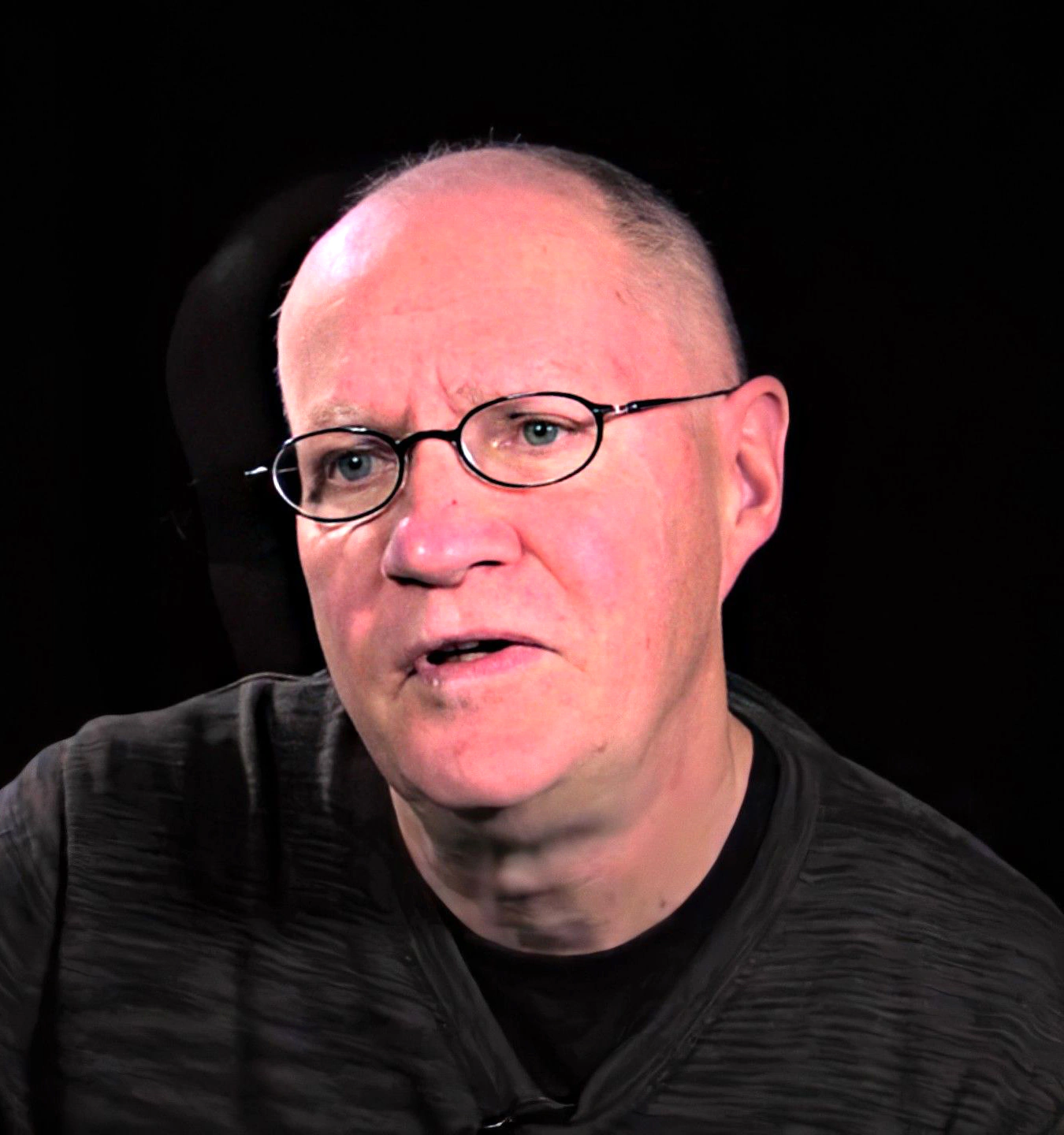
| 1 Quotes | |
| Occup. | Author |
| From | Canada |
| Spouse | Marilouise Kroker (1971-2018) |
| Born | June 3, 1945 Toronto, Ontario, Canada |
| Age | 80 years |
| Cite | |
Citation Formats
APA Style (7th ed.)
Arthur kroker biography, facts and quotes. (2026, February 11). FixQuotes. https://fixquotes.com/authors/arthur-kroker/
Chicago Style
"Arthur Kroker biography, facts and quotes." FixQuotes. February 11, 2026. https://fixquotes.com/authors/arthur-kroker/.
MLA Style (9th ed.)
"Arthur Kroker biography, facts and quotes." FixQuotes, 11 Feb. 2026, https://fixquotes.com/authors/arthur-kroker/. Accessed 26 Mar. 2026.
Early Life and Background
Arthur Kroker was born on June 3, 1945, in Canada, at the hinge-point between the end of the Second World War and the onset of the Cold War order that would define his intellectual temperament. Coming of age as television entered every living room and as North American consumer culture hardened into a near-total environment, he developed an early sensitivity to how media did not merely represent reality but reorganized it - emotionally, politically, and even somatically.Kroker's inner life, as later reflected in his writing, was shaped by the tension between Canadian proximity to American power and a persistent sense of difference from it. That borderland position became more than geography: it offered him a vantage point on the United States as spectacle and system, while also keeping him inside the circuits of its music, images, and anxieties. The result was a lifelong preoccupation with how technological modernity colonizes desire, memory, and the body.
Education and Formative Influences
Kroker emerged as a distinctive voice within late-20th-century Canadian intellectual culture, drawing on the era's crosscurrents: critical theory, political economy, media studies, and postmodern philosophy. He absorbed the shockwaves of thinkers such as Marshall McLuhan (especially the idea that the medium rewires perception), as well as European strands associated with post-structuralism and the critique of instrumental reason, and translated them into an idiom tuned to late capitalism's electronic textures - advertising, celebrity, war-as-television, and the everyday life of screens.Career, Major Works, and Turning Points
As an author, editor, and cultural theorist, Kroker became closely associated with the Canadian journal and publishing project CTheory (often styled CTHEORY), which helped circulate cutting-edge debate about technology, culture, and power. His books - notably The Postmodern Scene, Spasm: Virtual Reality, Android Music and Electric Flesh, Data Trash, and The Will to Technology - mapped how digital life alters politics and subjectivity, while his collaborations and interviews broadened his reach into media art, cyberculture, and contemporary philosophy. A key turning point in his career was recognizing that "technology" was not simply a toolkit but a governing imaginary: a set of promises and disciplines capable of reorganizing everyday life faster than traditional institutions could respond.Philosophy, Style, and Themes
Kroker wrote as if theory had to match the speed of its object. His prose often moves by montage: aphoristic bursts, compressed diagnoses, and sudden, luminous images that mimic the jittery attention of electronic culture. At the center is a psychological concern with the fate of embodiment under technological acceleration - how the body becomes both target and residue, pulled apart by consumer spectacle and rebuilt as data, brand, and interface. He repeatedly returned to celebrity not as gossip but as metaphysics: fame as a modern theology in which the person is consumed as image, and the image outlives the person.That sensibility concentrates in his use of pop icons as diagnostic instruments. “Elvis' disappearing body is like a flashing event horizon at the edge of the black hole that is America today”. In Kroker's hands, the metaphor is less about Elvis than about a civilization that cannot stop watching itself vanish - a culture fascinated by its own gravitational collapse. The "event horizon" image captures a recurring theme in his work: that late-capitalist America, and by extension its media hinterlands, draws desire inward until the self becomes a kind of singularity - dense with signals, thin in interiority. Kroker's criticism is not puritanical; it is intimate, almost forensic, tracking how people internalize the rhythms of machines and markets until their longings feel pre-programmed.
Legacy and Influence
Kroker's enduring influence lies in how he helped name and stylize the experience of living inside electronic capitalism before "social media" became a universal diagnosis. Through CTheory and his books, he provided a vocabulary - and a mood - for scholars, artists, and readers trying to understand why technology feels less like progress than fate. He remains a key figure in Canadian critical media thought and in the broader history of cyberculture writing: a theorist who treated the digital era not as an external shift, but as a transformation of inner life, where politics, pleasure, and panic increasingly share the same screen.Our collection contains 1 quotes written by Arthur, under the main topics: Deep.
Arthur Kroker Famous Works
- 2012 Body Drift: Butler, Hayles, Haraway (Book)
- 2004 The Will to Technology and the Culture of Nihilism: Heidegger, Nietzsche, and Marx (Book)
- 1994 Data Trash: The Theory of the Virtual Class (Book)
- 1989 Panic Encyclopedia: The Definitive Guide to the Postmodern Scene (Book)
- 1986 The Postmodern Scene: Excremental Culture and Hyper-Aesthetics (Book)
- 1984 Technology and the Canadian Mind: Innis, McLuhan, and Grant (Book)
Source / external links