
Arthur Kroker Biography Quotes 1 Report mistakes
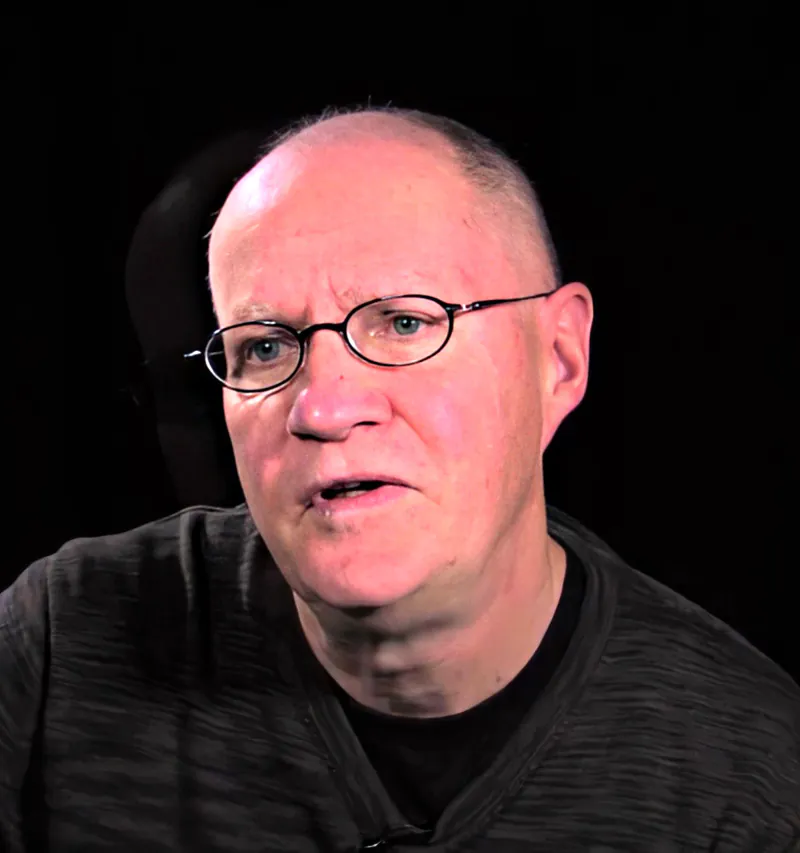
| 1 Quotes | |
| Occup. | Author |
| From | Canada |
| Spouse | Marilouise Kroker (1971-2018) |
| Born | June 3, 1945 Toronto, Ontario, Canada |
| Age | 80 years |
Arthur Kroker, born in 1945, emerged as a distinctly Canadian voice in political theory, media studies, and the philosophy of technology. From the outset of his career he gravitated toward the intersection of political thought and cultural criticism, reading widely across continental philosophy, communications theory, and critical sociology. He would become known not only as an author but as a curator of debates about high technology, postmodern culture, and the emergence of digital life.
Intellectual Formation and the Canadian Conversation
Kroker first came to broad attention through a sustained engagement with three major Canadian thinkers: Harold Innis, Marshall McLuhan, and George Grant. His book-length study of their work brought them into a single conversation about technology and communication, demonstrating how questions of media form, political economy, and moral philosophy intersect in Canadian intellectual life. By weaving Innis's bias-of-communication thesis, McLuhan's media-sense extensions, and Grant's critique of technological society, Kroker positioned himself as an interpreter and synthesizer who could move across disciplines while keeping technology at the center of inquiry.
Collaboration with Marilouise Kroker and the CTHEORY Project
A defining feature of his career is the lifelong intellectual partnership with Marilouise Kroker. Together they built CTHEORY, an influential electronic journal that has long published essays, interviews, and dossiers on theory, technology, and culture. CTHEORY functioned as a hub where emerging arguments about cyberspace, virtuality, and the posthuman met classic debates in philosophy and cultural studies. Through their editorial work, the Krokers cultivated a space where conversations among theorists, artists, and technologists could unfold in real time, helping to normalize the web as a serious venue for scholarly exchange.
Key Collaborators and Interlocutors
Beyond his partnership with Marilouise Kroker, Arthur collaborated with and wrote alongside political theorist Michael A. Weinstein, with whom he authored a number of books and essays that probed the political economy of information. Another early collaborator was David Cook, with whom the Krokers explored the affective intensities of postmodern culture. Over the years, his writing engaged deeply with the ideas of Jean Baudrillard and Paul Virilio, whose analyses of simulation and speed found strong resonance in Kroker's own critical vocabulary. He also wrote in dialogue with the philosophical legacies of Martin Heidegger, Friedrich Nietzsche, and Karl Marx, reframing their insights for a world mediated by screens, databases, and networks.
Major Works and Editorial Projects
Kroker's bibliography traces the arc of high-tech modernity. Early work on Canadian communications theory established his foundation. He then turned to the aesthetics and politics of postmodern culture, co-authoring projects that mapped the "panic" and "excremental" dimensions of the media environment. Spasm probed virtual reality, music, and the sensorial body as they were being rewired by digital technologies. In Data Trash, co-authored with Michael A. Weinstein, he analyzed the rise of the "virtual class", an elite of knowledge workers and information managers whose power derived from control over data flows and computational infrastructures. Digital Delirium, co-edited with Marilouise Kroker, assembled a wider conversation around the cultural impacts of networked computing. Later, The Will to Technology and the Culture of Nihilism returned to the philosophical ground, drawing on Heidegger, Nietzsche, and Marx to argue that technological will had become a dominant force shaping values, labor, and desire. In Body Drift he placed the work of Judith Butler, N. Katherine Hayles, and Donna Haraway into critical constellation, tracing how theories of gender, cybernetics, and cyborg embodiment reconfigure what counts as a human subject.
Themes, Concepts, and Style
Several concepts recur across Kroker's writing. He is a theorist of mediation, investigating how technologies do not merely convey messages but actively pattern thought and social life. He is also a diagnostician of the political economy of information: the "virtual class" names the managerial and technical strata that consolidate power by directing code, platforms, and networks. The body, for Kroker, is not left behind by technology; it is rearticulated as electric flesh, a charged site where sensation, desire, and labor are captured by circuits of value. Stylistically, his prose is aphoristic and performative, described by some as "panic writing" for the way it compresses analysis into passages that oscillate between critique and poetic intensity. This voice, honed in tandem with Marilouise Kroker's editorial sensibility, became a signature of their books and CTHEORY dossiers.
Academic Roles and Institutional Initiatives
Kroker taught for many years in Canadian universities, helping to consolidate technology and culture as a legitimate field of study within political science and the humanities. His appointments included leadership roles tied to research on technology, culture, and theory, and he played a part in establishing institutional venues for interdisciplinary work at the intersection of media, politics, and philosophy. In addition to traditional academic publishing, his commitment to electronic scholarship gave students and colleagues an early example of rigorous intellectual work thriving on the web.
Engagement with Continental Philosophy and Media Theory
He continually returned to continental philosophy to read the digital age. Nietzsche's transvaluation, Heidegger's question of technology, and Marx's analysis of capital provided analytic frames for understanding software, databases, and networks. From Baudrillard he absorbed a sensitivity to simulation and symbolic exchange, while Virilio's insights into speed, logistics, and accidents informed Kroker's accounts of connectivity's hazards. These influences converge in a critical posture: neither simple technophilia nor technophobia, but a skeptical, lucid tracking of how technologies insinuate themselves into consciousness, social relations, and political order.
Public Presence and Editorial Influence
As an editor and interlocutor, Kroker brought together writers, artists, and theorists whose work might otherwise have circulated in separate spheres. Marilouise Kroker's role here is central: her editorial collaborations shaped the community around CTHEORY, where emergent debates about surveillance, virtuality, and network culture unfolded. The result was an intellectual milieu that included established thinkers and new voices alike, with essays that moved fluidly between philosophical argument, cultural critique, and reflections on software, architecture, and art.
Later Work and Ongoing Relevance
In the new century, Kroker's writing pivoted toward the posthuman and the ecological implications of computation. Revisiting classic philosophical texts, he considered how digital systems reorganize labor and attention at planetary scale, and how bodies and identities are refashioned by code. Works like Body Drift demonstrated his method of reading across fields, placing gender theory, literary cybernetics, and science studies into productive tension. Meanwhile, the early insights of Data Trash about the power of the virtual class gained fresh relevance with the platform economy and the consolidation of data monopolies.
Legacy
Arthur Kroker's legacy lies at once in his books and in the intellectual network that formed around him and Marilouise Kroker. Their editorship made CTHEORY a formative site for theory and media studies, while collaborations with Michael A. Weinstein and David Cook mapped the cultural and political energies of the high-tech era with lasting precision. By threading Innis, McLuhan, and Grant through the fabric of postmodern and digital theory, he gave Canadian thought an international register. For students of media, politics, and culture, his work models how to think technology historically, philosophically, and aesthetically, and how to build institutions that allow critical theory to thrive in a changing media ecology.
Our collection contains 1 quotes who is written by Arthur, under the main topics: Deep.
Arthur Kroker Famous Works
- 2012 Body Drift: Butler, Hayles, Haraway (Book)
- 2004 The Will to Technology and the Culture of Nihilism: Heidegger, Nietzsche, and Marx (Book)
- 1994 Data Trash: The Theory of the Virtual Class (Book)
- 1989 Panic Encyclopedia: The Definitive Guide to the Postmodern Scene (Book)
- 1986 The Postmodern Scene: Excremental Culture and Hyper-Aesthetics (Book)
- 1984 Technology and the Canadian Mind: Innis, McLuhan, and Grant (Book)
Source / external links