
Arthur Laffer Biography Quotes 22 Report mistakes
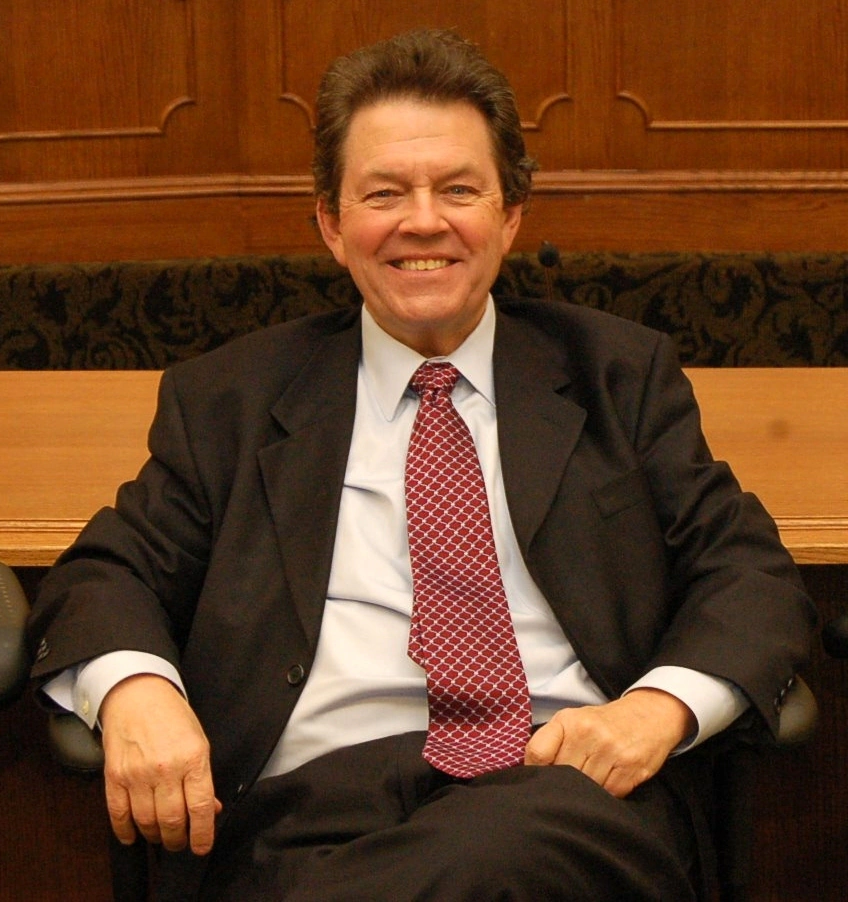
| 22 Quotes | |
| Born as | Arthur Betz Laffer |
| Occup. | Economist |
| From | USA |
| Born | August 14, 1940 Youngstown, Ohio |
| Age | 85 years |
| Cite | |
Citation Formats
APA Style (7th ed.)
Arthur laffer biography, facts and quotes. (2026, February 11). FixQuotes. https://fixquotes.com/authors/arthur-laffer/
Chicago Style
"Arthur Laffer biography, facts and quotes." FixQuotes. February 11, 2026. https://fixquotes.com/authors/arthur-laffer/.
MLA Style (9th ed.)
"Arthur Laffer biography, facts and quotes." FixQuotes, 11 Feb. 2026, https://fixquotes.com/authors/arthur-laffer/. Accessed 28 Mar. 2026.
Early Life and Background
Arthur Betz Laffer was born on August 14, 1940, in the United States, into a mid-century America that treated industrial expansion and mass prosperity as both proof of national purpose and a technical puzzle for economists. Coming of age during the Cold War and the postwar boom, he absorbed a civic atmosphere in which "growth" was not a slogan but a metric tied to jobs, prices, and geopolitical confidence.The later drama of the 1970s - stagflation, oil shocks, and a crisis of faith in Keynesian fine-tuning - would give Laffer his lifelong stage. He became, in effect, a public-facing economist: part theorist, part persuader, determined to translate abstract incentives into kitchen-table terms. That temperament, as much as any single model, positioned him to become an emblematic figure of the supply-side turn in American political economy.
Education and Formative Influences
Laffer studied economics at Yale University (BA) and later earned a PhD in economics at Stanford University, training in an era when macroeconomics was being reshaped by debates over inflation, monetary credibility, and the limits of demand management. Stanford also exposed him to policy-adjacent economics and the emerging emphasis on expectations and incentives, which hardened his instinct that the tax system is not merely a funding mechanism but a behavioral engine - something that can alter work, saving, investment, and risk-taking at the margin.Career, Major Works, and Turning Points
Laffer taught at the University of Chicago and later at the University of Southern California, moving between academic posts, consulting, and the policy world. His name became synonymous with the "Laffer Curve", the proposition that beyond some point higher tax rates can reduce total revenue by shrinking the taxable base - an idea with antecedents, but one he popularized with uncommon rhetorical force. In the late 1970s he emerged as a supply-side advocate to Republican leaders and would become closely associated with the tax-cutting agenda that culminated in the Reagan-era reductions of marginal rates, an association that made him a celebrity to allies and a target to critics. In subsequent decades he remained a prolific commentator and advisor, co-authoring policy books and reports and advocating lower marginal rates, deregulation, and pro-growth reforms, including state-level tax changes such as those in Kansas that later became politically contested.Philosophy, Style, and Themes
Laffer's inner life as a public economist is defined by impatience with what he sees as comforting fictions: that governments can distribute benefits without costs, or that macroeconomic pain can be legislated away without tradeoffs. His language often aims to puncture moralized budgeting with blunt equivalences: “Government spending is taxation. When you look at this, I've never heard of a poor person spending himself into prosperity; let alone I've never heard of a poor person taxing himself into prosperity”. The psychology behind the line is revealing - a deep suspicion that political systems reward short-term generosity and hide long-term incidence, and a need to restate economics as a constraint, not a preference.He is also a monetary realist whose supply-side emphasis is paired with a fear of inflationary drift and a moral tone about trust in the unit of account. “Sound money is the sine qua non of a prosperous society”. In his worldview, stable money anchors contracts, investment horizons, and social peace; unstable money is a stealth tax that corrodes discipline and rewards leverage over production. Even when he discusses inflation mechanically, he returns to scarcity and accounting: “What we're talking about is the price of goods, all goods, in terms of money”. That style - insisting on identities, incentives, and incidence - helps explain both his persuasive reach and why detractors hear reductionism where he hears clarity.
Legacy and Influence
Laffer endures less as a single diagram than as a catalytic figure in the late-20th-century reorientation of American economic rhetoric: from managing demand to energizing supply, from tax rates as fairness signals to tax rates as behavioral levers. His influence persists in debates over marginal rates, tax base broadening, and the growth effects of regulation, as well as in the enduring political habit of arguing that prosperity is best engineered by widening the space for private risk-taking. Admirers credit him with restoring incentives to the center of policy; critics argue his ideas were oversold, unevenly applied, or used to justify deficits. Either way, the Laffer name remains a shorthand for the proposition that how a society taxes shapes how it works, saves, and imagines its future.Our collection contains 22 quotes written by Arthur, under the main topics: Equality - Investment - Money - Wealth.
Other people related to Arthur: Mark Skousen (Economist), George Gilder (Writer), Sam Brownback (Politician)
Source / external links