
Arthur Lydiard Biography Quotes 4 Report mistakes
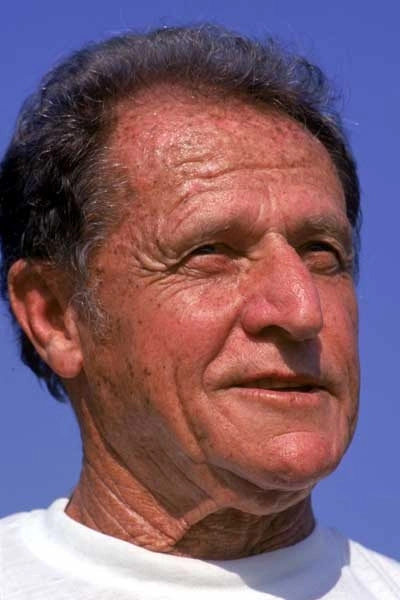
| 4 Quotes | |
| Born as | Arthur Leslie Lydiard |
| Occup. | Athlete |
| From | New Zealand |
| Spouse | Nancy Lydiard |
| Born | July 6, 1917 Auckland, New Zealand |
| Died | December 11, 2004 Texas, U.S. |
| Cause | Heart attack |
| Aged | 87 years |
| Cite | |
Citation Formats
APA Style (7th ed.)
Arthur lydiard biography, facts and quotes. (2026, February 11). FixQuotes. https://fixquotes.com/authors/arthur-lydiard/
Chicago Style
"Arthur Lydiard biography, facts and quotes." FixQuotes. February 11, 2026. https://fixquotes.com/authors/arthur-lydiard/.
MLA Style (9th ed.)
"Arthur Lydiard biography, facts and quotes." FixQuotes, 11 Feb. 2026, https://fixquotes.com/authors/arthur-lydiard/. Accessed 12 Feb. 2026.
Early Life and Background
Arthur Leslie Lydiard was born on July 6, 1917, in Auckland, New Zealand, a port city where work and weather hardened bodies early and recreation often meant moving under your own power. He grew up in an era when organized sport was both civic pride and personal proving ground, and when New Zealanders - distant from Europe and America yet intensely attuned to them - measured themselves through endurance, self-reliance, and practical invention. Those traits would become his signature: the coach as craftsperson, the runner as a long-term project, and training as a kind of moral education.Before he became a maker of champions, Lydiard was an ordinary man shaped by ordinary constraints: jobs, limited formal advantages, and the physicality of daily life. His own early running was less a polished pathway than a stubborn, iterative search for fitness and meaning, carried out on roads and hills rather than in laboratories. From the start he believed that the body could be remade by steady work, and that the mind - impatient, fearful, craving shortcuts - was the real opponent a runner had to tame.
Education and Formative Influences
Lydiard was largely self-taught as a coach, learning through training himself, observing athletes, reading widely where he could, and testing ideas against results with a mechanic's pragmatism. The decisive influence was not a university department but the terrain of Auckland and the community of runners who gathered around him, most famously in the Waitakere Ranges. He absorbed the early 20th-century shift toward systematic preparation - interval training, periodization, and the emerging language of physiology - but he filtered it through New Zealand common sense: build the engine first, then sharpen it, and never confuse fashionable intensity with lasting development.Career, Major Works, and Turning Points
As an athlete, Lydiard was a high-mileage marathoner whose own performances helped convince him that aerobic conditioning was the foundation for everything else; as a coach, he became one of the defining figures in modern middle- and long-distance training. His breakthrough came in the late 1950s and early 1960s when athletes he coached helped propel New Zealand onto the global stage: Peter Snell won Olympic gold in the 800m (1960) and then a rare 800m-1500m double (1964), while Murray Halberg won the 5000m (1960) and Barry Magee took marathon bronze (1960). Lydiard's ideas traveled far beyond his small country through clinics and books - notably Run to the Top - and through the sheer persuasive force of medals that seemed to arise from mud, hills, and weekly mileage rather than from institutional budgets.Philosophy, Style, and Themes
At the center of Lydiard's inner life was a disciplined optimism: the conviction that ordinary people could become extraordinary if they consented to patience. His training system was built on phases - long aerobic base, then hill strength, then track sharpening - but the deeper system was psychological. He treated consistency as character and fatigue as information. His blunt realism about effort is captured in his own words: "It's just a matter of understanding what's necessary and discipline yourself to do it". That sentence is not a slogan so much as a self-portrait: a man suspicious of excuses, convinced that clarity plus will could outlast talent.Yet Lydiard was not an apostle of grinding. He understood that intensity is seductive, especially for the young, because it offers immediate proof of toughness. His philosophy tried to protect athletes from their own impatience by placing most work in the aerobic domain and reserving anaerobic stress for the right time and dose. He argued that premature racing and repeated high-intensity sessions hollow out the athlete, turning ambition into fragility: "No one will burn out doing aerobic running. It is too much anaerobic running, which the American scholastic athletic system tends to put young athletes through, that burns them out". In that critique is a moral temperament: he saw burnout not as weakness but as a predictable outcome when adults chase quick results at the expense of development.
Lydiard also rejected one-dimensional training and one-dimensional selves. He saw the runner as a whole organism with multiple gears, and he insisted that endurance was only the platform from which speed could safely emerge. "If you want to be a successful runner, you have to consider everything. It's no good just thinking about endurance and not to develop fine speed". The breadth of that statement mirrors his coaching style - demanding, personal, and highly specific - and it hints at his deeper theme: mastery is integration, not obsession.
Legacy and Influence
Lydiard died on December 11, 2004, but his influence remains embedded in how endurance sport is taught: the primacy of aerobic base, the logic of periodization, the caution against chronic anaerobic strain, and the belief that peaks are planned rather than wished into existence. His legacy is both practical and cultural - a model of the coach as independent thinker who can reshape global practice from the periphery, using results as evidence and human development as the standard. In an era increasingly dominated by metrics and institutions, Lydiard endures as a reminder that the most transformative innovations can begin with a runner, a hill, a notebook, and the long patience to make theory answer to the road.Our collection contains 4 quotes written by Arthur, under the main topics: Self-Discipline - Training & Practice - Coaching.
Other people related to Arthur: Peter Snell (Athlete)
Source / external links