
Arthur Peacocke Biography Quotes 8 Report mistakes
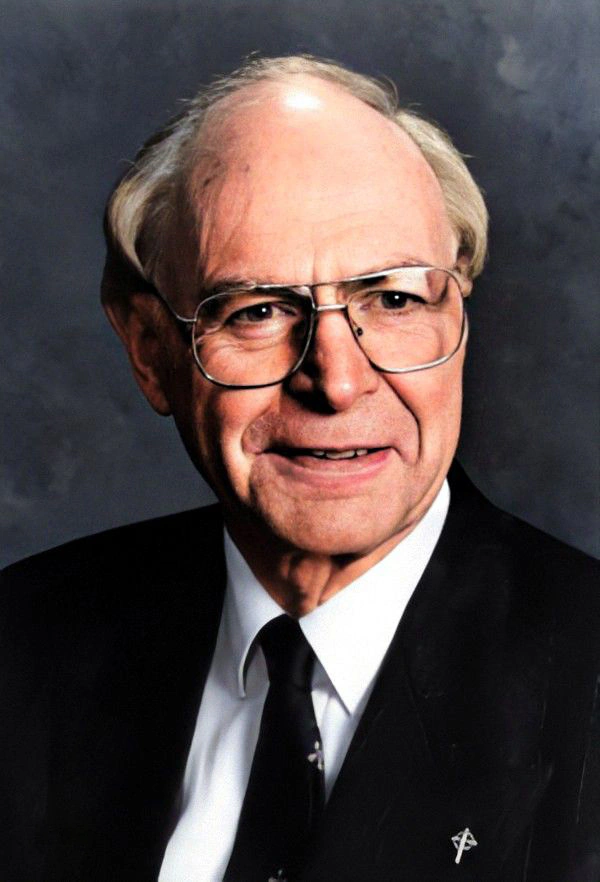
| 8 Quotes | |
| Occup. | Theologian |
| From | England |
| Born | November 29, 1924 England |
| Died | October 21, 2006 England |
| Aged | 81 years |
| Cite | |
Citation Formats
APA Style (7th ed.)
Arthur peacocke biography, facts and quotes. (2026, February 11). FixQuotes. https://fixquotes.com/authors/arthur-peacocke/
Chicago Style
"Arthur Peacocke biography, facts and quotes." FixQuotes. February 11, 2026. https://fixquotes.com/authors/arthur-peacocke/.
MLA Style (9th ed.)
"Arthur Peacocke biography, facts and quotes." FixQuotes, 11 Feb. 2026, https://fixquotes.com/authors/arthur-peacocke/. Accessed 2 Mar. 2026.
Early Life and Background
Arthur Robert Peacocke was born on 29 November 1924 in England, into a country still marked by the losses of the First World War and moving, unsteadily, toward another. His childhood and adolescence unfolded under the long shadow of total war and rationing, a social atmosphere that made public institutions - schools, laboratories, churches, civil service - feel like moral engines tasked with rebuilding a shattered civic order. For a reflective mind, that era invited two questions that never quite left him: how truth is to be trusted, and how human beings are to live when inherited certainties fracture.The postwar decades in Britain also brought a new prestige to the sciences and a sharper skepticism toward theology in elite culture. Peacocke matured in the space between those worlds. He was temperamentally empirical, wary of easy consolations, yet also drawn to the kinds of meaning claims that science, by itself, does not adjudicate. That inner tension - between intellectual rigor and existential depth - became the emotional motor of his later vocation as both scientist and theologian, and it explains the unusually public, bridge-building quality of his work.
Education and Formative Influences
Peacocke was trained first as a scientist, earning advanced degrees in the life sciences and building early credibility in biochemical research within the British academic system. He came of age professionally during a period when molecular biology was transforming the study of life and when evolutionary theory was being restated with new genetic precision. Alongside laboratory method, he absorbed a distinctively Anglican habit of argument: historically informed, wary of dogmatism, and willing to treat reason, tradition, and experience as mutually correcting sources. His eventual ordination and shift into theology did not represent an escape from science but an attempt to make theology answerable to the same discipline of evidence, coherence, and intellectual honesty that governed the lab.Career, Major Works, and Turning Points
After establishing himself in scientific research and university teaching, Peacocke increasingly devoted his career to the science-theology conversation, most visibly at Oxford where he served as Warden of the Ian Ramsey Centre and became a leading public voice for integrating evolutionary and cosmological insights into Christian doctrine. His major books - including Science and the Christian Experiment, Theology for a Scientific Age, Creation and the World of Science, and Paths from Science towards God - map a steady widening of scope: from methods of theological inquiry, to doctrines of creation, to a constructive vision in which God is understood not as a competitor to natural causes but as their enabling depth. A key turning point was his insistence that the credibility crisis of theology in modern culture required not defensive rhetoric but reform of theological imagination itself, so that doctrines could be stated in ways continuous with what the sciences disclose about time, contingency, emergence, and deep history.Philosophy, Style, and Themes
Peacocke wrote with the sober cadence of a working scientist: definitions first, then patient argument, then a willingness to revise conceptual frameworks when they no longer fit the world as known. He understood why theology had lost cultural standing, diagnosing a modern suspicion that it lacked the standards of a serious intellectual discipline: “For many decades now - and certainly during my adult life in academe - the Western intellectual world has not been convinced that theology is a pursuit that can be engaged in with intellectual honesty and integrity”. Rather than pleading for theology's status, he tried to earn it by proposing models that could withstand critique - especially models of divine action that did not require gaps in scientific explanation. His preferred constructive category was creation as an ongoing, law-governed, yet genuinely open process, compatible with evolutionary novelty and the stochastic textures of biology.At the heart of his inner life was a refusal to choose between reverence and realism. He read the sciences as narrating a world that is intrinsically temporal and unfinished: “The scientific perspective of the world, especially the living world, inexorably impresses on us a dynamic picture of the world of entities and structures involved in continuous and incessant change and in process without ceasing”. That dynamism did not, for him, evacuate God but reframed God as intimately related to natural processes without being reducible to them - a move he advanced with striking clarity: “God is creating at every moment of the world's existence in and through the perpetually endowed creativity of the very stuff of the world”. Psychologically, this is the signature of Peacocke: a mind committed to discipline and explanatory integrity, yet seeking a theology capacious enough to honor wonder without retreating into anti-intellectual refuge. He treated the doctrine of creation as the most scientifically testable in spirit - not by laboratory confirmation, but by its capacity to remain coherent as knowledge expands.
Legacy and Influence
Peacocke died on 21 October 2006, leaving behind a body of work that helped normalize, within late-20th-century Anglican and ecumenical thought, the idea that evolutionary theory and modern cosmology are not threats to Christian theology but conditions under which it must now think. He influenced generations of scholars and clergy who sought a non-combative relationship between faith and science, and he contributed enduring conceptual tools - especially his insistence on divine immanence compatible with natural causality, and his methodological demand that theology be intellectually accountable in a scientific age. In a culture tempted either to evacuate God from the world or to insert God as a rival explanation, Peacocke offered a third posture: rigorous, chastened, and still daring enough to speak of creation as a living, ongoing process.Our collection contains 8 quotes written by Arthur, under the main topics: Ethics & Morality - Science - Faith - God.
Source / external links