
Arthur Schopenhauer Biography Quotes 70 Report mistakes
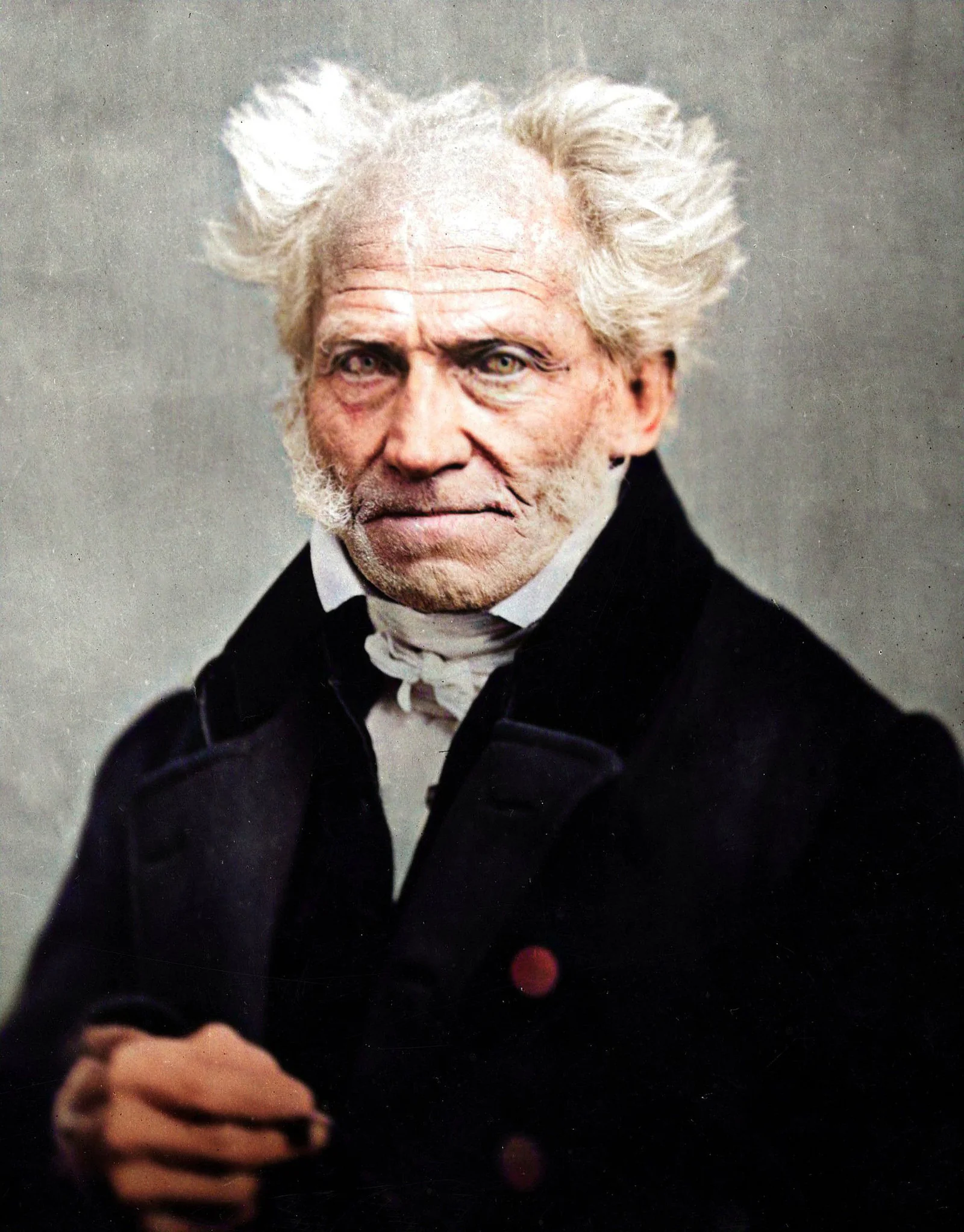
| 70 Quotes | |
| Occup. | Philosopher |
| From | Germany |
| Born | February 22, 1788 Danzig, Prussia, Germany |
| Died | September 21, 1860 Frankfurt am Main, Germany |
| Cause | Respiratory failure |
| Aged | 72 years |
| Cite | |
Citation Formats
APA Style (7th ed.)
Arthur schopenhauer biography, facts and quotes. (2026, February 1). FixQuotes. https://fixquotes.com/authors/arthur-schopenhauer/
Chicago Style
"Arthur Schopenhauer biography, facts and quotes." FixQuotes. February 1, 2026. https://fixquotes.com/authors/arthur-schopenhauer/.
MLA Style (9th ed.)
"Arthur Schopenhauer biography, facts and quotes." FixQuotes, 1 Feb. 2026, https://fixquotes.com/authors/arthur-schopenhauer/. Accessed 26 Mar. 2026.
Early Life and Background
Arthur Schopenhauer was born on 22 February 1788 in Danzig (then in the Polish-Lithuanian Commonwealth, soon contested by Prussia), into a mercantile family whose horizons were European rather than provincial. His father, Heinrich Floris Schopenhauer, was a wealthy trader with Enlightenment tastes and a volatile temperament; his mother, Johanna Schopenhauer, would later become a successful writer and salon hostess in Weimar. The household combined cosmopolitan polish with emotional friction, giving the son both a cultivated sensibility and an early suspicion that comfort and status did not purchase serenity.Political upheaval shaped his first geography. When Danzig lost its autonomy during the Napoleonic era, the family moved to Hamburg in 1793, a commercial city whose discipline and calculation left him cold. As a boy he traveled through the Netherlands, England, France, Switzerland, and Austria, absorbing languages and a comparative sense of manners, classes, and national myths. His father pressed him toward business; his mother offered a more literary world, but the marriage was strained and the home often felt like a contest of wills. Heinrich Floris died in 1805, likely by suicide, and the shock hardened Schopenhauer's conviction that the inner springs of life were darker and less rational than polite society admitted.
Education and Formative Influences
After a period of mercantile apprenticeship in Hamburg, Schopenhauer turned decisively to study, first at the University of Gottingen (1809) and then in Berlin (1811-1813), where he heard J.G. Fichte and Friedrich Schleiermacher and reacted against what he saw as rhetorical system-building. He learned rigorous skepticism from Kant, drew metaphysical daring from Plato, and found in the Upanishads and Buddhist thought a confirmation of his sense that craving is the engine of suffering. A dissertation at Jena, On the Fourfold Root of the Principle of Sufficient Reason (1813), announced his lifelong project: to map the forms of explanation without confusing them for the essence of the world.Career, Major Works, and Turning Points
His masterwork, The World as Will and Representation (1818; expanded 1844), fused Kantian limits on knowledge with a radical claim about what lies behind appearances: a blind, striving Will objectifying itself in nature and human desire. Living mostly in self-chosen solitude - in Dresden during the 1820s and later in Frankfurt - he cultivated a severe independence, reinforced by an infamous decision to lecture in Berlin in 1820 at the same hour as Hegel, an act of intellectual defiance that ended in empty benches and bitter contempt for academic fashion. For decades he was a marginal figure, writing essays later gathered as Parerga and Paralipomena (1851), whose sharp style finally reached a broad audience and, in his last years, brought him the recognition he had long predicted would arrive late.Philosophy, Style, and Themes
Schopenhauer's philosophy begins with a psychological realism: humans explain themselves with reasons, but they are moved by forces they do not choose. “A man can do what he wants, but not want what he wants”. The sentence is less a slogan than a diagnosis - freedom in action constrained by the deeper architecture of character and impulse. From this he built an ethics that prized compassion, because if individuality is a surface phenomenon of a deeper Will, then another's suffering is not alien in kind. His pessimism was not theatrical but clinical: happiness is episodic relief, while desire renews itself and converts satisfaction into restlessness.His prose, unlike the dense idealist systems he attacked, is deliberately lucid and aphoristic, designed to strike the reader as experience rather than doctrine. He distrusted prestige and the noisy marketplace of reputations, insisting that time, not applause, tests thought: “The longer a man's fame is likely to last, the longer it will be in coming”. Underneath the polemic sits a temperament tuned to transience and separation; his reflections repeatedly return to death as the horizon that gives life its pressure and its pathos: “Each day is a little life: every waking and rising a little birth, every fresh morning a little youth, every going to rest and sleep a little death”. The recurring themes - erotic compulsion, boredom, vanity, cruelty, and the rare grace of aesthetic contemplation - are framed as expressions of the Will, temporarily stilled by art, music most of all, and more enduringly quieted by ascetic restraint.
Legacy and Influence
By the time he died in Frankfurt on 21 September 1860, Schopenhauer had become a counterweight to optimistic progress narratives of the 19th century, offering instead a metaphysics of drive, illusion, and suffering that spoke to modern disillusion. His late fame fed directly into Nietzsche's early work and the broader revolt against academic idealism; his emphasis on unconscious motivation helped prepare the psychological climate in which Freud could be heard; his admiration for Indian philosophy opened European readers to non-Christian resources for ethics and self-understanding. He remains influential not because he was always right, but because he made inner life - desire, compulsion, self-deception, and compassion - central to philosophy, and wrote about it with a severity that still feels uncomfortably intimate.Our collection contains 70 quotes written by Arthur, under the main topics: Witty One-Liners - Ethics & Morality - Truth - Wisdom - Art.
Other people related to Arthur: Friedrich Nietzsche (Philosopher), Giorgio de Chirico (Artist), Bryan Magee (Author)
Frequently Asked Questions
- Arthur Schopenhauer wife: He never married.
- Arthur Schopenhauer cause of death: Respiratory failure (1860, Frankfurt).
- Arthur Schopenhauer influenced: Friedrich Nietzsche, Richard Wagner, Sigmund Freud, Leo Tolstoy, Ludwig Wittgenstein.
- Arthur Schopenhauer books: The World as Will and Representation; On the Fourfold Root of the Principle of Sufficient Reason; On the Basis of Morality; Parerga and Paralipomena; The Art of Being Right.
- Arthur Schopenhauer pronunciation: SHOH-pən-how-er (English); IPA: /ˈʃoʊpənˌhaʊər/.
- Arthur Schopenhauer philosophy: Pessimistic idealism: the world as blind will and representation; relief via art, compassion, asceticism.
- How old was Arthur Schopenhauer? He became 72 years old
Arthur Schopenhauer Famous Works
- 1851 Essays and Aphorisms (Book)
- 1851 Parerga and Paralipomena (Book)
- 1836 On the Will in Nature (Book)
- 1831 The Art of Being Right (Book)
- 1818 The World as Will and Representation (Book)
- 1813 On the Fourfold Root of the Principle of Sufficient Reason (Book)
Source / external links