
Ashley Montagu Biography Quotes 15 Report mistakes
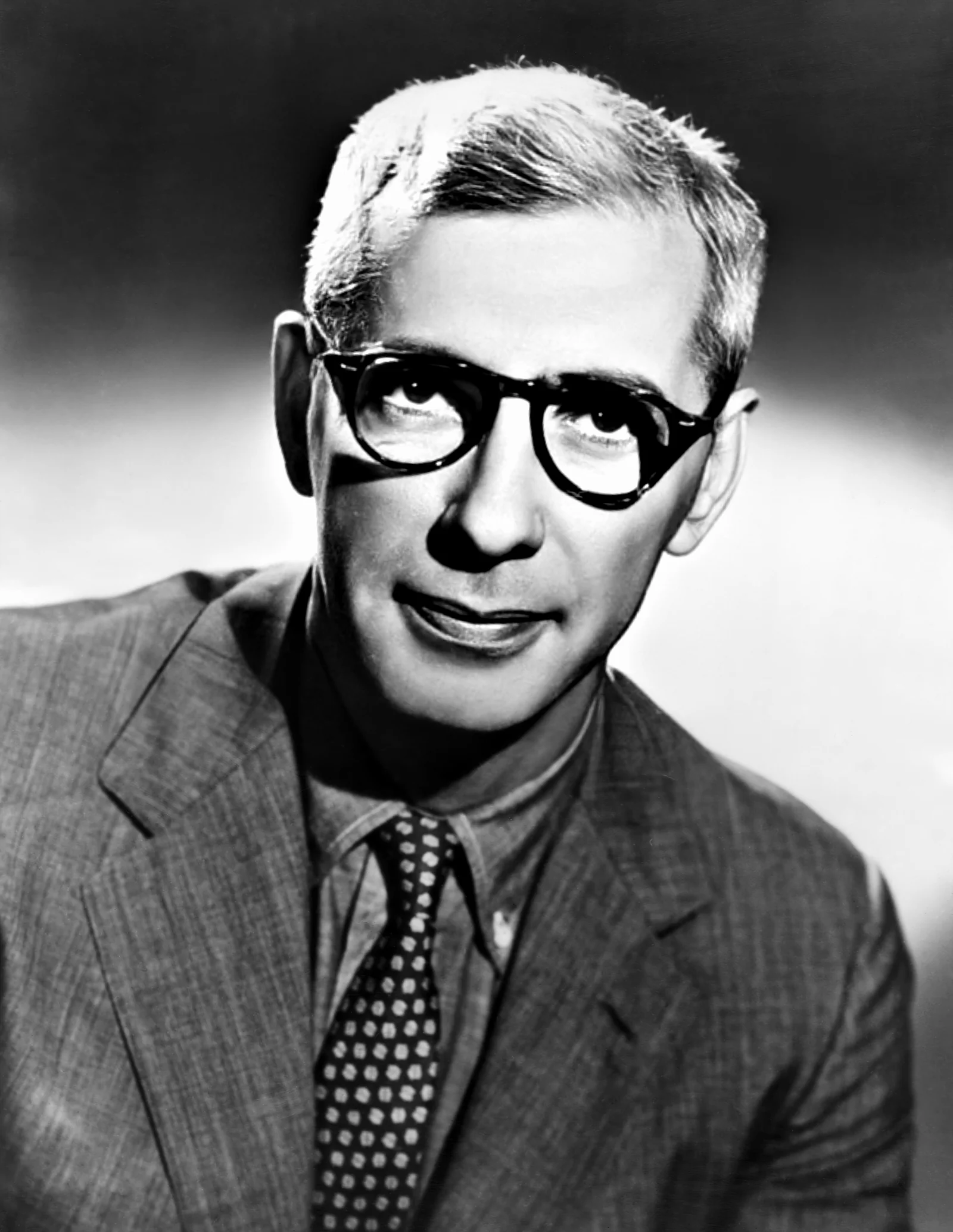
Attr: See page for author
| 15 Quotes | |
| Born as | Israel Ehrenberg |
| Occup. | Scientist |
| From | United Kingdom |
| Born | June 28, 1905 London, England |
| Died | November 26, 1999 Princeton, New Jersey, United States |
| Cause | Natural causes |
| Aged | 94 years |
| Cite | |
Citation Formats
APA Style (7th ed.)
Ashley montagu biography, facts and quotes. (2026, February 1). FixQuotes. https://fixquotes.com/authors/ashley-montagu/
Chicago Style
"Ashley Montagu biography, facts and quotes." FixQuotes. February 1, 2026. https://fixquotes.com/authors/ashley-montagu/.
MLA Style (9th ed.)
"Ashley Montagu biography, facts and quotes." FixQuotes, 1 Feb. 2026, https://fixquotes.com/authors/ashley-montagu/. Accessed 25 Mar. 2026.
Early Life and Background
Ashley Montagu was born Israel Ehrenberg on June 28, 1905, in London, the child of Orthodox Jewish immigrants from Eastern Europe, and grew up in the crowded, intensely striated world of the East End. His early years unfolded amid the aftershocks of the Victorian order and the pressures of Edwardian modernity - sweatshop labor, street politics, religious discipline, and the daily humiliations and solidarities of immigrant life. From the beginning he was both insider and observer: sensitive to the social uses of "difference", and alert to how quickly biology could be recruited as a rationale for hierarchy.He changed his name as a young man, fashioning "Ashley Montagu" as a passport into a broader intellectual public and, more privately, as an assertion that identity could be made rather than merely inherited. The psychological tension between belonging and self-invention would never leave him. It helped produce a writer with a missionary gift for popular explanation and a deep suspicion of any doctrine - racial, religious, or scientific - that claimed final authority over human worth.
Education and Formative Influences
Montagu educated himself aggressively, attending University College London and then crossing the Atlantic to train in anthropology in the United States, where he studied with leading Boasian figures and absorbed the discipline's anti-racist, culture-centered revolt against biological determinism. He completed doctoral work at Columbia University in the 1930s, in an era when anthropology was redefining itself against eugenics and when the Great Depression made questions of inequality unavoidably concrete. He also pursued medical studies later, a turn that sharpened his interest in the body not as destiny but as a site where environment, development, and care meet.Career, Major Works, and Turning Points
Montagu taught in American universities, wrote prolifically, and became one of the twentieth century's most visible humanist scientists, moving easily between academic argument and mass readership. A major turning point came with World War II and the Holocaust, which made the stakes of racial pseudoscience unmistakable; soon after, his work fed directly into UNESCO's postwar statements on race, where he argued that "race" was a social myth with damaging political uses. His books - including Man's Most Dangerous Myth: The Fallacy of Race, The Natural Superiority of Women, and The Meaning of Love - challenged orthodoxies across biology, psychology, and social policy, and his later public presence as lecturer and television guest made him an unusually durable bridge between specialist knowledge and moral debate.Philosophy, Style, and Themes
Montagu's central conviction was that science, properly practiced, should enlarge sympathy rather than shrink it. He did not oppose biology; he opposed the conversion of biological language into social verdicts. His polemical edge came from watching "reason" become a mask for cruelty, a tendency he captured with the aphorism, “Human beings are the only creatures who are able to behave irrationally in the name of reason”. For him, the lesson of the twentieth century was that intelligence without humane feeling is not progress but efficiency in harm.His style fused clarity, wit, and moral insistence, often using paradox to pry readers loose from inherited certainties. He liked to puncture absolutism with a scientist's epistemic humility: “Science has proof without any certainty. Creationists have certainty without any proof”. Underneath the debate about methods lay a biographical need - a man who had remade his own name insisting that every person deserved the space to become more than their assigned category. That ethical universalism surfaces in his insistence that “By virtue of being born to humanity, every human being has a right to the development and fulfillment of his potentialities as a human being”. Love, in his writings, was not sentimentality but a developmental requirement - the condition under which brains, selves, and societies can mature without terror.
Legacy and Influence
Montagu died on November 26, 1999, after a life spent arguing that the human sciences must answer to human consequences. He helped normalize the postwar consensus that race is not a biological essence, pressed the case for women's status as a serious scientific and moral question, and modeled a public intellectual stance in which data and compassion are not rivals. If later genetics complicated some of his formulations, the durable force of his work lies in its direction of travel: away from fatalism and toward dignity, insisting that what we call "human nature" is as much a responsibility as it is an inheritance.Our collection contains 15 quotes written by Ashley, under the main topics: Witty One-Liners - Ethics & Morality - Art - Doctor - Reason & Logic.
Ashley Montagu Famous Works
- 1981 Growing Young (Book)
- 1971 The Elephant Man: A Study in Human Dignity (Book)
- 1971 Touching: The Human Significance of the Skin (Book)
- 1953 The Natural Superiority of Women (Book)
- 1942 Man's Most Dangerous Myth: The Fallacy of Race (Book)
Source / external links