
Åsne Seierstad Biography Quotes 3 Report mistakes
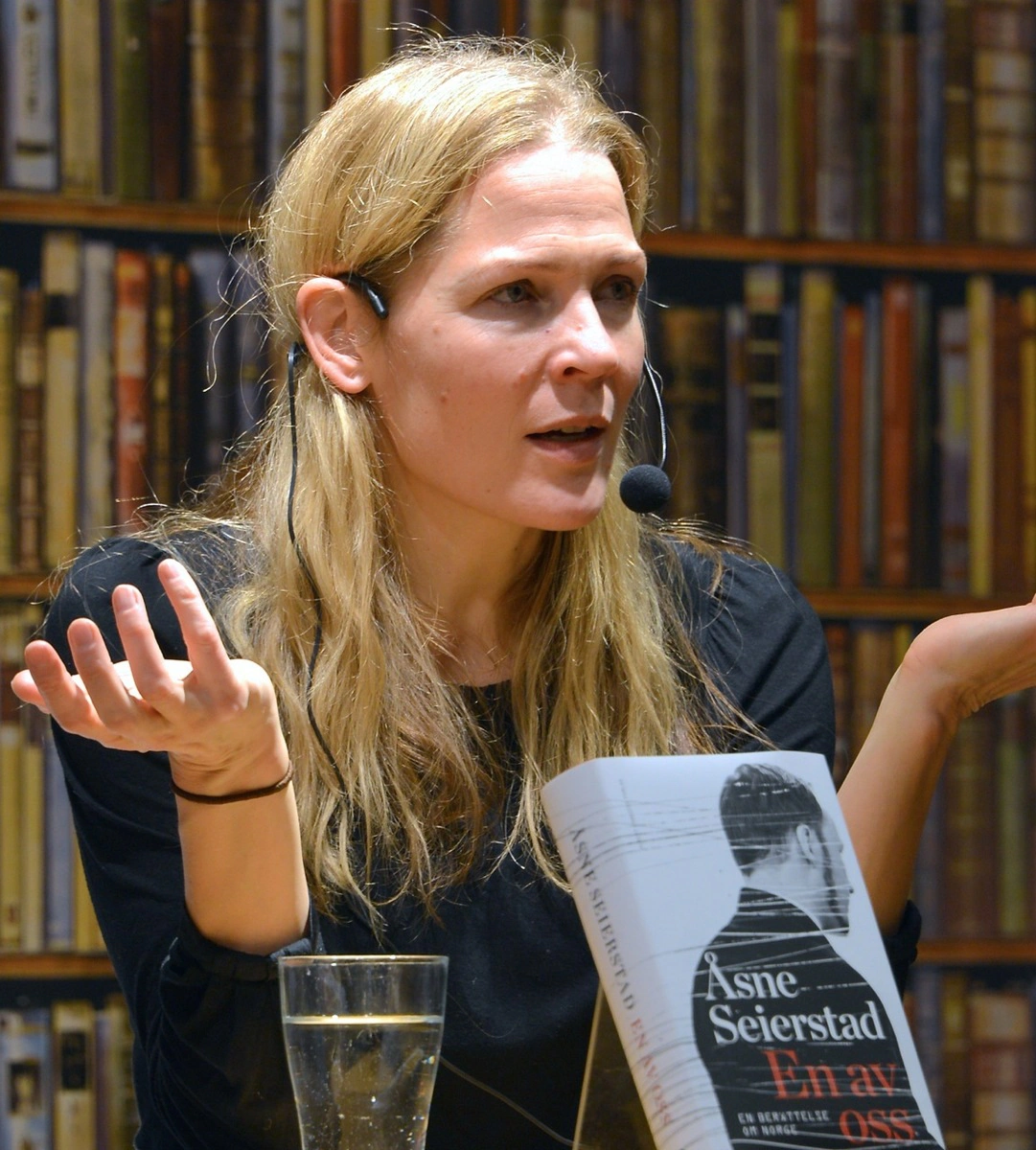
| 3 Quotes | |
| Born as | Åsne Guldahl Seierstad |
| Occup. | Journalist |
| From | Norway |
| Born | February 10, 1970 Lillehammer, Norway |
| Age | 56 years |
| Cite | |
Citation Formats
APA Style (7th ed.)
Åsne seierstad biography, facts and quotes. (2026, February 11). FixQuotes. https://fixquotes.com/authors/asne-seierstad/
Chicago Style
"Åsne Seierstad biography, facts and quotes." FixQuotes. February 11, 2026. https://fixquotes.com/authors/asne-seierstad/.
MLA Style (9th ed.)
"Åsne Seierstad biography, facts and quotes." FixQuotes, 11 Feb. 2026, https://fixquotes.com/authors/asne-seierstad/. Accessed 27 Mar. 2026.
Early Life and Background
Asne Guldahl Seierstad was born on 1970-02-10 in Norway, coming of age in a society that prized egalitarian ideals, strong public institutions, and a self-image of moral seriousness in world affairs. That contrast - between a safe, orderly homeland and the disorder of war zones - became the pressure point of her career. Norway in the late Cold War and immediate post-Cold War years was both prosperous and internationally engaged, and Seierstad would later write from places where those Nordic assumptions collapsed on contact with nationalism, state violence, and the daily improvisations of survival.From early on she gravitated toward people under strain rather than toward policy abstractions. Friends and colleagues have often described her as disciplined, self-contained, and purpose-driven - traits that read, in her work, as a determination to outlast chaos long enough to document it. Her biographies and reportage repeatedly return to the same human dilemma: how ordinary families navigate the compromises demanded by ideology, occupation, and patriarchy, and what it costs to keep a private self intact when history barges in.
Education and Formative Influences
Seierstad studied Russian and Spanish (and later worked with sources across the former Soviet sphere), training that positioned her for the post-1991 world in which Russia, the Balkans, and Central Asia became urgent story fields for European journalists. She joined Norway's NRK as a reporter and developed the habits of close listening and scene-building that would later define her literary journalism - not only who said what, but how a room felt, who sat where, what silences meant, and what fear did to the body.Career, Major Works, and Turning Points
Her early foreign reporting took her into the Balkans and the Caucasus, and she gained broader recognition for coverage from Afghanistan and Iraq in the wake of 9/11 and the 2003 invasion. Seierstad's global breakthrough came with The Bookseller of Kabul (2002; English translation 2003), a portrait of an Afghan family and a culture in uneasy transition after Taliban rule. The book's success made her a rare Scandinavian journalist with mass international readership, but it also pulled her into a defining controversy: the subjects sued in Norway over privacy and depiction. Although she ultimately prevailed in key respects, the case sharpened the ethical edge of her method and the risks of turning lived intimacy into narrative. She continued with major works including One of Us (2013), an expansive reconstruction of Anders Behring Breivik's 2011 terror attacks and the society that produced them, and The Angel of Grozny (2017), centered on Chechen activist Natalia Estemirova and the machinery of intimidation around Ramzan Kadyrov's rule.Philosophy, Style, and Themes
Seierstad writes in a hybrid form: reported fact assembled with the pacing and interiority of the novel, built from interviews, documents, and on-the-ground observation. Her style depends on proximity - shared meals, lingering in corridors, returning to the same people until their self-justifications and contradictions surface. That closeness is also her psychological wager. She treats fear as something to be managed operationally so that attention can stay outward, turning a reporter's body into a tool that must not hijack the assignment: “When I decided to stay in Iraq, I decided to take the fear out of my body and put it into a freezer”. The sentence captures a recurring dynamic in her work - not fearlessness, but compartmentalization, and the moral discomfort that comes with it.War in Seierstad is rarely only bullets and headlines; it is also gender, access, and the strange social choreography that determines who gets to witness what. She has noted the tactical advantage of being a woman in male-dominated military spaces, telling of a scene that is almost absurd in its normality amid violence: “As the only woman, I was able to sit with the officers in front, with a glass of vodka in one hand and a cucumber in the other. That's how I went to my first war”. Beneath the wit is a theme she returns to repeatedly - that reporting is often decided by such contingent permissions. Her empathy, meanwhile, is not sentimental; it is an insistence that the dead and silenced remain present through narrative labor. In the logic of witness, leaving can feel like betrayal: “If I leave, reality will devour me. Then they will all really be dead”. That line speaks to the almost devotional aspect of her craft: storytelling as resistance to erasure, and also as a way to contain trauma by giving it form.
Legacy and Influence
Seierstad helped popularize a distinctly Nordic strain of literary reportage - outwardly calm, morally intent, and structurally ambitious - in an era when global conflict and terror reshaped public attention. The Bookseller of Kabul became a touchstone for debates about the rights of subjects versus the duties of witness, while One of Us reframed political violence not as an alien eruption but as something that can grow inside a stable democracy. Across Afghanistan, Iraq, Chechnya, and Norway itself, her enduring influence lies in making systems legible through lives: not reducing people to symbols, but showing how ideology enters kitchens, bedrooms, schools, and the private negotiations that decide whether a person breaks, adapts, or resists.Our collection contains 3 quotes written by Åsne, under the main topics: Mortality - War - Fear.
Åsne Seierstad Famous Works
- 2013 One of Us: The Story of Anders Breivik and the Massacre in Norway (Book)
- 2007 The Angel of Grozny: Inside Chechnya (Book)
- 2003 One Hundred and One Days (Book)
- 2002 The Bookseller of Kabul (Book)
Source / external links