
Audre Lorde Biography Quotes 39 Report mistakes
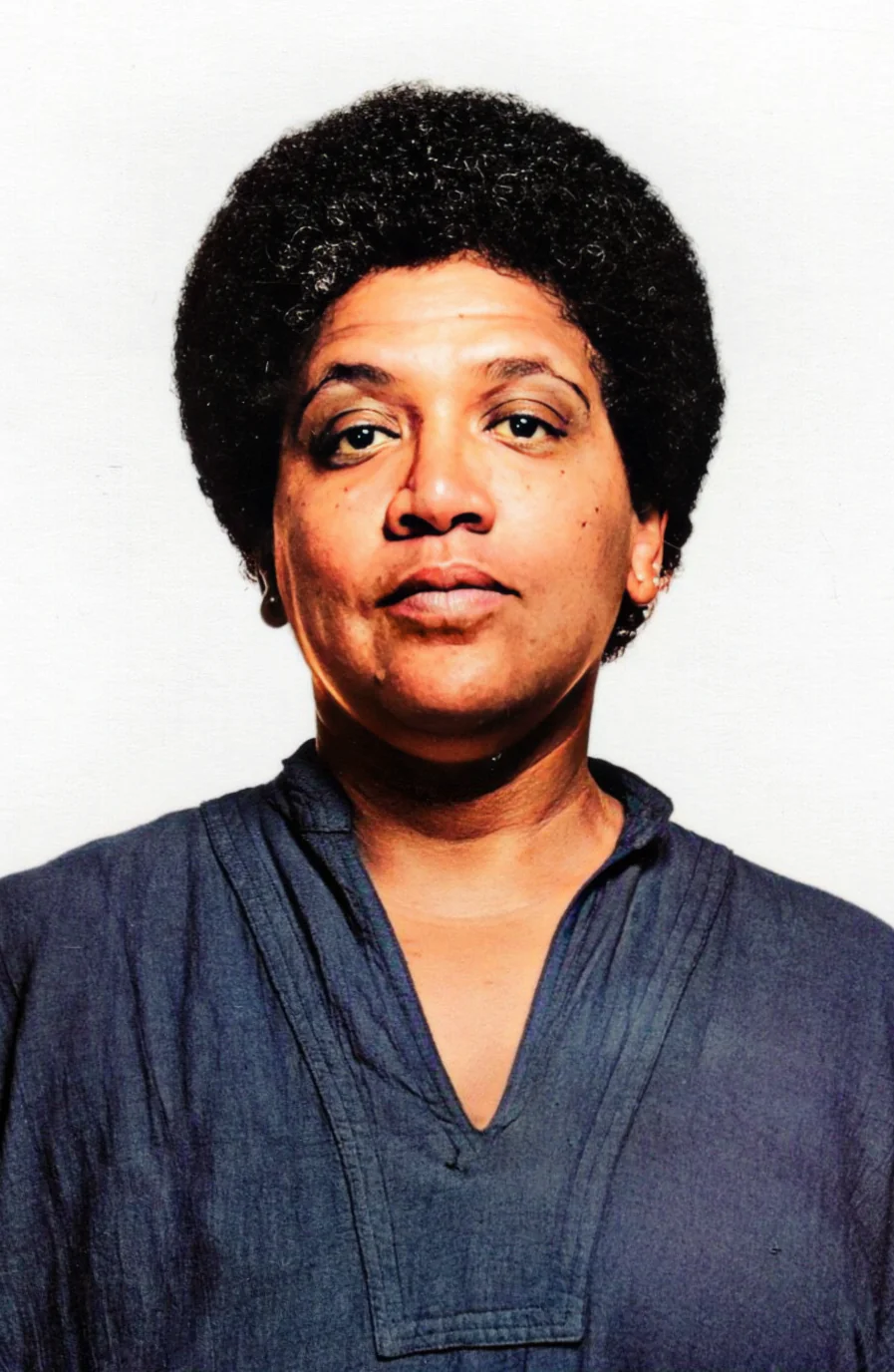
| 39 Quotes | |
| Occup. | Poet |
| From | USA |
| Born | February 18, 1934 New York City, USA |
| Died | November 17, 1992 Saint Croix, Virgin Islands, USA |
| Aged | 58 years |
| Cite | |
Citation Formats
APA Style (7th ed.)
Audre lorde biography, facts and quotes. (2026, February 2). FixQuotes. https://fixquotes.com/authors/audre-lorde/
Chicago Style
"Audre Lorde biography, facts and quotes." FixQuotes. February 2, 2026. https://fixquotes.com/authors/audre-lorde/.
MLA Style (9th ed.)
"Audre Lorde biography, facts and quotes." FixQuotes, 2 Feb. 2026, https://fixquotes.com/authors/audre-lorde/. Accessed 27 Mar. 2026.
Early Life and Background
Audre Geraldine Lorde was born on February 18, 1934, in Harlem, New York City, to parents from Grenada, Frederick Byron Lorde and Linda Gertrude Belmar Lorde. She grew up in a household shaped by West Indian propriety, color consciousness, and the hard arithmetic of survival during the Depression and wartime New York. Nearsighted and often quiet as a child, she learned early that language could be both refuge and leverage - a way to name what her surroundings insisted on misnaming.Harlem in the 1940s and 1950s gave her contradictions in close quarters: Black cultural brilliance alongside housing discrimination, policing, and the narrowing expectations placed on girls. Lorde later described childhood as a time when what could not be spoken still pressed on the body; in her own family, affection and fear could sit in the same room. That tension - between what one is and what one is permitted to admit - became the emotional engine of her later insistence that self-definition is a political act, not a private luxury.
Education and Formative Influences
Lorde attended Hunter College High School, where she began publishing poems and honing a style that fused lyric compression with argument, then went on to Hunter College (BA, 1959) and earned a Master of Library Science at Columbia University (1961). Her education also happened in cafeterias, bars, libraries, and movement spaces: she spent time in Mexico in the mid-1950s, a period she recalled as clarifying her erotic life and her sense of freedom. Poets such as Langston Hughes and the modernists, the cadences of church and street, and the lived study of race, class, gender, and desire in New York formed her into a writer who treated craft as a tool for survival.Career, Major Works, and Turning Points
Working as a librarian in New York (including at The Town School and later in public institutions), Lorde built a life that braided books, teaching, and organizing. Her poetry collections - from The First Cities (1968) and Cables to the Ace (1970) through Coal (1976) and The Black Unicorn (1978) - established her as a major voice of Black feminist and lesbian poetics, while her essays in The Cancer Journals (1980) and Sister Outsider (1984) made her a theorist of embodied politics without surrendering the heat of art. A late turning point came with her breast cancer diagnosis in the late 1970s and subsequent metastasis; she wrote illness not as inspiration porn but as a confrontation with mortality, medicine, and community. In the 1980s she deepened international ties, including significant work in West Berlin with Afro-German women that helped catalyze a new vocabulary for Black German identity; in her final years she lived in St. Croix, U.S. Virgin Islands, and continued writing until her death on November 17, 1992.Philosophy, Style, and Themes
Lorde called herself "Black, lesbian, mother, warrior, poet" - not as slogan but as a map of pressures meeting in one body. Her work returns to the cost of being rendered legible only through other peoples projections: “If I didn't define myself for myself, I would be crunched into other people's fantasies for me and eaten alive”. That sentence is psychological autobiography: it reveals a mind that experienced erasure as predation and answered it with disciplined naming. For Lorde, identity was not a badge; it was a boundary, and boundaries were what made intimacy possible rather than impossible.Her style is urgent, tactile, and argumentative, moving between incantation and instruction, love lyric and manifesto. She distrusted the false safety of withholding, insisting that fear does not disappear when unspoken: “Your silence will not protect you”. The line exposes her central ethic - that speech is not performance but self-defense and solidarity, a refusal to let the unsaid metastasize. Yet her politics were not a flattening of difference into unity; she treated difference as raw material for coalition, warning that fracture comes from denial rather than diversity: “It is not our differences that divide us. It is our inability to recognize, accept, and celebrate those differences”. Across poems and essays, the erotic becomes a theory of power, joy becomes infrastructure for trust, and anger becomes information - a signal to be translated into action rather than swallowed.
Legacy and Influence
Lorde endures as a founding architect of Black feminist thought and a patron saint of writing that refuses to choose between beauty and usefulness. Her vocabulary of self-definition, intersectional struggle, and the erotic as power shaped generations of poets, queer writers, disability and illness memoirists, and organizers building coalitions across race, gender, class, and nationality. Institutions, prizes, and curricula continue to canonize her, but her truer afterlife lives in how people speak when stakes are high: with clarity about power, tenderness about the body, and a refusal to confuse silence with safety.Our collection contains 39 quotes written by Audre, under the main topics: Motivational - Truth - Wisdom - Art - Friendship.
Other people related to Audre: Adrienne Rich (Poet), Barbara Smith (Activist)
Audre Lorde Famous Works
- 1988 A Burst of Light: Essays (Essay Collection)
- 1986 Our Dead Behind Us (Poetry Collection)
- 1984 Sister Outsider (Essay Collection)
- 1982 Zami: A New Spelling of My Name (Biomythography)
- 1980 The Cancer Journals (Memoir)
- 1978 The Black Unicorn (Poetry Collection)
Source / external links