
Auguste Lumiere Biography Quotes 1 Report mistakes
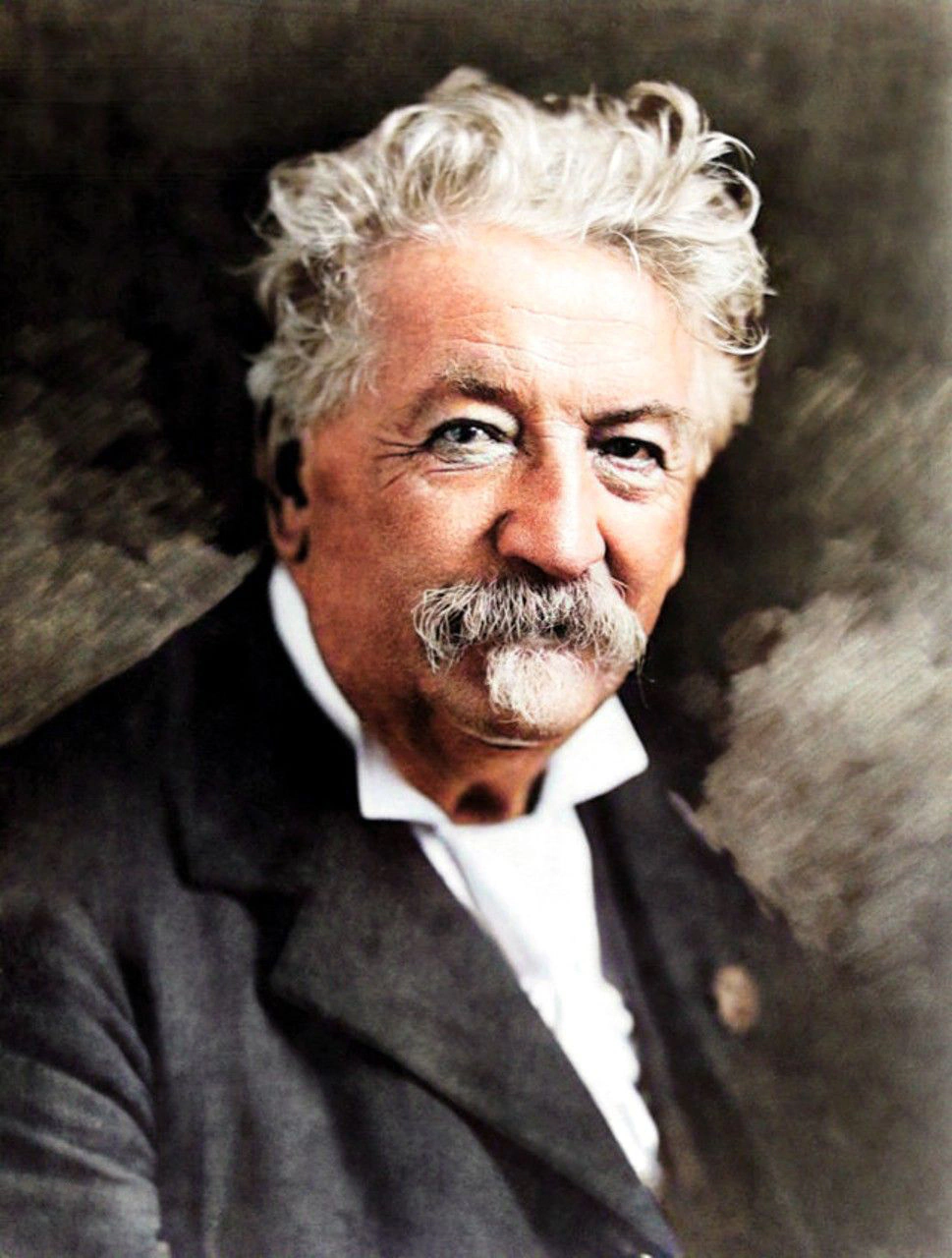
| 1 Quotes | |
| Occup. | Director |
| From | France |
| Born | October 5, 1864 Besançon, France |
| Died | June 6, 1948 |
| Aged | 83 years |
| Cite | |
Citation Formats
APA Style (7th ed.)
Auguste lumiere biography, facts and quotes. (2026, February 11). FixQuotes. https://fixquotes.com/authors/auguste-lumiere/
Chicago Style
"Auguste Lumiere biography, facts and quotes." FixQuotes. February 11, 2026. https://fixquotes.com/authors/auguste-lumiere/.
MLA Style (9th ed.)
"Auguste Lumiere biography, facts and quotes." FixQuotes, 11 Feb. 2026, https://fixquotes.com/authors/auguste-lumiere/. Accessed 12 Feb. 2026.
Early Life and Background
Auguste Marie Louis Nicolas Lumiere was born on October 5, 1864, in Besancon, in eastern France, into a household where craft and ambition ran together. His father, Antoine Lumiere, was a painter turned photographer-entrepreneur, the sort of provincial modernizer drawn to the new chemistry of images. The family moved to Lyon, a fast-growing industrial city, where workshops, factories, and the commercial middle class created a ready audience for technical novelty.Within that milieu, Auguste grew up with an experimental temperament: less the showman than the methodical builder who could turn a clever idea into a reliable apparatus. The Franco-Prussian War and the later Third Republic shaped the era of his adolescence - a France intent on scientific prestige and industrial competitiveness. In Lyon, photography was not a parlor trick but a business, and the young Lumiere learned early that images could be manufactured, standardized, and sold.
Education and Formative Influences
Auguste and his younger brother Louis were trained in the practical sciences rather than in the fine arts, learning chemistry, optics, and mechanics through technical schooling in Lyon and the daily discipline of their father's photographic enterprise. Antoine encouraged them to treat invention as a commercial and experimental problem at once: improve sensitivity, reduce costs, stabilize processes, and above all make devices that could survive repeated use by ordinary operators. The brothers absorbed the late-19th-century European fascination with chronophotography and motion studies, from which the idea of animating still images became a solvable engineering question.Career, Major Works, and Turning Points
With Louis as the principal engineer and Auguste as the organizer, tester, and industrial strategist, the Lumiere brothers built a formidable photographic-plate business in Lyon before turning to motion pictures. In 1895 they finalized the Cinematographe, a compact camera-printer-projector that used 35mm film and an intermittent mechanism, making it portable enough for location shooting and practical exhibition. Auguste oversaw production discipline and the scaling of operations as short actuality films were shot and circulated: the now-iconic "La Sortie de l'usine Lumiere a Lyon" and "L'Arrivee d'un train en gare de La Ciotat" helped define cinema as a public event. A decisive turning point followed quickly - rather than pursuing long-term domination of entertainment, the brothers shifted attention back toward industrial research and medical-photographic interests, leaving others to build narrative cinema and studio empires.Philosophy, Style, and Themes
Auguste Lumiere's public posture toward cinema was famously restrained, almost austere, and it reveals a psychology shaped by the laboratory more than the theater. He could sound like a man wary of his own success, reducing a world-changing medium to a provisional experiment: "My invention, (the motion picture camera), can be exploited... as a scientific curiosity, but apart from that it has no commercial value whatsoever". Read literally, the sentence misjudges the market; read biographically, it shows a temperament that preferred controllable variables to the unruly appetites of mass culture, and that trusted utilitarian proof over speculative hype.That attitude helps explain the Lumiere style: brief, observational, and anchored in ordinary space - workers leaving a factory, a train arriving, a street corner alive with small incidents. The early films treat the camera as a measuring instrument that records modern life with minimal intrusion. Auguste, who thrived on process and repeatability, gravitated toward the "actuality" as a kind of visual experiment: hold the frame steady, let the world perform itself, and learn what the machine can capture. The themes are modernity without melodrama - movement, crowds, labor, leisure - with the quiet implication that the new century would be understood through devices that could register time itself.
Legacy and Influence
Although later directors pushed cinema toward narrative complexity, the Lumiere model - portable apparatus, location shooting, attention to everyday reality - became a permanent pillar of film language, resurfacing in documentary practice and neorealist aesthetics. Auguste Lumiere's enduring influence lies as much in industrial method as in artistic authorship: he helped turn moving pictures from a clever demonstration into a reproducible technology that could be deployed anywhere. His skepticism about commercial destiny, paradoxically, underscores how disruptive the Cinematographe was - an invention so potent that even its makers initially tried to contain it within the boundaries of science and industry.Our collection contains 1 quotes written by Auguste, under the main topics: Technology.
Source / external links