
Auguste Rodin Biography Quotes 15 Report mistakes
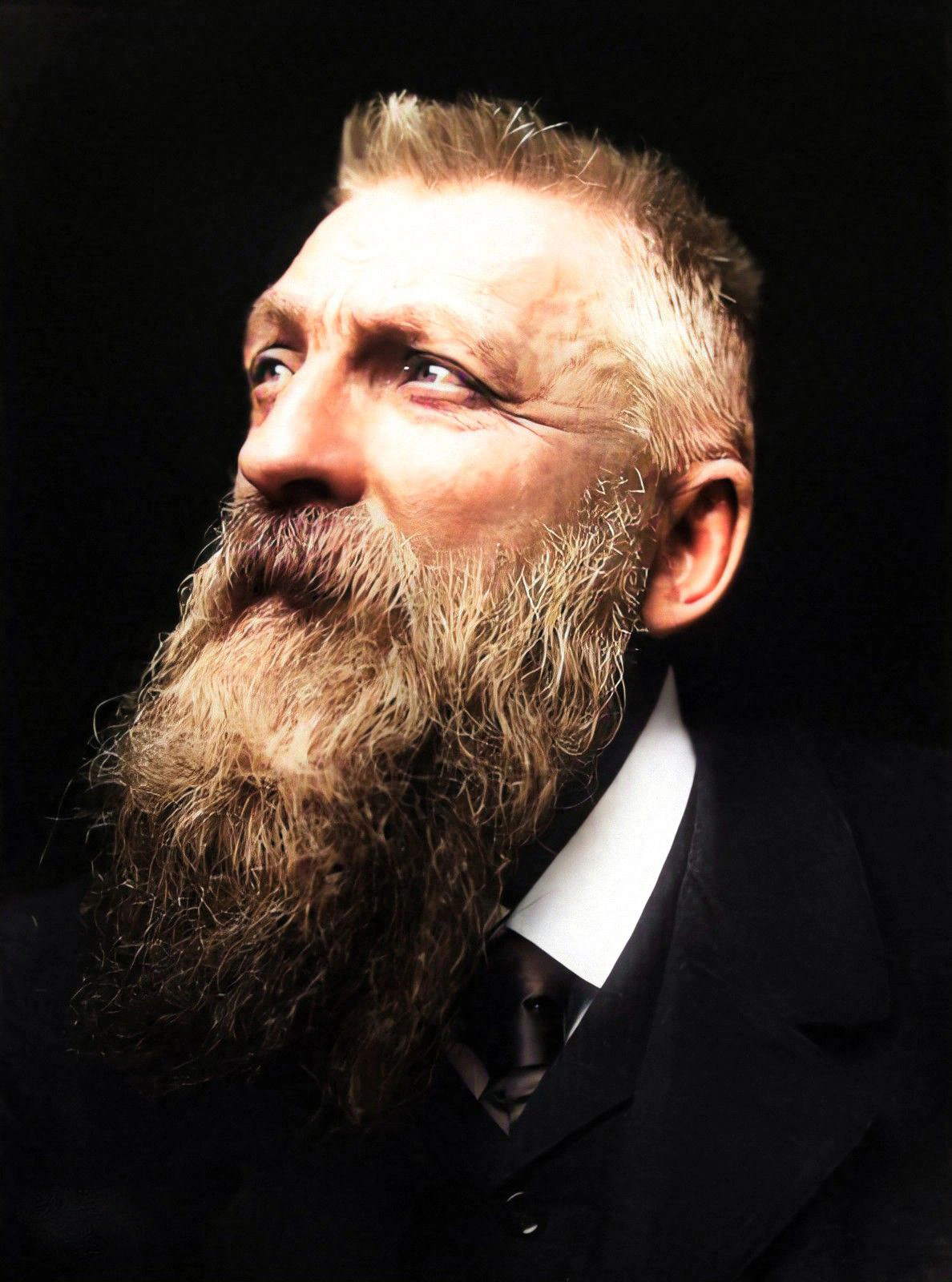
Attr: George Charles Beresford
| 15 Quotes | |
| Born as | François Auguste René Rodin |
| Occup. | Sculptor |
| From | France |
| Born | November 12, 1840 Paris, France |
| Died | November 17, 1917 Meudon, France |
| Cause | Complications of influenza |
| Aged | 77 years |
| Cite | |
Citation Formats
APA Style (7th ed.)
Auguste rodin biography, facts and quotes. (2026, February 11). FixQuotes. https://fixquotes.com/authors/auguste-rodin/
Chicago Style
"Auguste Rodin biography, facts and quotes." FixQuotes. February 11, 2026. https://fixquotes.com/authors/auguste-rodin/.
MLA Style (9th ed.)
"Auguste Rodin biography, facts and quotes." FixQuotes, 11 Feb. 2026, https://fixquotes.com/authors/auguste-rodin/. Accessed 4 Mar. 2026.
Early Life and Background
Francois Auguste Rene Rodin was born on November 12, 1840, in Paris, in a France still haunted by revolution and remade by modernity. His father, Jean-Baptiste Rodin, was a police clerk; his mother, Marie Cheffer, brought rural piety into a cramped urban life. Rodin grew up near the working neighborhoods of the capital as Baron Haussmanns renovations began to carve new boulevards through old streets, a collision of tradition and force that later echoed in his art: bodies that look excavated, unfinished, and yet emphatically alive.As a boy he was quiet, nearsighted, and observant, drawn to drawing more than to rhetoric or school prizes. The early death of his beloved sister Maria in 1862 struck him with guilt and depression and briefly pushed him toward religious life; he entered the Congregation of the Blessed Sacrament but was urged out by superiors who recognized that his vocation was visual, not clerical. That brush with devotion never left him: it sharpened his sense that flesh, suffering, and grace could occupy the same figure without canceling one another.
Education and Formative Influences
Denied entry to the Ecole des Beaux-Arts after repeated attempts, Rodin trained at the Petite Ecole (Ecole Imperiale Speciale de Dessin et de Mathematiques) under Horace Lecoq de Boisbaudran, learning to draw from memory and to trust the compression of lived observation. He supported himself as a decorative craftsman, modeling ornaments and architectural sculpture, a discipline that taught him speed, surface, and the eloquence of fragments. In the 1870s he traveled in Belgium for work, then to Italy in 1875-1876, where Michelangelo and Donatello confirmed for him that truth could be muscular, irregular, and spiritually charged rather than polished into academic calm.Career, Major Works, and Turning Points
Rodins first major scandal and breakthrough came with The Age of Bronze (1877), accused of being cast from life because its naturalism unsettled academic expectations; the controversy forced him to defend close study as artistry, not trickery. A commission in 1880 for a monumental portal, The Gates of Hell, became his lifelong quarry, spawning independent masterpieces: The Thinker, The Kiss, and countless tormented studies that made process visible. He followed with The Burghers of Calais (modeled 1884-1889, installed 1895), refusing heroic elevation in favor of collective anguish, and with monuments to Victor Hugo and Balzac that were attacked for their roughness and psychological daring. His long, complex partnership with fellow sculptor Camille Claudel sharpened his studio practice and his emotional life; their intimacy and rupture coincided with some of his most searching work. By the 1890s and 1900s he was celebrated internationally, working from his Paris studio at Meudon, producing marbles, bronzes, and drawings that treated the human body as both document and prophecy. He married Rose Beuret in January 1917 after decades together; she died weeks later, and Rodin died on November 17, 1917, during the First World War, leaving his collections to the French state as the foundation for the Musee Rodin.Philosophy, Style, and Themes
Rodins sculpture begins where academic finish ends: in the tremor of skin, the torsion of a back, the moment a gesture becomes a confession. He worked by modeling in clay, recombining figures, enlarging, reducing, and isolating parts, insisting that meaning could live in a hand, a shoulder, or a torso. He saw nature not as a catalogue of ideal proportions but as a reservoir of expressive facts, and his realism was never merely optical. “To the artist there is never anything ugly in nature”. That sentence is less a slogan than a psychological key: Rodin trained himself to look past social disgust and to find, in age, strain, and deformity, the same dignity he found in youth.His modernity also lay in humility before what already exists - a belief that the sculptor uncovers rather than manufactures life. “I invent nothing, I rediscover”. The claim describes his method (patient observation, constant revision) and his inner life: a man haunted by the sense that forms precede him, that he is responsible for doing them justice. Yet the rediscovery is never neutral; in The Gates of Hell and the late fragments, bodies seem wrested from material, as if the act of seeing costs the artist something. “The artist must create a spark before he can make a fire and before art is born, the artist must be ready to be consumed by the fire of his own creation”. Rodin lived that combustion in public commissions, private love, and relentless labor, producing figures that feel unfinished because they are faithful to becoming.
Legacy and Influence
Rodin reshaped sculpture by making process, texture, and psychological intensity legitimate subjects in themselves, clearing a path toward modernism while remaining anchored in the observed body. He influenced Constantin Brancusi (even through Brancusis later rejection of him), Antoine Bourdelle, Aristide Maillol, and generations of figurative sculptors who learned from his fragments and his dramatic surfaces. His bequest created the Musee Rodin in Paris and preserved The Gates of Hell as a map of his imagination - a work that, like his career, treats the human figure as a site where history, desire, shame, and courage meet and leave permanent marks.Our collection contains 15 quotes written by Auguste, under the main topics: Ethics & Morality - Art - Nature - Learning from Mistakes.
Other people related to Auguste: Camille Claudel (Sculptor), Octave Mirbeau (Writer), Paul Claudel (Dramatist)
Frequently Asked Questions
- Auguste Rodin family: Rodin was born to a family with modest means, and he had a sister named Maria. He had a son named Auguste-Eugène Beuret with Rose Beuret.
- Auguste Rodin drawings: Rodin's drawings include a variety of sketches and studies, often focusing on the human form and movement.
- Auguste Rodin Wife: Auguste Rodin married Rose Beuret, who had been his lifelong companion.
- Where did Auguste Rodin live: Rodin lived in Paris, France, for most of his life, and later at the Villa des Brillants in Meudon.
- What is Auguste Rodin best known for: Rodin is best known for his influential sculptures, particularly 'The Thinker' and 'The Kiss'.
- Auguste Rodin horse: Auguste Rodin created an equestrian monument called 'Monument to the Burghers of Calais,' which features horse-themed elements.
- How did Auguste Rodin die: Auguste Rodin died of complications from influenza.
- How old was Auguste Rodin? He became 77 years old
Source / external links