
Augusto Roa Bastos Biography Quotes 4 Report mistakes
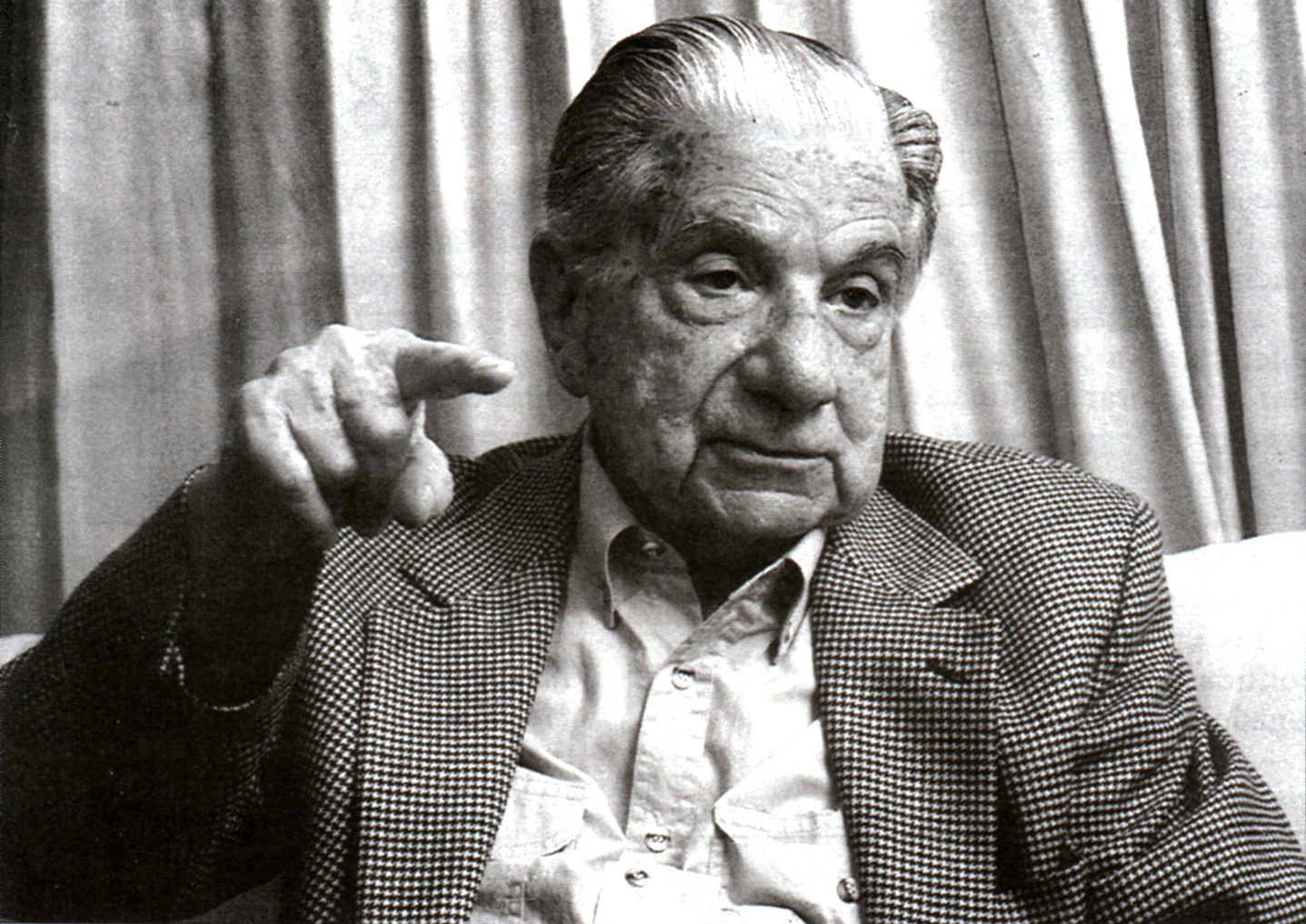
| 4 Quotes | |
| Occup. | Novelist |
| From | Paraguay |
| Born | June 13, 1917 Asunción, Paraguay |
| Died | April 26, 2005 Asunción, Paraguay |
| Aged | 87 years |
| Cite | |
Citation Formats
APA Style (7th ed.)
Augusto roa bastos biography, facts and quotes. (2026, February 11). FixQuotes. https://fixquotes.com/authors/augusto-roa-bastos/
Chicago Style
"Augusto Roa Bastos biography, facts and quotes." FixQuotes. February 11, 2026. https://fixquotes.com/authors/augusto-roa-bastos/.
MLA Style (9th ed.)
"Augusto Roa Bastos biography, facts and quotes." FixQuotes, 11 Feb. 2026, https://fixquotes.com/authors/augusto-roa-bastos/. Accessed 23 Mar. 2026.
Early Life and Background
Augusto Roa Bastos was born on June 13, 1917, in Asuncion, Paraguay, but his imaginative homeland formed in the countryside: Iturbe and the Guaira region, where Guarani speech, oral storytelling, and the textures of rural labor shaped his ear. Paraguay in his youth still lived in the long shadow of the War of the Triple Alliance and the dictatorship of Jose Gaspar Rodriguez de Francia, with political life marked by militarism, oligarchic parties, and periodic repression. From the beginning, Roa Bastos absorbed the paradox that would define his work: a small nation with a vast, violent history and a bilingual culture whose deepest truths were often carried in the cadence of another tongue.His adolescence coincided with the Chaco War (1932-1935) between Paraguay and Bolivia, a conflict fought as much by peasant conscripts as by generals. Roa Bastos served as a young soldier and later worked with wartime communications, experiences that gave him a lifelong mistrust of official rhetoric and a close knowledge of fear, obedience, and rumor. The war did not simply supply subject matter; it trained him to hear how power edits reality and how trauma returns as fragments - the raw material of his later narrative architecture.
Education and Formative Influences
Educated in Paraguay during a period when institutions were fragile and censorship recurrent, he gravitated early toward journalism, theater, and translation as practical schools of language. He read the Spanish classics and modern Latin American narrative, but his most decisive influence was the collision between written Spanish and spoken Guarani - a living reminder that national identity is never singular. The bilingual environment sharpened his sense that history is narrated by competing idioms, and that literature, to be honest, must register both the prestige language of power and the intimate language of the people.Career, Major Works, and Turning Points
After the war he entered Paraguayan cultural life as a writer and journalist, then lived through the cycles of coups and repression that culminated in Alfredo Stroessner's dictatorship (1954-1989). Exile became his central biographical turning point: he settled mainly in Buenos Aires from the late 1940s, working in publishing and writing scripts, stories, and essays while Paraguay hardened into a police state. In 1960 he published the story collection "El trueno entre las hojas" (The Thunder Among the Leaves), a landmark of social realism and moral fury; in 1974 he released his masterwork, the novel "Yo el Supremo" (I, the Supreme), a radical reimagining of Francia that fused archival parody, monologue, footnote, and political theology. Later works such as "Hijo de hombre" (Son of Man, Spanish publication 1960) and the trilogy completed by "El fiscal" (The Prosecutor, 1993) widened his inquiry into martyrdom, revolution, and the afterlife of tyranny. International recognition came steadily, crowned by the Premio Cervantes in 1989, and after Stroessner fell he returned to Paraguay, living between Asuncion and France until his death on April 26, 2005.Philosophy, Style, and Themes
Roa Bastos approached the self with suspicion, not as modesty but as an ethical method in a country where autobiography could become propaganda. His stance is captured in the aphorism, “Anyone who attempts to relate his life loses himself in the immediate. One can only speak of another”. In his fiction, this becomes a dramaturgy of masks: dictators write decrees that read like confessions, rebels speak in borrowed slogans, and narrators expose their own distortions. The point is not to deny interiority, but to show how interior life is colonized by public language - how a citizen learns to think in the syntax of the regime.His style is therefore polyphonic and adversarial: Spanish prose pressured by Guarani rhythms, documents sabotaged by marginalia, memories interrupted by counter-memories. He returns obsessively to the failures of remembrance, to the way words outlive the experiences they claim to contain: “What happens is that your wretched memory remembers the words and forgets what's behind them”. "Yo el Supremo" stages this crisis as a political problem - the dictator tries to monopolize the archive, but the archive breeds dissenting annotations. Across his work, violence is not only physical but semiotic: names, slogans, and schoolbook histories become instruments of coercion, and literature becomes a form of witness that refuses to let language settle into official comfort.
Legacy and Influence
Roa Bastos endures as Paraguay's most influential modern novelist and one of Latin America's great anatomists of dictatorship, comparable in ambition to the Boom generation while remaining fiercely anchored in Paraguayan history and bilingual culture. His innovations in documentary fiction and his skeptical treatment of the archive helped shape later "dictator novels" and historical metafiction across the region, offering a model for how to write about power without reproducing its certainties. By making tyranny a problem of language as much as of guns, he left writers and readers a durable lesson: that national memory must be contested sentence by sentence, in the very words that once tried to erase it.Our collection contains 4 quotes written by Augusto, under the main topics: Wisdom.
Augusto Roa Bastos Famous Works
- 1974 I The Supreme (Novel)
- 1960 Son of Man (Novel)
- 1953 The Burning Plain and Other Stories (Short Stories Collection)
Source / external links