
Austin Dobson Biography Quotes 5 Report mistakes
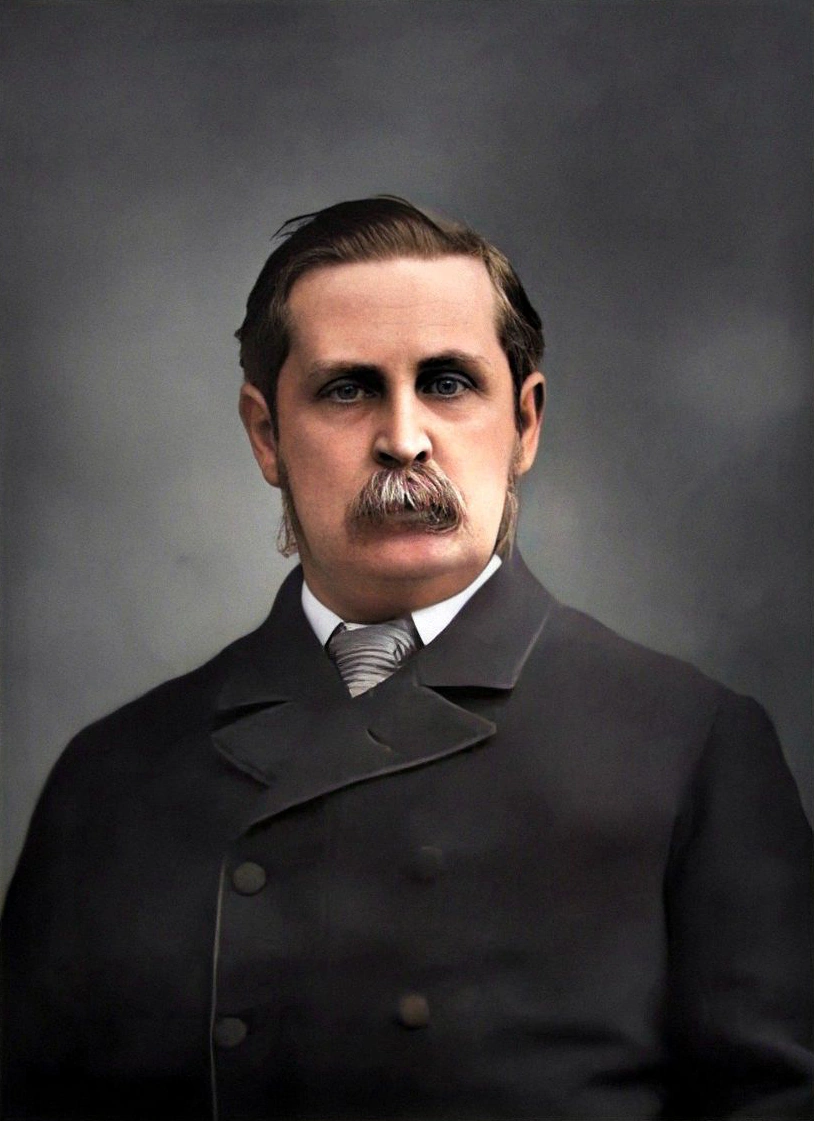
| 5 Quotes | |
| Occup. | Celebrity |
| From | England |
| Born | August 19, 1912 |
| Died | March 13, 1963 |
| Aged | 50 years |
| Cite | |
Citation Formats
APA Style (7th ed.)
Austin dobson biography, facts and quotes. (2026, February 11). FixQuotes. https://fixquotes.com/authors/austin-dobson/
Chicago Style
"Austin Dobson biography, facts and quotes." FixQuotes. February 11, 2026. https://fixquotes.com/authors/austin-dobson/.
MLA Style (9th ed.)
"Austin Dobson biography, facts and quotes." FixQuotes, 11 Feb. 2026, https://fixquotes.com/authors/austin-dobson/. Accessed 13 Feb. 2026.
Early Life and Background
Austin Dobson was an English poet and man of letters born in Plymouth, Devon, on January 18, 1840, the son of an army surgeon. His childhood was shaped by the itinerant logic of military service and by the texture of port cities and provincial posts - settings that trained his ear for everyday speech and his eye for social ritual. That early exposure to mixed ranks and manners later fed his gift for miniature scenes: flirtations overheard, reputations made and unmade, the bittersweet comedy of people trying to behave.Ill health and family circumstance meant long stretches of reading and indoor observation, a temperament that ran less toward public declamation than toward the private theatre of memory. Even as Victorian England accelerated - railways, factories, expanding newspapers, the noisy confidence of empire - Dobson gravitated to the small, the shaped, the recoverable: the anecdote, the epigram, the carefully turned stanza. The distance between the era's public machinery and his inward preference for intimacy would become one of the quiet tensions animating his career.
Education and Formative Influences
Dobson was educated at the High School in Strasbourg, an experience that deepened his sense of Europe as a storehouse of style and helped direct him toward the French eighteenth century that later became his imaginative homeland. He read widely in English verse and in French writers and memoirists, absorbing the poise of the salon and the precision of the chanson; at the same time, the Victorian cult of earnestness pressed on him from the other side, sharpening his resolve to make lightness serious and craft its own kind of truth.Career, Major Works, and Turning Points
In 1856 he entered the Board of Trade in London and remained a civil servant for decades, rising steadily while writing in the margins of official life - a double existence that suited his controlled temperament. His literary breakthrough came with Vignettes in Rhyme (1873) and especially Proverbs in Porcelain (1877), followed by Old-World Idylls (1883) and At the Sign of the Lyre (1885), books that refined a recognizable Dobson mode: graceful narrative lyrics, conversational wit, and period pastiche rendered with modern psychological tact. He also wrote influential biographies and critical studies of figures such as Henry Fielding and William Hogarth, works that were not mere scholarship but extensions of his aesthetic allegiance to the Georgian and early Romantic worlds. The turning point of his later life was not a scandal or manifesto but a consolidation - his verse became a standard for polished "light" poetry, and his retirement from the civil service allowed a fuller public literary presence, though never a loudly polemical one.Philosophy, Style, and Themes
Dobson's inner life reads as a disciplined sensibility guarding tenderness with technique. His poems often locate feeling in the act of making - in the tightening of a rhyme, the control of tone, the acceptance that emotion becomes shareable only when shaped. Hence his characteristic self-deprecation about form: "I intended an Ode, And it turned to a Sonnet". The joke is also a confession. Grandeur threatens to sprawl, so he chooses the sonnet's small room, where private emotion can be spoken without shouting.His recurring themes are transience, social performance, and the melancholy behind elegance. Love in Dobson is rarely a conquering blaze; it is a late realization, a missed cue, a vanishing warmth glimpsed after it has passed: "Love comes unseen; we only see it go". That line captures his psychological bias toward retrospection - the sense that experience is most legible when it is already leaving. Even his celebrations carry an undertow of urgency, the moral not of self-improvement but of attention, of paying full tribute to beauty before habit dulls it: "Look thy last on all things lovely, Every hour - let no night Seal thy sense in deathly slumber Till to delight Thou hast paid thy utmost blessing". In an industrial century that prized quantity and speed, Dobson defended the cultivated instant, the refined perception, and the craft that preserves it.
Legacy and Influence
Dobson became one of the defining English verse craftsmen of the late Victorian and Edwardian imagination: a poet who proved that lightness could carry weight, and that comedy could coexist with elegy. He influenced later writers of formal, witty lyric - from the minor masters of drawing-room verse to twentieth-century poets who returned to stanzaic discipline as a modern option. His critical biographies helped keep Fielding, Hogarth, and an eighteenth-century sense of proportion vivid for new readers, while his own poems remain touchstones for anyone seeking the art of saying much in little: a reminder that polish is not evasion, but a way of telling the truth without bruising it.Our collection contains 5 quotes written by Austin, under the main topics: Mortality - Live in the Moment - Poetry - Heartbreak.
Other people related to Austin: Henry Austin Dobson (Poet)
Source / external links