
Austin O'Malley Biography Quotes 18 Report mistakes
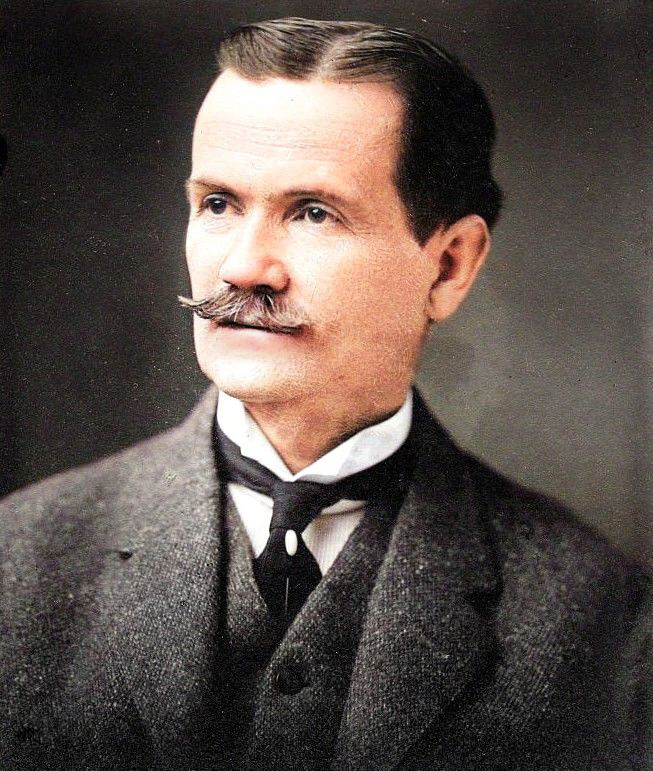
Attr: Bain, Public domain
| 18 Quotes | |
| Occup. | Physicist |
| From | USA |
| Born | October 1, 1858 |
| Died | 1932 |
| Cite | |
Citation Formats
APA Style (7th ed.)
Austin o'malley biography, facts and quotes. (2026, February 11). FixQuotes. https://fixquotes.com/authors/austin-omalley/
Chicago Style
"Austin O'Malley biography, facts and quotes." FixQuotes. February 11, 2026. https://fixquotes.com/authors/austin-omalley/.
MLA Style (9th ed.)
"Austin O'Malley biography, facts and quotes." FixQuotes, 11 Feb. 2026, https://fixquotes.com/authors/austin-omalley/. Accessed 7 Mar. 2026.
Early Life and Background
Austin O'Malley was born on October 1, 1858, in the United States, into a Catholic Irish-American milieu shaped by post-Famine migration and the steady climb of immigrant families into professional life. His earliest decades unfolded amid the Reconstruction aftermath and the Gilded Age's sharp contrasts - scientific optimism on one hand, urban poverty and machine politics on the other - a civic atmosphere that would later sharpen his habit of moral aphorism and social diagnosis.Although later labeled a physicist in some popular summaries, O'Malley is more securely placed among physician-writers and essayists who drew authority from medical training and a disciplined, observational cast of mind. The private intensity in his best lines suggests a temperament alert to human self-deception, yet reluctant to sermonize directly; he preferred the scalpel of wit to the cudgel of polemic, and he treated ordinary motives as data to be read with clinical patience.
Education and Formative Influences
O'Malley trained in medicine in an era when American professionalization was accelerating and laboratory methods were transforming both hospitals and universities; the physician's habit of note-taking, classification, and diagnostic inference became his literary method. He absorbed not only medical science but also the older humanist tradition common among late-19th-century doctors - Latin tags, moral philosophy, and Catholic devotional practice - which helped him write with a blend of empirical sobriety and metaphysical insistence that life had meaning beyond its measurable symptoms.Career, Major Works, and Turning Points
By the turn of the century O'Malley had become known less for technical research than for the compact essays and maxims he published and recirculated in magazines and later collections, a form suited to an age of newspapers, public lectures, and rapid argument. His reputation rests chiefly on the epigrammatic books associated with his name, including widely quoted collections such as Thoughts of a Psychiatrist, where professional vocabulary is repurposed for moral psychology and civic critique. The crucial turning point was his choice to treat the doctor's authority as a literary lens: instead of writing case histories, he wrote diagnoses of habits - resentment, vanity, credulity, and piety - giving readers the feeling of being recognized, not merely instructed.Philosophy, Style, and Themes
O'Malley's inner life reads as a tug-of-war between spiritual aspiration and an unsentimental appraisal of what people actually do. His spirituality is practical rather than ornamental, suspicious of performative religion and self-exculpating emotion; “Practical prayer is harder on the soles of your shoes than on the knees of your trousers”. That sentence exposes the engine of his moral psychology: he distrusts words that cost nothing, and he measures sincerity by consequences, effort, and changed behavior.His style is diagnostic aphorism - quick, humorous, and edged with a clinician's impatience for rationalization. He warns against reflexive retaliation, not as saintly counsel but as behavioral economics: “Revenge is often like biting a dog because the dog bit you”. The metaphor suggests how he saw anger: self-harming, contagious, and oddly proud of its own irrationality. Yet he also framed suffering within a Catholic-inflected metaphysics of hope, especially when confronting fear and uncertainty; "When walking through the "valley of shadows“, remember, a shadow is cast by a Light”. In that turn, his psychology becomes pastoral - pain is real, but it is not final, and endurance is more than grim stoicism.
Legacy and Influence
O'Malley's enduring influence is less a single discovery than a portable way of thinking: he compressed the authority of the professional class into sentences short enough to travel by memory, quotation columns, and later anthologies. In the early-20th-century United States - an age of reform movements, scientific rhetoric, and political cynicism - his epigrams gave readers a secular-sounding moral vocabulary that still carried religious gravity, and his counsel on anger, work, and hope remains recyclable because it targets recurring mechanisms of mind rather than passing events. Whatever the inconsistency of later labels about his scientific specialty, his true legacy is as a physician-observer of character who made self-knowledge feel both bracing and possible.Our collection contains 18 quotes written by Austin, under the main topics: Witty One-Liners - Art - Friendship - Leadership - Hope.
Austin O'Malley Famous Works
- 1914 Keystones of Thought (Book)
Source / external links