
Ava DuVernay Biography Quotes 14 Report mistakes
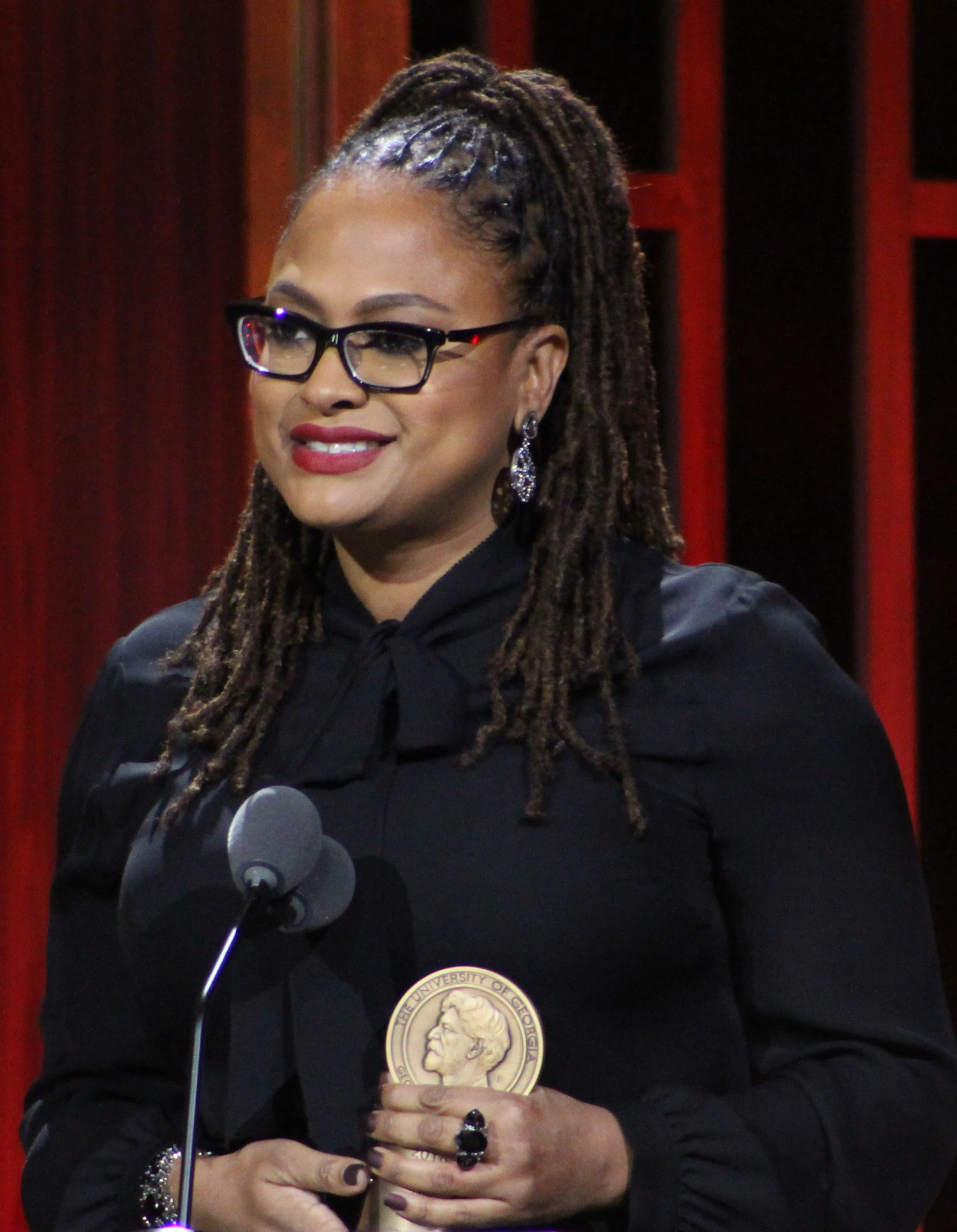
| 14 Quotes | |
| Born as | Ava Marie DuVernay |
| Occup. | Director |
| From | USA |
| Born | August 24, 1972 Long Beach, California, USA |
| Age | 53 years |
| Cite | |
Citation Formats
APA Style (7th ed.)
Ava duvernay biography, facts and quotes. (2026, February 11). FixQuotes. https://fixquotes.com/authors/ava-duvernay/
Chicago Style
"Ava DuVernay biography, facts and quotes." FixQuotes. February 11, 2026. https://fixquotes.com/authors/ava-duvernay/.
MLA Style (9th ed.)
"Ava DuVernay biography, facts and quotes." FixQuotes, 11 Feb. 2026, https://fixquotes.com/authors/ava-duvernay/. Accessed 12 Feb. 2026.
Early Life and Background
Ava Marie DuVernay was born on August 24, 1972, in Long Beach, California, and grew up in the greater Los Angeles area at the hinge point between post-civil-rights optimism and the hard backlash of deindustrialization, the drug war, and policing. Her childhood unfolded amid the ordinary textures of Black Southern California - churchgoing communities, sprawling freeways, and a media ecosystem that rarely centered Black interiority except through stereotype. That imbalance, felt early and repeatedly, became a private irritant that later sharpened into a public vocation: to make images that corrected the record.Family, community, and the cadence of everyday speech formed her first archive. Long Beach and Los Angeles in the 1970s and 1980s offered both cultural abundance and structural constraint; by the time the 1992 Los Angeles uprising erupted, the question of who controlled narrative - who was framed as citizen, threat, victim, or hero - was no longer abstract. DuVernay absorbed that lesson not as a single revelation but as a running education: the camera could be a witness, a weapon, or a shield, depending on who held it and why.
Education and Formative Influences
DuVernay studied English and African American Studies at the University of California, Los Angeles, training her eye in close reading, rhetoric, and the long history of contested representation. Rather than moving directly into film, she entered publicity and marketing, learning how institutions manufacture attention and how audiences are courted, segmented, and persuaded. That apprenticeship in media mechanics - what stories are packaged as universal, what stories are treated as niche - later informed her instincts as a director and producer, particularly her ability to position politically charged work inside mainstream conversation without sanding down its edges.Career, Major Works, and Turning Points
In the 2000s DuVernay ran her own PR firm and worked across entertainment and culture before pivoting into independent filmmaking, founding ARRAY (originally the African-American Film Festival Releasing Movement) to address distribution gatekeeping. Her early features included I Will Follow (2010) and Middle of Nowhere (2012), the latter winning the U.S. Dramatic Directing Award at Sundance and announcing her as a filmmaker of intimate realism and moral pressure. She moved between documentary and narrative with increasing scale: the civil-rights drama Selma (2014) reframed Martin Luther King Jr. through strategy, doubt, and coalition; 13th (2016) traced mass incarceration from Reconstruction to the present with prosecutorial clarity; A Wrinkle in Time (2018) marked a leap into studio spectacle; and When They See Us (2019) turned the Central Park Five case into a searing study of coerced narrative and stolen childhood. Across these turning points she also expanded her role as an architect of opportunity, using producing and advocacy to widen the pipeline for underrepresented filmmakers.Philosophy, Style, and Themes
DuVernay treats cinema as an argument about belonging, and her work repeatedly tests how power writes biography onto bodies. Her style is less interested in ornamental ambiguity than in moral legibility: point of view is declared, not disguised, and the camera lingers on faces long enough for the viewer to feel the cost of policy as personal weather. In both Selma and When They See Us, the drama is not only what happens, but who gets believed - the quiet violence of being narrated by hostile institutions. That concern extends to her off-screen labor: building distribution routes and insisting that access is not charity but infrastructure.Her public statements map a psychology of urgency and self-authorizing craft. "Cinema is a language. It can be used to elevate, to illuminate, to interrogate. It can also be used to erase. I'm interested in using it to reveal". The word reveal is key: her films often stage a contest between official story and lived truth, using montage, archival materials, and tightly controlled emotional escalation to make concealment visible. She rejects the prestige economy as an end in itself - "I don't make films for awards. I make films to move people". - which reads less as modesty than as a discipline against distraction, a reminder that the real target is the viewer's conscience and, through it, civic action. And her ethic of representation is explicitly relational: "If you don't have inclusion, you don't have a full spectrum of storytelling. And if you don't have a full spectrum of storytelling, you have a fractured view of humanity". Inclusion, for DuVernay, is not a quota but a repair of perception, a way to restore complexity to people long flattened by myth.
Legacy and Influence
DuVernay's legacy is twofold: the films themselves and the scaffolding she has built around them. She helped re-center Black history and contemporary injustice within popular film and television, not as background but as narrative engine, while demonstrating that political clarity can coexist with formal ambition and mass reach. Through ARRAY and her producing commitments, she has also influenced what gets made and who gets to make it, shifting attention toward filmmakers historically pushed to the margins of distribution and marketing. In an era defined by debates over representation, policing, and civic memory, DuVernay stands as a director for whom storytelling is not escape from the real world but a lever on it.Our collection contains 14 quotes written by Ava, under the main topics: Motivational - Art - Writing - Freedom - Equality.
Other people related to Ava: John Leguizamo (Comedian), Rosario Dawson (Actress)
Source / external links
- Festival de Cannes: Ava DuVernay profile
- ARRAY NOW: Our Story (founded by Ava DuVernay)
- Smithsonian (Great Americans Medal): Ava DuVernay
- American Academy of Arts and Sciences: Ava DuVernay
- Encyclopaedia Britannica: Ava DuVernay
- IMDb: Ava DuVernay
- Instagram: @ava (Ava DuVernay)
- Wikipedia: Ava DuVernay