
Ayatollah Khomeini Biography Quotes 3 Report mistakes
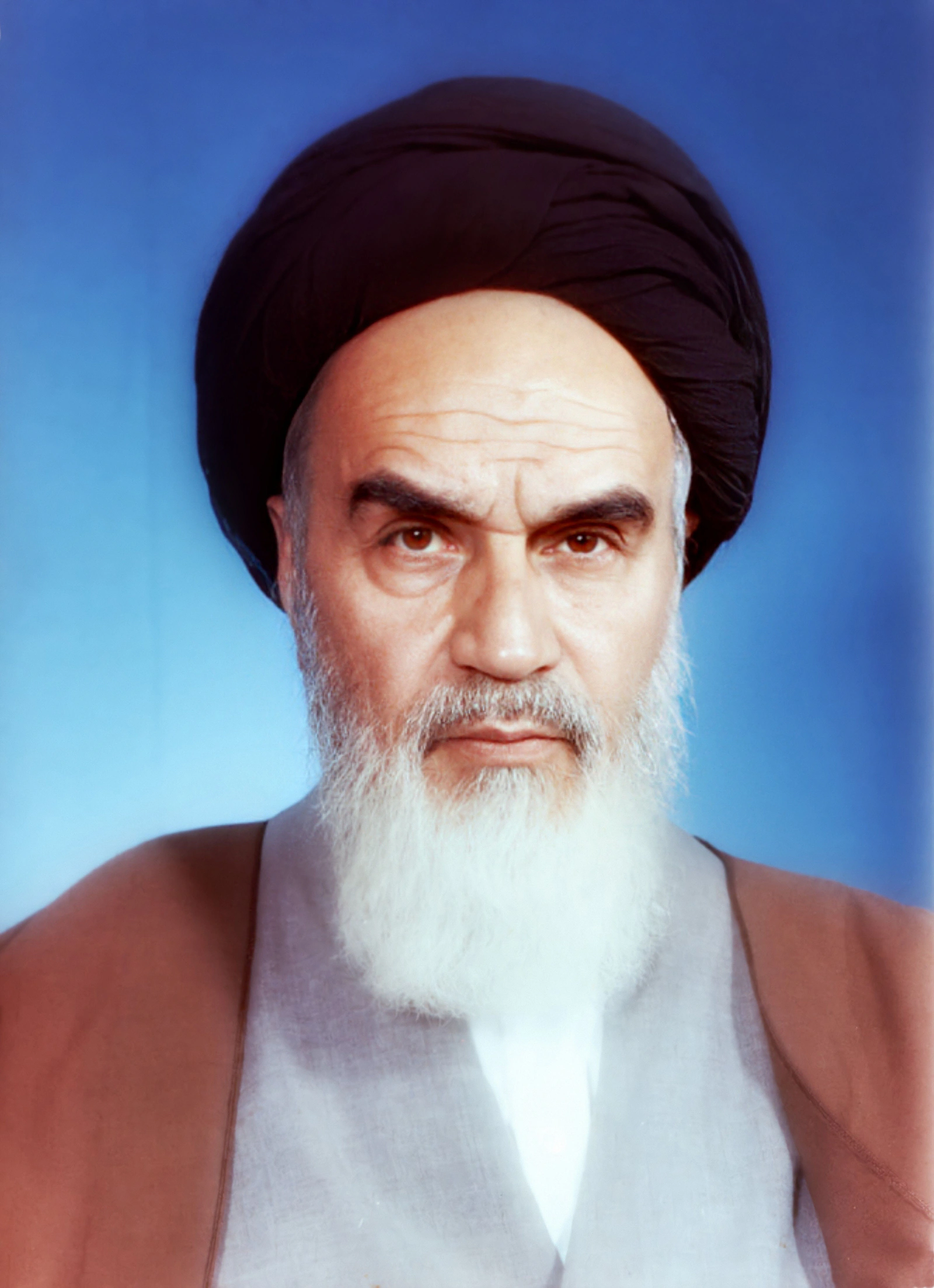
| 3 Quotes | |
| Born as | Ruhollah Mostafavi Musavi |
| Known as | Ruhollah Khomeini |
| Occup. | Statesman |
| From | Iran |
| Born | May 17, 1900 Khomein, Iran |
| Died | June 3, 1989 Tehran, Iran |
| Cause | Natural causes |
| Aged | 89 years |
| Cite | |
Citation Formats
APA Style (7th ed.)
Ayatollah khomeini biography, facts and quotes. (2026, February 16). FixQuotes. https://fixquotes.com/authors/ayatollah-khomeini/
Chicago Style
"Ayatollah Khomeini biography, facts and quotes." FixQuotes. February 16, 2026. https://fixquotes.com/authors/ayatollah-khomeini/.
MLA Style (9th ed.)
"Ayatollah Khomeini biography, facts and quotes." FixQuotes, 16 Feb. 2026, https://fixquotes.com/authors/ayatollah-khomeini/. Accessed 30 Mar. 2026.
Early Life and Background
Ruhollah Mostafavi Musavi Khomeini was born on 1900-05-17 in Khomein, a small town in Iran then ruled by the Qajar dynasty and increasingly penetrated by Russian and British power. He grew up in a clerical family that cultivated descent-based authority and a jurist's sense of order; his father, Sayyid Mustafa Musavi, a local religious figure, was killed while Ruhollah was still a child, leaving the household marked by both piety and grievance. The combination of provincial hardship and the prestige of the sayyid lineage helped form a personality attuned to moral hierarchy and to the political uses of martyrdom.Khomeini's adolescence unfolded as Iran lurched from constitutionalist hopes into coercive centralization under Reza Shah Pahlavi (r. 1925-1941). The modernization drive brought new courts, schools, and dress codes that squeezed the clerical estate and threatened the seminaries' autonomy. For Khomeini, the era's humiliations - foreign concessions, police intrusion, and the enforced privatization of religion - encouraged an early habit of treating politics as an extension of jurisprudence, and coercive state-building as a rival creed.
Education and Formative Influences
He pursued the traditional Shiite curriculum in Arak and then in Qom, which became Iran's preeminent seminary city, studying Arabic sciences, hadith, philosophy, and especially usul al-fiqh (principles of jurisprudence) on the path to ijtihad. He came under the influence of senior scholars such as Ayatollah Abd al-Karim Haeri Yazdi and absorbed the intellectual climate where law, ethics, and metaphysics were debated alongside the question of how a cleric should respond to a secularizing monarchy. Alongside formal legal study, he engaged in mystically inflected ethics that emphasized inner discipline, a thread that later coexisted uneasily with his fierce public polemics.Career, Major Works, and Turning Points
By the 1940s and 1950s Khomeini had become a respected teacher in Qom, publishing works in jurisprudence and ethics and gradually entering political confrontation as the Pahlavi state tightened its alliance with the United States and pursued rapid Westernization. His break into mass politics came during opposition to Mohammad Reza Shah's "White Revolution" reforms; his 1963 sermons helped trigger nationwide unrest and led to arrest, then exile (first to Turkey, then Najaf in Iraq). In Najaf he systematized his most consequential doctrine in lectures later published as "Hokumat-e Islami: Velayat-e Faqih" (Islamic Government: Guardianship of the Jurist), arguing that in the absence of the Hidden Imam, qualified jurists should hold governing authority. After years of cassette-sermon dissemination, he was expelled from Iraq, moved to Neauphle-le-Chateau near Paris in 1978, and returned to Iran in February 1979 to become the revolution's paramount leader; he then guided the creation of the Islamic Republic, presided over the hostage crisis, the brutal consolidation of power, and the Iran-Iraq War, remaining Supreme Leader until his death on 1989-06-03.Philosophy, Style, and Themes
Khomeini's political theology fused apocalyptic moral clarity with the technical confidence of a jurist. "Velayat-e faqih" recast the seminarian from counselor to sovereign, treating the state as an instrument for enforcing divine law and cultivating a virtuous community. His style relied on uncompromising binaries - Islam versus taghut (idolatrous tyranny), oppressed versus arrogant powers - and it sought to turn personal devotion into collective mobilization. The result was a revolutionary idiom that could sanctify sacrifice and suppress dissent with the same logic: the law must be protected, even from the ambiguities of ordinary politics.Psychologically, his rhetoric reveals a leader who experienced geopolitics as a spiritual drama, and hostility as a form of purification. “Americans are the great Satan, the wounded snake”. The sentence compresses his worldview into a single demonology: a superpower becomes temptation, injury, and menace at once, useful for forging unity through external enmity. Yet the same mind that preached transcendence could also descend into meticulous legalism, as in a ruling that polices impurity with startling concreteness: “If one commits the act of sodomy with a cow, an ewe, or a camel, their urine and their excrements become impure, and even their milk may no longer be consumed. The animal must then be killed and as quickly as possible and burned”. The extremity is not merely prudishness; it is an insistence that transgression contaminates the social body and must be excised, a pattern echoed in the revolution's readiness to treat ideological deviation as moral filth. Even his triumphalism could be cast as moral vindication rather than policy, as when he gloated over American scandal: “One thing I congratulate everyone on is the great explosion which has occurred in Washington's Black House and the very important scandal which has gripped leaders of America”. The taunt discloses a psychology that read opponents' disorder as providential confirmation.
Legacy and Influence
Khomeini reshaped Shiite political imagination and the modern Middle East by proving that a clerical network could topple a monarchy and build a durable state ideology. His institutional legacy - the Supreme Leadership, the Guardian Council, the Revolutionary Guards, and a constitution that mixed elections with juristic oversight - established a model of theocratic republicanism that inspired Islamist movements while alarming secularists and many Sunni actors. He also left a contested moral inheritance: for supporters, he restored sovereignty, dignity, and anti-imperial defiance; for critics, he inaugurated a system where revolutionary virtue justified coercion, war, and the narrowing of pluralism. Few twentieth-century statesmen demonstrated more clearly how a single jurist's inner certainties can be translated into enduring institutions - and into a political culture that continues to define Iran long after its founder's death.Our collection contains 3 quotes written by Ayatollah, under the main topics: Ethics & Morality - War.
Other people related to Ayatollah: Oriana Fallaci (Journalist), Ali Hoseini-Khamenei (Politician), Akbar Hashemi Rafsanjani (Politician), Ayatollah Khamenei (Statesman)
Source / external links