
Ayn Rand Biography Quotes 47 Report mistakes
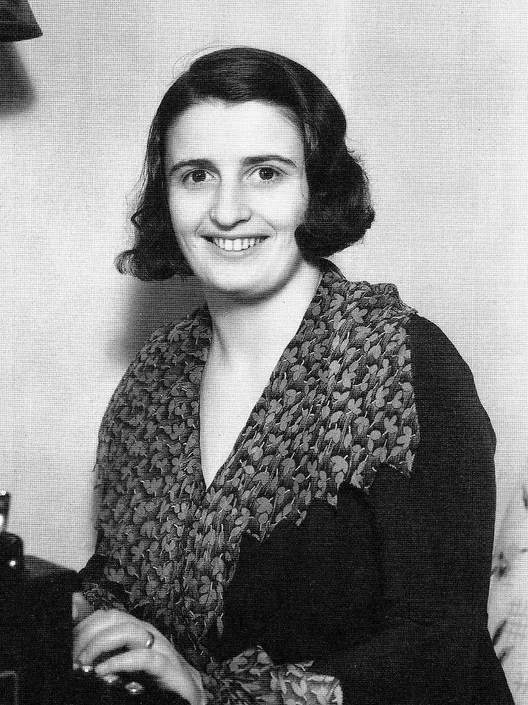
| 47 Quotes | |
| Born as | Alisa Zinov'yevna Rosenbaum |
| Occup. | Writer |
| From | Russia |
| Born | February 2, 1905 Saint Petersburg, Russian Empire |
| Died | March 6, 1982 New York City, United States |
| Aged | 77 years |
| Cite | |
Citation Formats
APA Style (7th ed.)
Ayn rand biography, facts and quotes. (2026, February 11). FixQuotes. https://fixquotes.com/authors/ayn-rand/
Chicago Style
"Ayn Rand biography, facts and quotes." FixQuotes. February 11, 2026. https://fixquotes.com/authors/ayn-rand/.
MLA Style (9th ed.)
"Ayn Rand biography, facts and quotes." FixQuotes, 11 Feb. 2026, https://fixquotes.com/authors/ayn-rand/. Accessed 5 Mar. 2026.
Early Life and Background
Ayn Rand was born Alisa Zinov'yevna Rosenbaum on February 2, 1905, in St. Petersburg, Russian Empire, into a secular Jewish family of the urban professional class. Her father, Zinovy Rosenbaum, owned a pharmacy, a stable marker of bourgeois security in a city where modern commerce sat uneasily beside imperial authority, radical politics, and periodic antisemitic pressure. From childhood she read voraciously and imagined herself as a maker of plots and heroes, developing an early attachment to the idea that a single mind could stand apart from the crowd.The shock that organized her inner life came with revolution. After 1917 the Bolshevik takeover and the ensuing civil conflict brought scarcity, ideological coercion, and the nationalization of private businesses; her father's pharmacy was confiscated, and the family experienced material hardship and political fear. The experience did not merely sour her on a particular regime - it convinced her that collectivist politics could reach into the home and the self, converting moral life into a demand for obedience. That formative wound later became a lifelong preoccupation with independence as a spiritual necessity, not a lifestyle preference.
Education and Formative Influences
Rand studied at the University of Petrograd (later Leningrad), focusing on history and philosophy in the early 1920s, and absorbed a wide spectrum of European thought while privately rejecting the reigning Marxist orthodoxy. She was also shaped by popular narrative forms - adventure stories, melodrama, and above all cinema - and she trained briefly at the State Institute for Cinema Arts, learning to think in scenes, contrasts, and visual motifs. In 1926 she obtained permission to visit relatives in the United States and chose not to return to the Soviet Union, arriving with a sharpened antagonism to state power and a conviction that the New World offered the psychological air necessary for ambition.Career, Major Works, and Turning Points
Settling in Hollywood, she worked in the film industry and as a writer while anglicizing her identity as "Ayn Rand", a self-invention that matched her belief that identity is made, not inherited. Her first novel, We the Living (1936), drew directly on Soviet experience, portraying love and aspiration under totalitarian pressure. The Fountainhead (1943) made her famous through the figure of architect Howard Roark, a portrait of creative integrity that framed independence as a moral absolute; its success financed her transition into full-time advocacy. Atlas Shrugged (1957) became her major turning point: part novel, part philosophical manifesto, it provoked controversy and created a durable movement around her ideas. In the decades that followed she codified "Objectivism" through essays, lectures, and the periodical The Objectivist, and she became a polemical public intellectual in Cold War America, defending capitalism and attacking both Soviet communism and what she saw as the West's moral self-doubt. She died in New York City on March 6, 1982.Philosophy, Style, and Themes
Rand's core drama is internal: the refusal to surrender the self. She argued that reason is man's means of survival, that individual rights are the political expression of moral autonomy, and that capitalism is the only system consistent with human nature. Her fiction externalized these claims by turning metaphysics into plot - heroes who build, invent, and judge, and antagonists who manipulate guilt, resentment, and public opinion. She was fascinated by the psychological mechanisms that make domination possible, especially the way moral language can be weaponized to train capable people to apologize for being capable. “The worst guilt is to accept an unearned guilt”. In her work, liberation begins when a character recognizes that shame can be socially manufactured - and refuses to pay it.Her prose style is declarative, architectural, and adversarial, designed to sound like a mind thinking aloud in absolutes. Critics called it didactic; admirers found in it a rare moral clarity. The recurring theme is the sanctity of the individual against the crowd, stated not as sentiment but as a political axiom: “The smallest minority on earth is the individual. Those who deny individual rights cannot claim to be defenders of minorities”. Her interest in love, friendship, and sex is filtered through identity and self-possession - intimacy is portrayed as the recognition of another person's earned character, not a dissolving of boundaries. "To say "I love you" one must first be able to say the "I."" . Even when her characters form communities, they do so as traders of value, not as sacrificial parts of a collective body.
Legacy and Influence
Rand's legacy is unusually bifurcated: she remains a literary phenomenon, a philosophical lightning rod, and a lasting force in American political culture. The Fountainhead and Atlas Shrugged have sold in the millions and continue to recruit readers in adolescence and early adulthood, when the question of selfhood feels most urgent; at the same time, her absolutism and her movement's internal conflicts have kept her reputation contentious. Yet her impact on libertarian and conservative thought, on debates about capitalism and individual rights, and on popular vocabulary about "selfishness" and creative ambition is undeniable. In the long view, Rand endures less as an academic philosopher than as a myth-maker of modern individuality - a writer who turned the 20th century's battles over state power, conformity, and moral confidence into a set of unforgettable, polarizing human types.Our collection contains 47 quotes written by Ayn, under the main topics: Motivational - Ethics & Morality - Wisdom - Truth - Love.
Other people related to Ayn: Andrew Bernstein (Philosopher), Nathaniel Branden (Psychologist), Peter Fonda (Actor), Leonard Peikoff (Philosopher), Isabel Paterson (Journalist), George Reisman (Economist)
Ayn Rand Famous Works
- 1957 Atlas Shrugged (Novel)
- 1943 The Fountainhead (Novel)
- 1938 Anthem (Novella)
- 1936 We the Living (Novel)
Source / external links