
B. R. Ambedkar Biography Quotes 21 Report mistakes
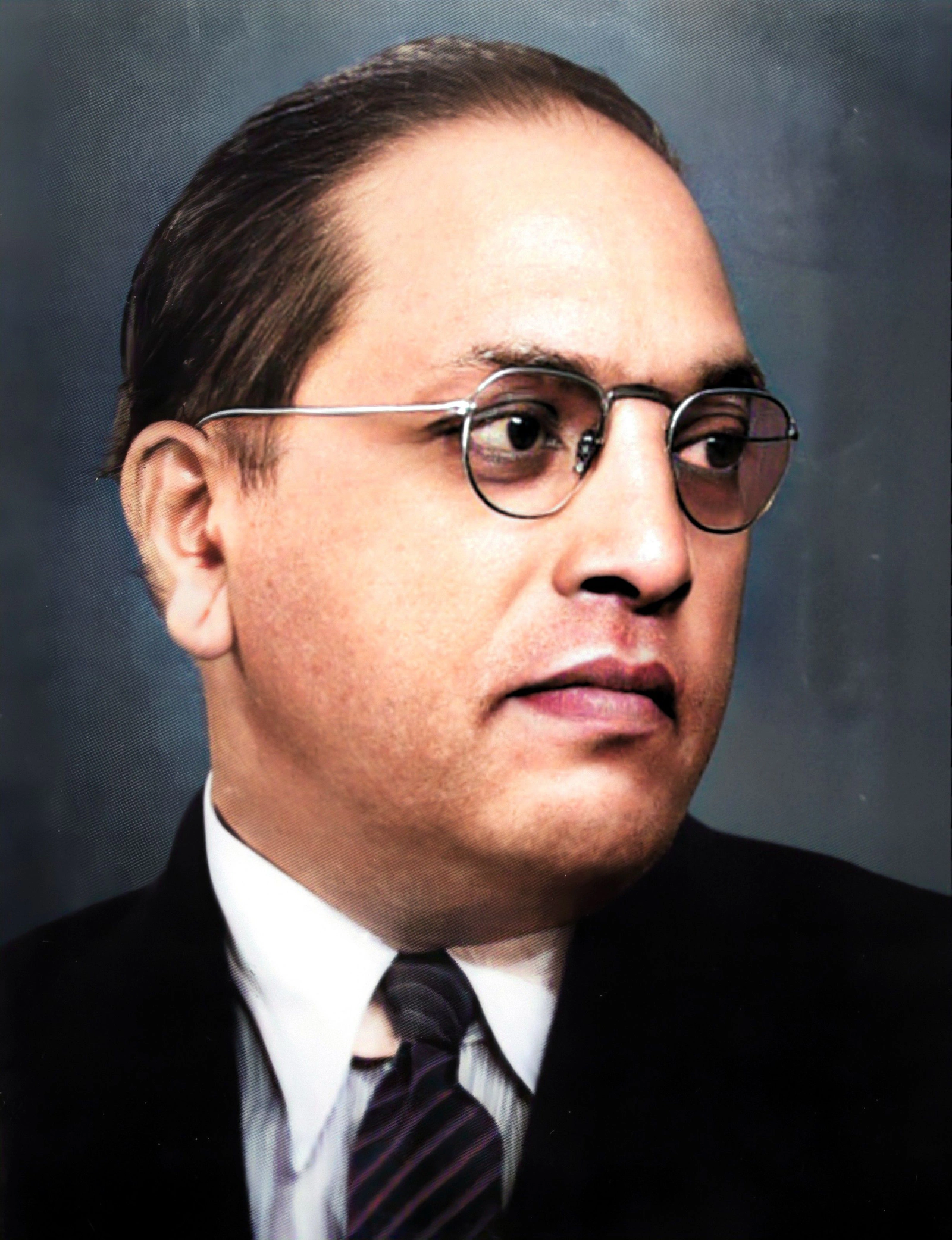
| 21 Quotes | |
| Born as | Bhimrao Ramji Ambedkar |
| Occup. | Politician |
| From | India |
| Spouse | Ramabai Ambedkar |
| Born | April 14, 1891 Mhow, Madhya Pradesh, India |
| Died | December 6, 1956 New Delhi, India |
| Cause | Natural Causes |
| Aged | 65 years |
| Cite | |
Citation Formats
APA Style (7th ed.)
B. r. ambedkar biography, facts and quotes. (2026, February 11). FixQuotes. https://fixquotes.com/authors/b-r-ambedkar/
Chicago Style
"B. R. Ambedkar biography, facts and quotes." FixQuotes. February 11, 2026. https://fixquotes.com/authors/b-r-ambedkar/.
MLA Style (9th ed.)
"B. R. Ambedkar biography, facts and quotes." FixQuotes, 11 Feb. 2026, https://fixquotes.com/authors/b-r-ambedkar/. Accessed 5 Mar. 2026.
Early Life and Background
Bhimrao Ramji Ambedkar was born on 1891-04-14 at Mhow (then in the Central Provinces of British India, now in Madhya Pradesh) into a Mahar family marked by the daily humiliations of "untouchability". His father, Ramji Maloji Sakpal, served in the British Indian Army and valued education and discipline; his mother, Bhimabai, died when he was young, leaving the household to be held together by older relatives. From the start, Ambedkar experienced the social architecture of caste not as an abstraction but as a system that regulated water, seating, touch, and speech - a childhood of prohibitions that trained his mind to notice how power hides inside custom.When the family moved to Bombay, the contradiction sharpened: colonial modernity promised schooling, yet caste blocked its ordinary consolations. Teachers could be kind or cruel, but the rule remained that a Dalit child must not contaminate the classroom. Those early injuries did not only produce anger; they produced a forensic temperament, a habit of assembling evidence, and a refusal to treat suffering as fate. The young Ambedkar learned that the most durable chains are the ones that look like tradition and therefore pass as natural.
Education and Formative Influences
Ambedkar studied at Elphinstone College, University of Bombay, graduating in 1912, then won the Baroda State scholarship that carried him to Columbia University (1913-1916), where he absorbed American pragmatism, constitutionalism, and the sociology of race and labor; his teachers included John Dewey, whose emphasis on democracy as an ethical method resonated deeply. He continued to the London School of Economics and Gray's Inn, returning repeatedly to complete degrees amid financial and political pressure, and wrote on public finance and monetary questions that later fed his critique of inequality as both a moral and economic structure. The experience of moving between Bombay, New York, and London gave him a comparative lens: oppression could be localized in caste, but the tools to dismantle it - rights, institutions, and organization - could be studied, borrowed, and remade.Career, Major Works, and Turning Points
Back in India, Ambedkar became the most formidable Dalit public intellectual of the interwar period, building institutions, newspapers, and mass movements while clashing with orthodox Hindu leaders and negotiating with the Congress. He led the Mahad Satyagraha (1927) for the right to drink from public water, and the Temple Entry movement, insisting that civic equality had to be practiced in public space, not merely promised. In the 1930s he emerged as a national negotiator on minority rights; the 1932 Poona Pact, reached under intense pressure after the British Communal Award and Gandhi's fast, forced a compromise on separate electorates while confirming Ambedkar as the chief strategist of Dalit political representation. His writings - including Annihilation of Caste (written 1936), The Problem of the Rupee (1923), and later The Buddha and His Dhamma (published posthumously) - fused scholarship with agitation. After Independence, he served as India's first Law Minister and, as chair of the Drafting Committee, became the principal architect of the Constitution, resigning in 1951 after the Hindu Code Bill was stalled, a defeat that clarified how social reform could be vetoed by majoritarian caution. In 1956, after years of declaring he would not die a Hindu, he embraced Buddhism at Nagpur in a mass conversion that made spiritual choice a political act; he died on 1956-12-06 in Delhi.Philosophy, Style, and Themes
Ambedkar's inner life was driven by a double discipline: the analytic patience of a trained economist and jurist, and the emotional urgency of someone who had been denied the ordinary dignity of belonging. He distrusted romantic nationalism when it asked the oppressed to wait, and he distrusted mere legalism when it promised paper freedom without social transformation. His insistence that “So long as you do not achieve social liberty, whatever freedom is provided by the law is of no avail to you”. was not anti-constitutional; it was a warning that constitutional text must be matched by changed behavior, enforced rights, and institutional courage. In his mind, the deepest tyranny was not only in police or prisons but in the everyday social veto that could make a citizen feel subhuman.His prose, sharp and cumulative, often reads like a brief written for history: define the problem, trace its mechanism, propose remedies, and name the interests that will resist. He repeatedly returned to the idea that a revolution requires more than resentment - “For a successful revolution it is not enough that there is discontent. What is required is a profound and thorough conviction of the justice, necessity and importance of political and social rights”. This was psychology as strategy: he tried to convert pain into conviction, and conviction into organization. Even his attacks on caste Hindu orthodoxy served a constructive end - the building of a civic identity capable of shared citizenship, captured in the pledge-like clarity of “We are Indians, firstly and lastly”. Across law, religion, and economics, his central theme was fraternity: without it, liberty becomes the privilege of the strong and equality becomes a statistic.
Legacy and Influence
Ambedkar's enduring influence lies in the institutions he shaped and the moral vocabulary he forced India to speak: fundamental rights, constitutional remedies, affirmative action, and the idea that dignity is the measure of democracy. He became an emblem of self-making for Dalits and other marginalized groups, but his legacy is broader than iconography: he left behind a method - argue from evidence, organize the excluded, and bind power with law while refusing to confuse legality with justice. The constitutional order he helped found continues to be contested, yet his diagnosis of social tyranny, and his demand that citizenship be real in schools, workplaces, temples, and homes, remain among the most bracing standards by which modern India judges itself.Our collection contains 21 quotes written by R. Ambedkar, under the main topics: Ethics & Morality - Justice - Freedom - Meaning of Life - Reason & Logic.
Other people related to R. Ambedkar: Rajendra Prasad (Statesman)
Source / external links