
Baltasar Gracian Biography Quotes 47 Report mistakes
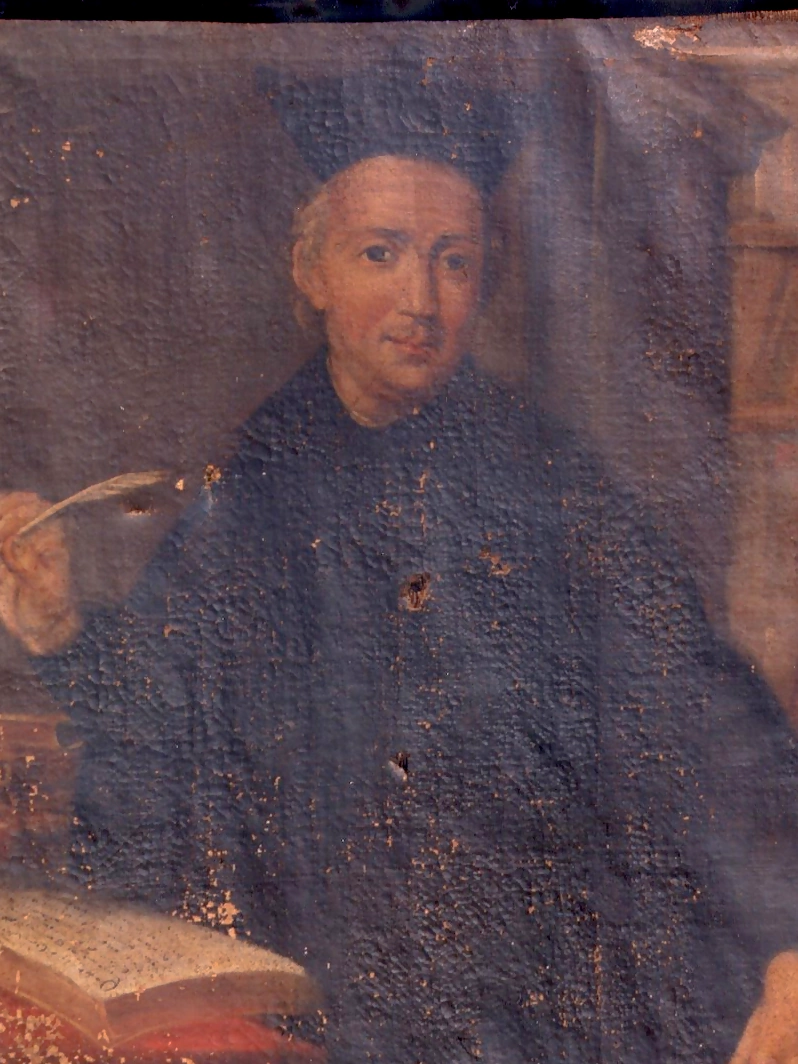
| 47 Quotes | |
| Born as | Baltasar Gracian y Morales |
| Occup. | Philosopher |
| From | Spain |
| Born | January 8, 1601 Belmonte de Gracian, Aragon, Spain |
| Died | December 6, 1658 Tarazona, Spain |
| Aged | 57 years |
| Cite | |
Citation Formats
APA Style (7th ed.)
Baltasar gracian biography, facts and quotes. (2026, February 11). FixQuotes. https://fixquotes.com/authors/baltasar-gracian/
Chicago Style
"Baltasar Gracian biography, facts and quotes." FixQuotes. February 11, 2026. https://fixquotes.com/authors/baltasar-gracian/.
MLA Style (9th ed.)
"Baltasar Gracian biography, facts and quotes." FixQuotes, 11 Feb. 2026, https://fixquotes.com/authors/baltasar-gracian/. Accessed 5 Mar. 2026.
Early Life and Background
Baltasar Gracian y Morales was born on January 8, 1601, in Belmonte de Gracian, near Calatayud in the Kingdom of Aragon, a frontier of small towns and clerical careers rather than courtly spectacle. He grew up in a Spain that still projected imperial grandeur while living through fiscal strain, war, and moral fatigue. That tension between appearance and reality - the shine of empire and the grit beneath it - would become the lifelong pressure point of his thought.His family placed him early on a path of learning and the Church. The young Gracian moved within networks of parish life and patronage, watching how reputation could rise on ceremony and collapse on misjudgment. The era valued honor, discretion, and the management of public face, yet it also produced hunger, censorship, and the brutal logic of power. From this setting he absorbed a practical psychology: how people maneuver, how institutions reward, and how survival often depends on reading the room better than reading a book.
Education and Formative Influences
In 1619 Gracian entered the Society of Jesus, the Jesuit order that fused rigorous schooling with disciplined obedience, and he trained through its program of humanities, philosophy, and theology in Aragon and Catalonia (including studies in Zaragoza). The Jesuits sharpened his rhetoric and moral casuistry, while Spanish Baroque culture shaped his taste for compressed expression, paradox, and moral chiaroscuro. He emerged as a priest and teacher, later serving as preacher and confessor - roles that exposed him to ambition and fear at close range and taught him to treat interior motives as the true battlefield.Career, Major Works, and Turning Points
Gracian taught and preached in Jesuit houses, then gained a broader public as a writer during the 1630s and 1640s, years of crisis for the Spanish Monarchy: the Catalan Revolt, the Portuguese restoration, and grinding wars with France. His early successes included "El heroe" (1637), "El politico Don Fernando el Catolico" (1640), and "El discreto" (1646), portraits of excellence that read like manuals for surviving volatile courts and institutions. He followed with his influential "Oraculo manual y arte de prudencia" (1647), a book of maxims for worldly navigation, and his most ambitious work, the three-part allegorical novel "El Criticon" (1651, 1653, 1657), published under his brother Lorenzo Gracian's name. That final publication triggered Jesuit discipline for violating the order's rules on authorship; he was reprimanded, reassigned, and internally punished, dying on December 6, 1658, in Tarazona, having learned firsthand the cost of saying too clearly what power prefers to keep implicit.Philosophy, Style, and Themes
Gracian's philosophy is not a system but an instrument: a moral technology for a world in which selfhood is tested by intrigue, scarcity, and spectacle. He wrote as if every sentence must earn its place, practicing conceptismo - dense, pointed phrasing that turns ethics into tactics without surrendering to cynicism. The core of his outlook is prudence: the art of timing, proportion, and self-command. “Be content to act, and leave the talking to others”. That line captures his suspicion of vanity and his belief that the surest authority is quiet competence, especially in institutions where speech can be weaponized.His psychological realism can feel cold until one sees its motive: defense of the inner life against manipulation. He advises readers to study opponents because antagonists, unlike flatterers, reveal consequences. “A wise man gets more use from his enemies than a fool from his friends”. The point is not paranoia but clarity - turning friction into information. Likewise his warnings about unequal risk are really warnings about moral asymmetry in conflict. “Never contend with a man who has nothing to lose”. In Gracian's world, prudence is compassion for oneself: avoid contests that corrupt judgment, and preserve the capacity to act well when circumstances allow.
Legacy and Influence
Gracian became one of the great moralists of the European Baroque, read as a guide to conduct in turbulent public life and as a master stylist in Spanish prose. "Oraculo manual" traveled widely in translation and later helped shape modern aphoristic writing; "El Criticon" offered a dark pilgrimage through human illusions that anticipates later social satire and philosophical allegory. His influence runs through the tradition of pragmatic ethics and cultural critique - admired by thinkers who valued lucid counsel over consoling theory, and by writers drawn to the power of compressed insight. In an age that demanded masks, Gracian taught how to wear one without losing the face beneath it.Our collection contains 47 quotes written by Baltasar, under the main topics: Motivational - Wisdom - Friendship - Kindness - Work Ethic.
Baltasar Gracian Famous Works
- 1651 El Criticón (Novel)
- 1647 Oráculo manual y arte de prudencia (Book)
- 1642 Agudeza y arte de ingenio (Essay)