
Barack Obama Biography Quotes 124 Report mistakes
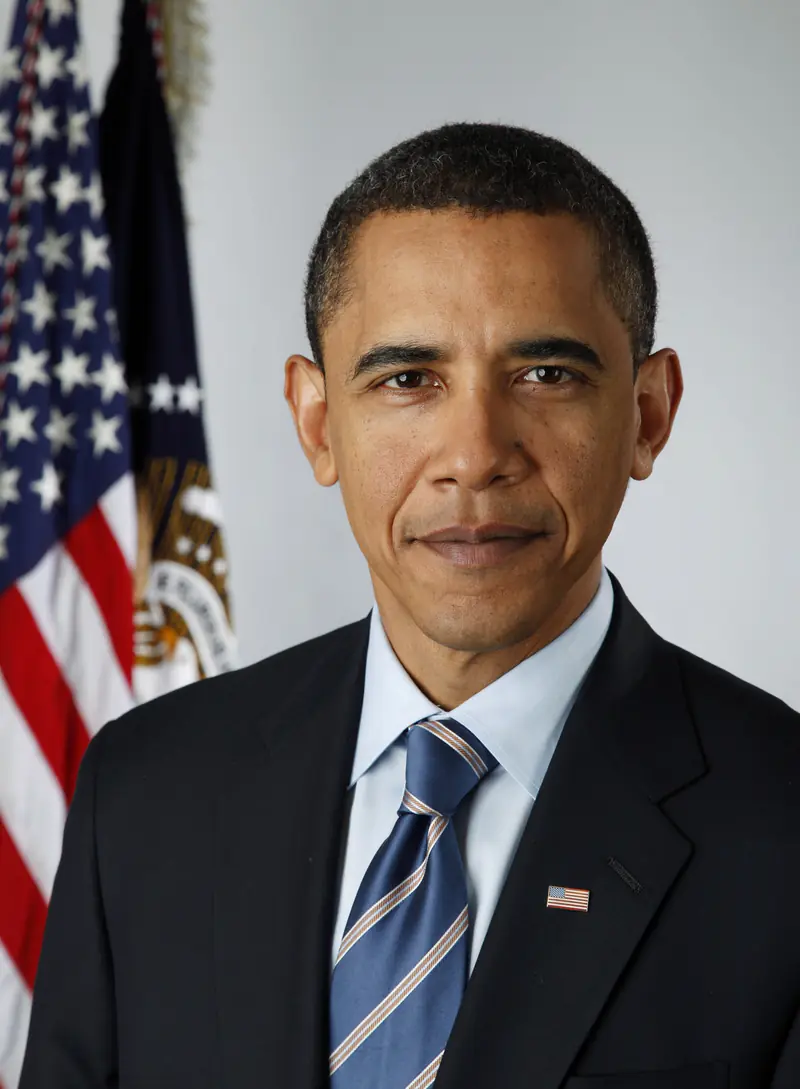
| 124 Quotes | |
| Occup. | President |
| From | USA |
| Born | August 4, 1961 Honolulu, Hawaii |
| Age | 64 years |
| Cite | Cite this page |
Citation Formats
APA Style (7th ed.)
Obama, Barack. (n.d.). Barack Obama. FixQuotes. https://fixquotes.com/authors/barack-obama/
Chicago Style
Obama, Barack. "Barack Obama." FixQuotes. Accessed February 3, 2026. https://fixquotes.com/authors/barack-obama/.
MLA Style (9th ed.)
"Barack Obama." FixQuotes, https://fixquotes.com/authors/barack-obama/. Accessed 3 Feb. 2026.
Barack Hussein Obama II was born on August 4, 1961, in Honolulu, Hawaii, at the hinge-point of postwar American confidence and Cold War anxiety. His father, Barack Obama Sr., arrived from Kenya as part of an elite cohort of African students; his mother, Stanley Ann Dunham, came from a Midwestern family shaped by Depression-era mobility and wartime service. Their brief marriage ended when Obama was young, leaving him with an origin story that was both global and intimate - a father more mythic than present, and a mother whose restlessness became his first lesson in adaptation.
He spent crucial early years in Indonesia (1967-1971) after his mother married Lolo Soetoro, absorbing a daily reality of poverty, political memory, and religious pluralism far from American certainties. Returning to Hawaii, he was raised largely by his maternal grandparents, Stanley and Madelyn Dunham, while his mother pursued fieldwork and development-related study. Those shifting households gave him what he later framed as a talent for crossing boundaries, but also a private hunger for coherence - a desire to reconcile race, class, and belonging without denying any part of himself.
Education and Formative Influences
Obama attended Punahou School in Honolulu, then Occidental College in Los Angeles, transferring to Columbia University in New York City and graduating in 1983. New York in the early 1980s - recession, crime, and the hard edge of Reagan-era ideology - sharpened his political curiosity, yet his decisive formation came after college, when he moved to Chicago to work as a community organizer on the South Side. The discipline of listening, coalition-building, and confronting structural unemployment met the intellectual tradition he later pursued at Harvard Law School, where he became the first Black president of the Harvard Law Review in 1990 - an early rehearsal in bearing symbolic weight while negotiating practical power.
Career, Major Works, and Turning Points
After returning to Chicago, Obama practiced civil rights law, taught constitutional law at the University of Chicago, and entered electoral politics as an Illinois state senator (1997-2004), building a reputation for careful pragmatism and reform-minded rhetoric. His 2004 Democratic National Convention keynote vaulted him into national attention, followed by election to the U.S. Senate and the publication of Dreams from My Father (1995; reissued 2004) and The Audacity of Hope (2006), books that fused memoir with a theory of democratic renewal. Elected the 44th president in 2008 and reelected in 2012, he governed through the Great Recession and polarized realignment: the Affordable Care Act (2010), the Dodd-Frank financial reforms (2010), the operation that killed Osama bin Laden (2011), the Paris climate agreement and Iran nuclear deal (both 2015), and support for marriage equality amid a shifting Supreme Court landscape. His tenure also carried enduring conflicts - drone warfare expansion, a frustrated push for gun legislation after mass shootings, the rise of the Tea Party and later Trump-era populism - turning his presidency into a case study in the limits of consensus in an era of fractured media and hardening identity.
Philosophy, Style, and Themes
Obama's public philosophy was a wager that American pluralism could be narrated into being - not as a sentimental slogan, but as a political technology for coalition. He argued for a civic identity larger than race and party, crystallizing that belief in the line, "There is not a liberal America and a conservative America - there is the United States of America. There is not a black America and a white America and latino America and asian America - there's the United States of America". Psychologically, the insistence on a single national "we" reads as both conviction and defense: the child of dislocation translating personal synthesis into national unity, attempting to preempt the centrifugal forces that once pulled at his own sense of belonging.
His style married professorial precision to revivalist cadence, with an organizer's instinct for narrative and an attorney's care for constraints. The inner engine, however, was endurance - a disciplined refusal to indulge grievance even when politics turned brutal: "The future rewards those who press on. I don't have time to feel sorry for myself. I don't have time to complain. I'm going to press on". That temperament shaped his approach to crisis management and incremental reform, but it also produced critiques of emotional distance: the cool analytic posture that could steady markets and allies while leaving opponents convinced he was remote. On national security, his worldview blended hard power with institution-building and diplomacy, voiced in the warning, "We cannot continue to rely only on our military in order to achieve the national security objectives that we've set. We've got to have a civilian national security force that's just as powerful, just as strong, just as well-funded". Read as a psychological tell, it reveals a leader uneasy with perpetual war as default policy, seeking legitimacy through civic capacity - yet still governing within the post-9/11 architecture he inherited.
Legacy and Influence
Obama's legacy is inseparable from the paradox of his era: he expanded health coverage, stabilized a collapsing economy, and elevated U.S. diplomacy, while presiding over deepening partisan mistrust and a backlash that reshaped the electorate. He became a global symbol of multiracial possibility and a domestic lightning rod, influencing a generation of organizers and candidates who learned both from his coalition-building and from the limits he encountered. Through the Obama Foundation, post-presidential writing, and the continued centrality of the Affordable Care Act to American social policy, his influence persists as an argument about what democratic repair can look like - painstaking, contested, and still driven by the insistence that progress is possible if the country can be persuaded to share a story again.
Our collection contains 124 quotes who is written by Barack, under the main topics: Witty One-Liners - Motivational - Wisdom - Justice - Never Give Up.
Other people realated to Barack: Dalai Lama (Leader), Jesse Jackson (Activist), Nancy Pelosi (Politician), Billie Jean King (Athlete), Toni Morrison (Novelist), Henry A. Kissinger (Statesman), William J. Clinton (President), Oprah Winfrey (Entertainer), Robert De Niro (Actor), Elie Wiesel (Novelist)
Barack Obama Famous Works
- 2020 A Promised Land (Memoir)
- 2010 Of Thee I Sing: A Letter to My Daughters (Children's book)
- 2006 The Audacity of Hope (Non-fiction)
- 1995 Dreams from My Father (Memoir)
Source / external links