
Barbara Bush Biography Quotes 25 Report mistakes
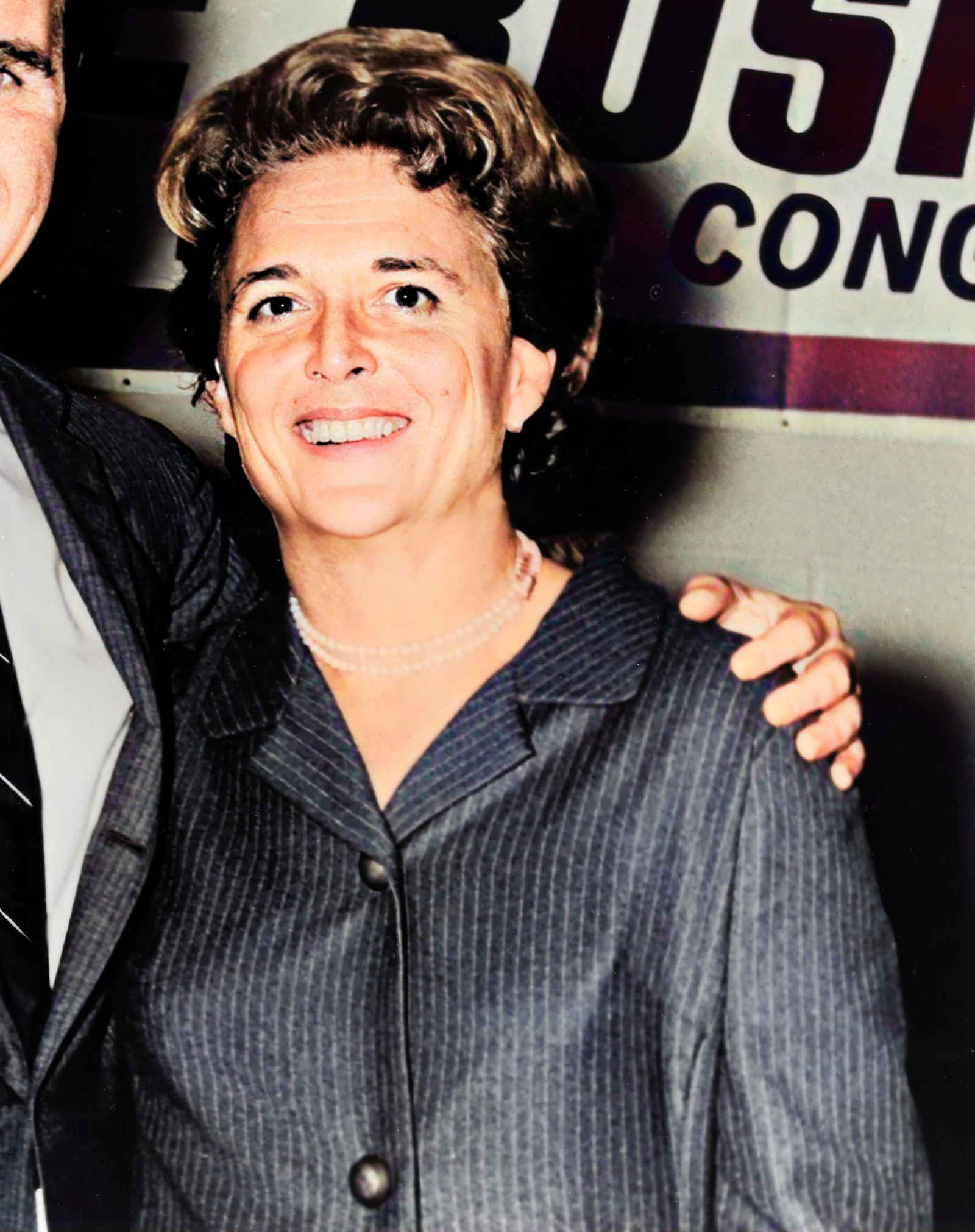
| 25 Quotes | |
| Born as | Barbara Pierce |
| Occup. | First Lady |
| From | USA |
| Spouse | George H. W. Bush |
| Born | June 8, 1925 New York City |
| Died | April 17, 2018 Houston, Texas, USA |
| Cause | Congestive heart failure and chronic obstructive pulmonary disease |
| Aged | 92 years |
| Cite | |
Citation Formats
APA Style (7th ed.)
Barbara bush biography, facts and quotes. (2026, February 18). FixQuotes. https://fixquotes.com/authors/barbara-bush/
Chicago Style
"Barbara Bush biography, facts and quotes." FixQuotes. February 18, 2026. https://fixquotes.com/authors/barbara-bush/.
MLA Style (9th ed.)
"Barbara Bush biography, facts and quotes." FixQuotes, 18 Feb. 2026, https://fixquotes.com/authors/barbara-bush/. Accessed 26 Mar. 2026.
Early Life and Background
Barbara Pierce was born on June 8, 1925, in New York City and raised in the suburban ease of Rye, New York, a world shaped by private clubs, summer islands, and the anxious optimism of interwar America. Her father, Marvin Pierce, rose to become president of McCall Corporation, linking the household to the mass-circulation magazine culture that taught Americans how to live, decorate, dress, and behave. Her mother, Pauline Pierce, anchored the domestic sphere with an old-fashioned insistence on manners and steadiness. In that milieu, Barbara absorbed two lasting lessons: public life is performed through calm surfaces, and private life is held together by routines.The Great Depression and then World War II tightened those routines into duty. Like many girls of her class, she was expected to be polished, not loud - competent in the social arts, loyal to family, and ready to adapt as men went to war and returned altered. Her early confidence came less from rebellion than from an ability to read rooms and defuse tension with humor. That social intelligence, developed long before politics, would become her most reliable instrument in the harsh light of national scrutiny.
Education and Formative Influences
She attended Rye Country Day School and later Ashley Hall in Charleston, South Carolina, a boarding school that emphasized discipline, poise, and service. The decisive influence, however, was less academic than historical: wartime America accelerated courtship and clarified expectations. At age 16 she met Navy aviator George H.W. Bush at a Christmas dance in 1941; their rapid engagement and 1945 marriage folded her personal fate into the trajectory of the postwar United States - mobility, suburban building, and a new political class drawn from veterans.Career, Major Works, and Turning Points
Barbara Bush became a naval wife, then a mother navigating frequent moves as her husband studied at Yale and entered the Texas oil business. The death of their daughter Robin from leukemia in 1953 was the inner turning point of her life, deepening her reserve and intensifying her commitment to family cohesion. As George Bush rose from congressman to UN ambassador, CIA director, vice president, and president, Barbara shifted from private manager of six children to a public figure whose authority derived from credibility rather than ideology. As First Lady (1989-1993) she championed literacy through the Barbara Bush Foundation for Family Literacy (founded 1989), using the White House as a platform for reading programs and fundraising. She also wrote bestselling books whose proceeds supported literacy causes, including C. Fred's Story (1984) and Millie's Book (1990), cultivating a self-deprecating, domestic voice that made philanthropy feel neighborly rather than grand.Philosophy, Style, and Themes
Barbara Bush's public philosophy was a politics of the close-up: the moral life measured at kitchen-table range. She consistently returned to the idea that character is proven in ordinary contact, not rhetorical triumph. “Never lose sight of the fact that the most important yardstick of your success will be how you treat other people - your family, friends, and coworkers, and even strangers you meet along the way”. The sentence reads like a maxim, but it also exposes her psychology - a woman who had seen prestige fail to protect against grief and who therefore treated decency as the only stable currency. Her literacy work fit that ethic: reading was not framed as elite cultivation but as practical dignity, a means for families to function.Her style - pearls, white hair, crisp humor - was often mistaken for conventionality, yet it concealed a sharp boundary-making mind. She distrusted the cruelty of politicizing intimacy and preferred consensus-building through restraint: “The personal things should be left out of platforms at conventions. You can argue yourself blue in the face, and you're not going to change each other's minds. It's a waste of your time and my time”. That impatience with performative outrage was also self-protection, a way to keep the family core intact amid campaigning. Even her famous domestic candor carried a quiet thesis about competence as attention: “It seems to me I spent my life in car pools, but you know, that's how I kept track of what was going on”. In that line, caretaking is not diminished - it is information-gathering, governance at the smallest scale, and the training ground for the steadiness she demanded of herself.
Legacy and Influence
Barbara Bush died on April 17, 2018, in Houston, Texas, after choosing comfort-focused care, a final act consistent with her lifelong pragmatism. Her legacy rests on an unusually durable blend of private authority and public usefulness: she normalized a First Ladyship centered on literacy, volunteer infrastructure, and maternal bluntness rather than policy experimentation, and she modeled a public marriage defined by loyalty without sentimentality. As the matriarch of a modern political dynasty - mother of President George W. Bush and Governor Jeb Bush - she helped set the emotional tone of an era when family narrative became campaign asset and liability alike. Yet her most enduring influence is smaller and harder to measure: a civic ideal in which kindness is not softness, but a discipline practiced daily, in carpools and hospital rooms, long after the cameras move on.Our collection contains 25 quotes written by Barbara, under the main topics: Witty One-Liners - Motivational - Friendship - Meaning of Life - Parenting.
Other people related to Barbara: Columba Bush (Celebrity), Kitty Kelley (Journalist), Lauren Bush (Model)
Source / external links