
Barbara Januszkiewicz Biography Quotes 10 Report mistakes
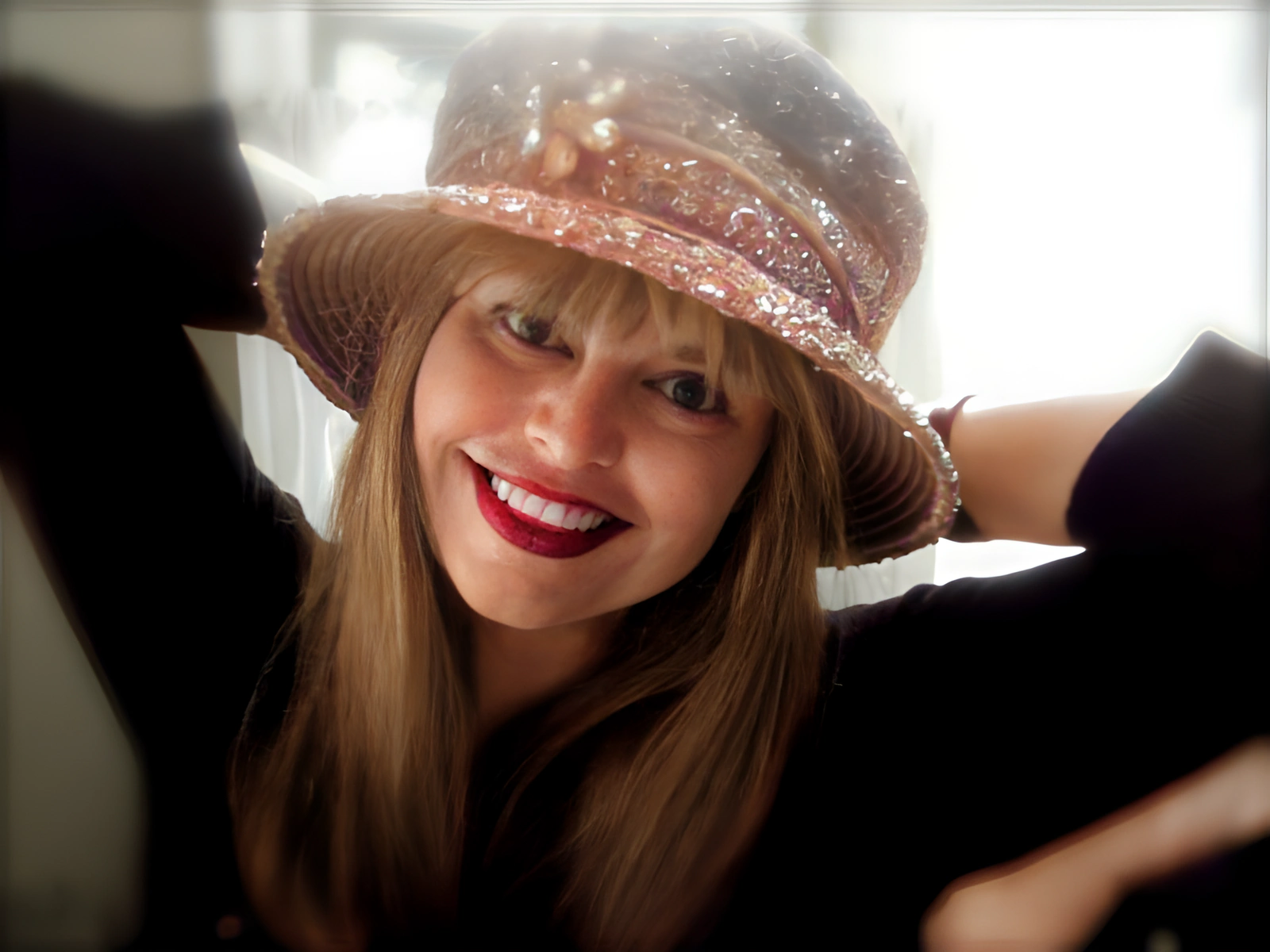
| 10 Quotes | |
| Born as | Barbara Morrison Januszkiewicz |
| Occup. | Artist |
| From | USA |
| Born | February 23, 1955 USA |
| Age | 71 years |
| Cite | |
Citation Formats
APA Style (7th ed.)
Barbara januszkiewicz biography, facts and quotes. (2026, February 11). FixQuotes. https://fixquotes.com/authors/barbara-januszkiewicz/
Chicago Style
"Barbara Januszkiewicz biography, facts and quotes." FixQuotes. February 11, 2026. https://fixquotes.com/authors/barbara-januszkiewicz/.
MLA Style (9th ed.)
"Barbara Januszkiewicz biography, facts and quotes." FixQuotes, 11 Feb. 2026, https://fixquotes.com/authors/barbara-januszkiewicz/. Accessed 26 Mar. 2026.
Early Life and Background
Barbara Morrison Januszkiewicz was born on February 23, 1955, in the United States, coming of age in a postwar culture where mass media, civil-rights struggle, and the churn of American popular music continually redrew the boundaries of what art could hold. She would later become known simply as Barbara Januszkiewicz, an artist whose identity was shaped as much by listening as by looking, and whose mature work would treat sound as a structural force rather than a mere mood.Her earliest years unfolded in an era when jazz and modern art circulated as public languages - on radio, in clubs, on record sleeves, in museum posters - and that ambient presence mattered. For a sensitive temperament, the period offered both permission and pressure: permission to experiment, pressure to find an authentic voice amid abundance. Those conditions help explain why her later statements circle around imagination, improvisation, and the ethics of attention, as if artistic growth were less a ladder than a daily practice of staying open.
Education and Formative Influences
Reliable public details about Januszkiewicz's formal training, teachers, and institutions are limited, but the arc of her thinking suggests an education as much self-directed as credentialed - a long apprenticeship to American visual culture and to jazz as an intellectual system. She belongs to a generation for whom museums expanded their reach, art publishing became ubiquitous, and recorded music offered a portable curriculum; her work and commentary imply sustained study of abstraction, color relationships, and the compositional logics shared by painting and improvisation.Career, Major Works, and Turning Points
Januszkiewicz built her career around a distinctive cross-disciplinary premise: that visual composition can be conceived in musical terms and that jazz, in particular, can function as a generative engine for image-making. While specific dated milestones and universally cited signature works are not consistently documented in mainstream art histories, her public identity coheres around the concept she names "jazz vision" - a framework that positions her art as translation and dialogue, not illustration. The turning point in her development appears less like a single breakthrough exhibition than the consolidation of this idea into a recognizable practice: an artist staking out a method, a vocabulary, and a mission to argue for art's cognitive and civic value.Philosophy, Style, and Themes
Januszkiewicz's philosophy begins with hunger - not for novelty, but for nourishment. “Imagination needs to be fed”. Read psychologically, it is an admission that creativity is not a fixed trait but a vulnerable capacity that can wither under routine, distraction, or fear. Her work treats the studio as a place to protect that capacity, returning again and again to processes that keep perception active: variation, repetition with difference, and the deliberate courting of surprise. This emphasis also frames her as an artist of discipline rather than romantic spontaneity; feeding imagination implies responsibility, curation, and the choice to remain porous to influence.Her signature theme, however, is jazz as a model for seeing. “Jazz vision for me is seeing my art in musical term. It offers me an visual expressions in an ever-changing musical palette”. That sentence reveals a mind oriented toward structure-in-motion: harmony as color, rhythm as spacing, improvisation as compositional decision-making under time pressure. It also discloses her temperament - alert, relational, drawn to systems that can flex without collapsing. In her account, jazz is not background music; it is a cognitive stance, where the artist thinks publicly through the medium, taking risks and revising in real time. Hence the blunt epistemology: “Jazz is the art of thinking out loud”. In that formulation, the canvas becomes a record of thought made visible, and style becomes the trace of choices - the way an artist listens, responds, and dares.
Legacy and Influence
Januszkiewicz's enduring influence lies in how she articulates an accessible yet rigorous bridge between disciplines, encouraging audiences to understand painting and drawing not only as objects but as experiences akin to music - temporal, responsive, and emotionally intelligent. By framing art as a living conversation with jazz, she extends a lineage of American creators who treat improvisation as both method and metaphor, offering younger artists a permission slip to synthesize forms without apology. Her legacy is thus less a single canonical work than a durable idea: that visual art can carry rhythm, that thinking can be made visible, and that imagination, once fed, becomes a shared resource.Our collection contains 10 quotes written by Barbara, under the main topics: Wisdom - Art - Music - Change.
Source / external links