
Barbara Jordan Biography Quotes 34 Report mistakes
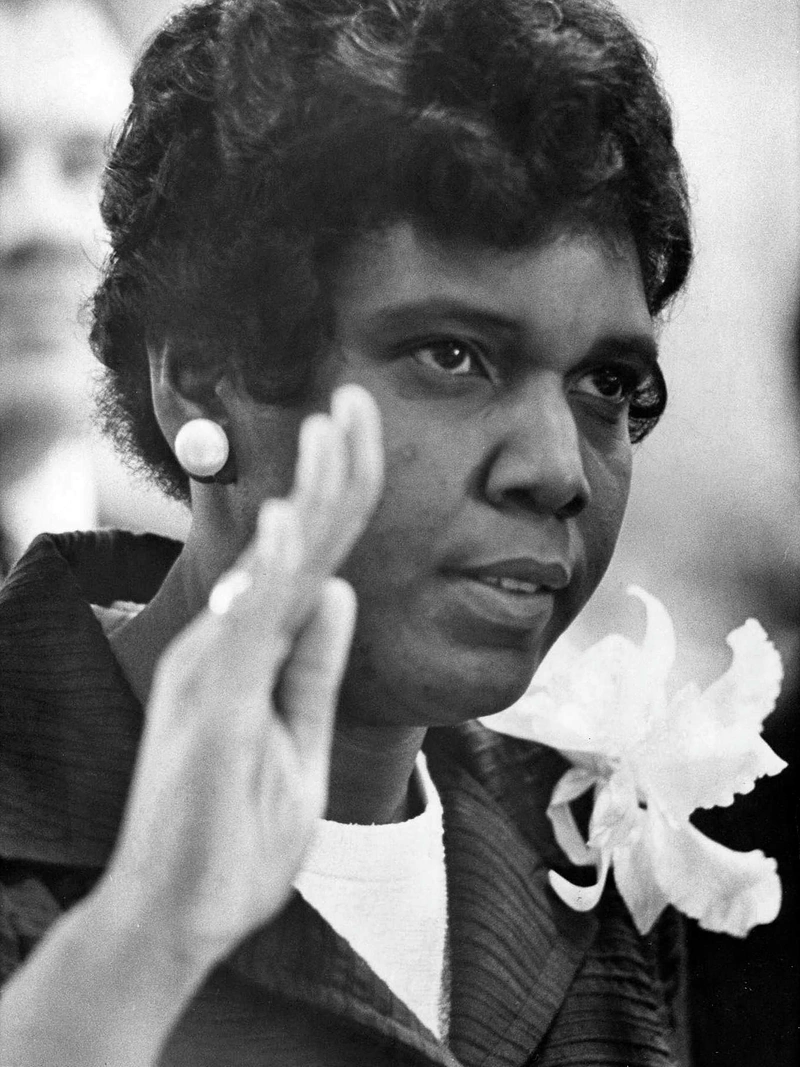
Attr: houstonchronicle.com
| 34 Quotes | |
| Occup. | Politician |
| From | USA |
| Born | February 21, 1936 Houston, Texas, USA |
| Died | January 17, 1996 Austin, Texas, USA |
| Cause | pneumonia |
| Aged | 59 years |
| Cite | |
Citation Formats
APA Style (7th ed.)
Barbara jordan biography, facts and quotes. (2026, February 11). FixQuotes. https://fixquotes.com/authors/barbara-jordan/
Chicago Style
"Barbara Jordan biography, facts and quotes." FixQuotes. February 11, 2026. https://fixquotes.com/authors/barbara-jordan/.
MLA Style (9th ed.)
"Barbara Jordan biography, facts and quotes." FixQuotes, 11 Feb. 2026, https://fixquotes.com/authors/barbara-jordan/. Accessed 25 Mar. 2026.
Early Life and Background
Barbara Charline Jordan was born on February 21, 1936, in Houston, Texas, and raised in the segregated Fifth Ward, a neighborhood shaped by tight-knit churches, small businesses, and the daily arithmetic of Jim Crow. Her father, Benjamin Jordan, worked as a Baptist preacher and warehouseman; her mother, Arlyne Patten Jordan, was a domestic worker who pressed education and dignity as nonnegotiable. In a city that policed ambition by race and gender, Jordan learned early that rhetoric could be both shield and lever - a way to claim space without asking permission.She grew up in the orbit of Antioch Baptist Church, where the cadence of sermons and the discipline of public speaking trained her ear for moral argument. The Fifth Ward also gave her a durable realism: the distance between American ideals and American practice was not theoretical but visible in schools, jobs, and voting lines. That tension - between constitutional promise and lived exclusion - became the emotional engine of her public life, making her neither naive about power nor cynical about the nation.
Education and Formative Influences
Jordan attended Phillis Wheatley High School, excelling in debate before studying political science at Texas Southern University, graduating in 1956. TSU, a historically Black institution, offered both intellectual rigor and a front-row seat to the legal and civic battles of the civil rights era; she then earned her law degree from Boston University in 1959. Returning to Houston, she entered a profession still hostile to Black women, but the combination of pulpit-trained oratory, courtroom logic, and constitutional study forged her signature mode: moral clarity delivered with lawyerly precision.Career, Major Works, and Turning Points
After early defeats in Texas legislative races, Jordan broke through in 1966, winning a seat in the Texas Senate and becoming the first Black state senator since Reconstruction. In 1972 she was elected to the U.S. House from Texas, where she quickly became a national figure. Her defining moment came during the 1974 House Judiciary Committee hearings on President Richard Nixon: her televised constitutional argument, measured yet unyielding, made her a symbol of principled governance and brought unusual public trust to a scandal-scarred Congress. She delivered the keynote at the 1976 Democratic National Convention, served three terms in the House, and then left Congress in 1979 to teach at the Lyndon B. Johnson School of Public Affairs at the University of Texas at Austin. In later years, despite multiple sclerosis that increasingly limited her mobility, she chaired the U.S. Commission on Immigration Reform in the 1990s, insisting on policies that balanced enforcement with a coherent national ethic. She died on January 17, 1996, in Austin.Philosophy, Style, and Themes
Jordan's public philosophy was built on participation, competence, and the hard work of citizenship - not as sentiment but as structure. She treated democracy as a craft with rules, procedures, and obligations, and she demanded that reformers master the machinery they sought to move: “If you're going to play the game properly, you'd better know every rule”. The line reveals her psychology as much as her politics: she distrusted shortcuts, romantic gestures, and purity theater, preferring the slow accumulation of authority through preparation. Her most convincing moral claims were anchored in constitutional language, because she believed legitimacy had to be argued in terms the whole country could recognize.At the same time, she spoke from a communal, almost churchlike understanding of the republic - a nation held together by shared responsibility rather than tribal reward. “A nation is formed by the willingness of each of us to share in the responsibility for upholding the common good”. That emphasis was personal: as someone excluded from power yet determined to belong, Jordan framed American identity as an ongoing act of mutual commitment. She also refused to reduce empowerment to slogans of identity alone, insisting that capability and knowledge were the durable currencies of freedom: “Do not call for black power or green power. Call for brain power”. Her style mirrored these themes - solemn, deliberate, and impeccably structured - a voice that carried both Fifth Ward grit and constitutional reverence, turning lived injustice into disciplined argument rather than bitterness.
Legacy and Influence
Jordan endures as one of the late 20th century's most trusted democratic voices - a model of how moral passion can coexist with procedural seriousness. Her Watergate testimony remains a benchmark for constitutional rhetoric in crisis; her career in Texas and Washington widened the imagined place of Black women in public authority; and her post-Congress work and teaching shaped generations of public servants who heard in her life a demand for competence joined to conscience. In an era that often rewards speed and spectacle, Jordan's example still argues for something rarer: civic adulthood, where rights are defended by people willing to do the work, learn the rules, and accept the burden of the common good.Our collection contains 34 quotes written by Barbara, under the main topics: Ethics & Morality - Justice - Leadership - Freedom - Learning.
Other people related to Barbara: Craig Washington (Politician), Lindy Boggs (Politician)