
Barbara Kolb Biography Quotes 1 Report mistakes
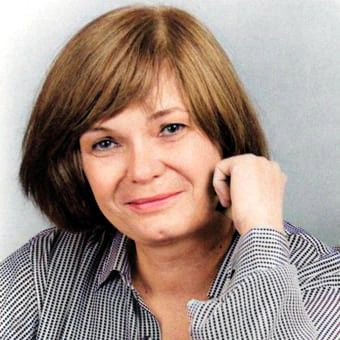
| 1 Quotes | |
| Occup. | Composer |
| From | USA |
| Born | February 10, 1939 Hartford, Connecticut, USA |
| Age | 87 years |
| Cite | |
Citation Formats
APA Style (7th ed.)
Barbara kolb biography, facts and quotes. (2026, February 11). FixQuotes. https://fixquotes.com/authors/barbara-kolb/
Chicago Style
"Barbara Kolb biography, facts and quotes." FixQuotes. February 11, 2026. https://fixquotes.com/authors/barbara-kolb/.
MLA Style (9th ed.)
"Barbara Kolb biography, facts and quotes." FixQuotes, 11 Feb. 2026, https://fixquotes.com/authors/barbara-kolb/. Accessed 30 Mar. 2026.
Early Life and Background
Barbara Kolb was born on February 10, 1939, in the United States, into a country already reshaping itself through radio, film, and the postwar expansion of higher education. Her childhood and adolescence unfolded in the long shadow of World War II and the early Cold War, when American concert life both absorbed European modernism and cultivated its own institutions. For a young musician with compositional ambition, the period offered a double message: opportunity through conservatories, orchestras, and new-media work, and constraint through narrow assumptions about who could author serious music.Kolb came of age as the sounds of the city - advertising, television, vernacular speech, and the increasingly international language of post-tonal concert music - pressed against older expectations of melody and form. That collision became a lifelong habitat for her imagination. Even before her public career took shape, she was oriented toward music as an intellectual craft and a lived sensibility, attentive to how contemporary life edits time, changes listening, and makes identity - including gender - audible.
Education and Formative Influences
Kolb pursued advanced musical training during the era when American composition was negotiating between academic serialism, the timbral revolutions of the postwar avant-garde, and a growing interest in electronics and intermedia. She studied composition and developed the technical command that would let her move fluidly among chamber writing, vocal-instrumental forms, and larger canvases, absorbing the discipline of modernist structure while resisting any single school as a total aesthetic. Just as important was the professional lesson implicit in her formative years: in mid-century American music, women often had to be twice as prepared to be heard at all.Career, Major Works, and Turning Points
Kolb built a career in which craft and curiosity remained the constants, even as the cultural frame around contemporary music shifted from the high-modernist consensus toward stylistic pluralism. She wrote across mediums, cultivating a language that can be incisive without forfeiting lyric impulse, and modern without turning expression into an abstract test. As commissions, ensembles, and new-music networks expanded in the late 20th century, she used those platforms to explore color, pacing, and psychological narrative - qualities that suit both intimate chamber forces and the theatricality of the voice. A key turning point in her trajectory was the increasing willingness of presenters and performers to program women composers as composers rather than as exceptions, allowing her work to circulate on its own terms and encouraging the long view that a catalog earns through repeated listening.Philosophy, Style, and Themes
Kolb has spoken about composition not merely as technique but as temperament - a way of being in time. “Composing a piece of music is very feminine”. In her framing, the word is not a stereotype but a rebuttal to one: it insists that sensitivity and interiority are strengths rather than disqualifiers, and it quietly shifts authority away from the traditionally "masculine" myths of domination, conquest, and noise. The psychological stance implied is intimate and self-trusting: she treats the act of composing as a form of attentive making, where nuance carries structural weight.The second half of the same remark sharpens the critique with humor and bite: “It is sensitive, emotional, contemplative”. Kolb's music, at its best, behaves like that sentence - concentrated, patient, and alert to gradations of feeling. Yet her irony exposes social contradiction: “By comparison, doing housework is positively masculine”. Read psychologically, the joke is a defense mechanism that doubles as analysis, turning domestic expectation into an aesthetic argument about labor, value, and who gets credited for what. In her work, this becomes a thematic preoccupation with listening itself: how a culture assigns seriousness, how private life and public form interpenetrate, and how a composer can encode agency through timbre, pacing, and the careful shaping of musical attention.
Legacy and Influence
Kolb's enduring influence lies in the example of a modern American composer who refused to equate rigor with emotional austerity, and who treated gendered assumptions about creativity as something to be examined rather than obeyed. Her career belongs to the broader historical arc that widened the canon of late-20th-century American composition, not by abandoning complexity, but by insisting that complexity can include intimacy, wit, and psychological candor. For listeners and younger composers, her work stands as a reminder that the most lasting modernism is not a style badge - it is a practice of honest perception, renewed each time a score becomes sound.Our collection contains 1 quotes written by Barbara, under the main topics: Music.
Source / external links