
Barbara Smith Biography Quotes 7 Report mistakes
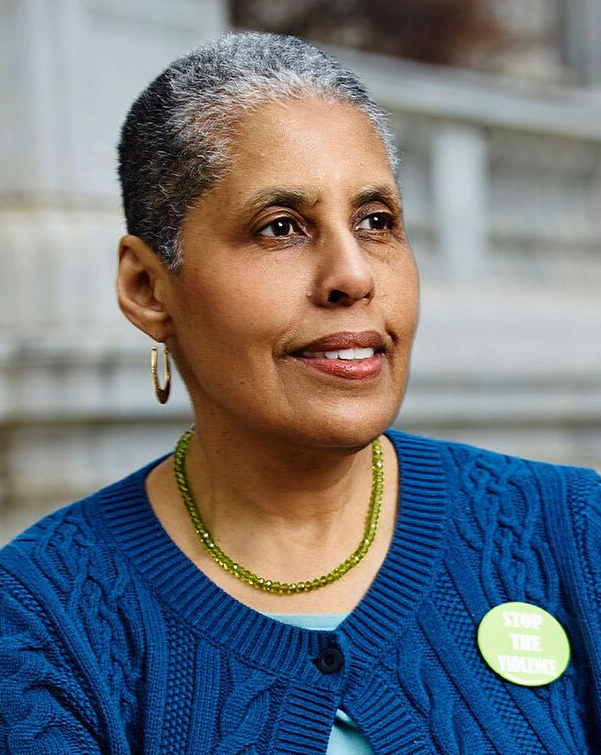
| 7 Quotes | |
| Occup. | Activist |
| From | USA |
| Born | November 16, 1946 Cleveland, Ohio, USA |
| Age | 79 years |
| Cite | |
Citation Formats
APA Style (7th ed.)
Barbara smith biography, facts and quotes. (2026, March 8). FixQuotes. https://fixquotes.com/authors/barbara-smith/
Chicago Style
"Barbara Smith biography, facts and quotes." FixQuotes. March 8, 2026. https://fixquotes.com/authors/barbara-smith/.
MLA Style (9th ed.)
"Barbara Smith biography, facts and quotes." FixQuotes, 8 Mar. 2026, https://fixquotes.com/authors/barbara-smith/. Accessed 28 Mar. 2026.
Early Life and Background
Barbara Smith was born on November 16, 1946, in Cleveland, Ohio, into a Black working-class family whose history ran through the Great Migration and the disciplined aspirations of mid-century Black urban life. She was born a few minutes before her identical twin, Beverly Smith, who would become a lifelong intellectual and political companion. Their mother died when the girls were young, a formative loss that sharpened Barbara Smith's sense of precarity, attachment, and the labor of survival that Black women were expected to perform without recognition. Raised largely by female relatives, she grew up in a world where race, class, gender, and family obligation were not abstractions but daily structure.
Cleveland in the 1950s and early 1960s offered both civic possibility and hard racial boundaries. Smith came of age before the great naming of "intersectionality", yet in a social reality already shaped by overlapping exclusions: segregated housing, constrained educational opportunity, and the persistent devaluation of Black women's minds. The twin facts of her life - deep intimacy with Black female experience and early awareness of institutional indifference - would become the basis of both her criticism and her activism. Even as a young woman, she developed the habit that would define her mature work: to begin not from theory imposed from above, but from what Black women knew in their bodies, friendships, households, and political disappointments.
Education and Formative Influences
Smith attended Mount Holyoke College, graduating in 1969, and entered adulthood in the thick of the Black freedom movement, second-wave feminism, antiwar protest, and the early gay and lesbian liberation struggle. At Mount Holyoke and later in graduate study, she encountered both the power and the limits of canonical literary education: the curriculum gave her tools of close reading and historical analysis, but it also revealed how thoroughly Black women had been excluded from serious scholarly attention. She was influenced by the insurgent energies of Black Arts and Black Power, but she also recognized their masculinism; she was energized by feminism, yet found mainstream white feminism unable or unwilling to reckon with race and class. Audre Lorde, Toni Cade Bambara, June Jordan, and other Black women writers and organizers helped define the intellectual atmosphere in which Smith came to political clarity as a Black feminist, lesbian, socialist-leaning critic committed to coalition without illusion.
Career, Major Works, and Turning Points
Smith's career joined activism, criticism, publishing, and institution-building. In Boston in the 1970s she became a founder of the Combahee River Collective, the Black feminist lesbian organization whose 1977 Combahee River Collective Statement remains one of the essential documents of modern radical politics; its analysis of interlocking oppressions anticipated later intersectional frameworks while remaining grounded in organizing experience. As a literary critic, Smith helped create Black feminist criticism as a field, arguing that Black women writers had to be read on their own terms rather than as appendages to white feminist or Black male traditions. She edited the landmark anthology Home Girls: A Black Feminist Anthology (1983), bringing together voices that transformed scholarship and movement culture, and she wrote influential essays including "Toward a Black Feminist Criticism". With Audre Lorde she also co-founded Kitchen Table: Women of Color Press in 1980, one of the first U.S. publishers devoted to women of color. Later, she expanded her public work into electoral and civic life, serving on the Albany, New York, Common Council and insisting that radical analysis belonged not only in manifestos and classrooms but in governance, anti-violence work, and concrete community policy.
Philosophy, Style, and Themes
Smith's philosophy begins from visibility: who is seen, who is misread, and who is omitted from the archive altogether. Her criticism and activism repeatedly insist that Black women are not a subsidiary category but a distinct historical and political location. “Black women, whose experience is unique, are seldom recognized as a particular social-cultural entity and are seldom thought to be important enough for serious scholarly consideration”. That sentence captures both her diagnosis and her method. She wrote against erasure, but not only to secure representation; she wanted a transformed standard of knowledge, one in which lived experience could reorganize politics, literature, and ethics from the ground up. “One of the greatest gifts of Black feminism to ourselves has been to make it a little easier simply to be Black and female”. The modesty of "a little easier" is revealing: Smith distrusts grand emancipation narratives and measures freedom by whether actual lives become more livable.
Her style is lucid, unsentimental, and strategically exact. She prefers naming structures to performing outrage, and that restraint gives her prose unusual force. Again and again, she returns to Black women's practical intelligence under pressure: “Black women as a group have never been fools. We couldn't afford to be”. The line is psychologically rich. It rejects romantic victimhood without denying violence; it honors survival as intellect, skepticism as discipline, and political clarity as something forged in conditions where error carried a high price. Across her essays and speeches, one feels a mind committed to coalition yet wary of innocence, eager for solidarity yet insistent that trust must be earned through material accountability. That combination - tenderness toward the vulnerable, severity toward bad faith - made her one of the sharpest moral and political diagnosticians of her generation.
Legacy and Influence
Barbara Smith's legacy is foundational across Black feminism, queer theory, literary studies, and movement politics. Long before universities standardized the language of intersectionality, Smith and her comrades articulated how racism, sexism, class exploitation, and homophobia operate together in lived experience and therefore must be confronted together in political practice. Her anthologies, essays, and publishing work changed what could be taught, researched, and imagined; her activism changed what could be organized. She helped make Black lesbian thought publicly legible without severing it from broader struggles for racial and economic justice. Today her influence can be seen in feminist scholarship, community accountability models, women-of-color publishing, and multiracial coalition work that takes difference seriously rather than treating it as a distraction. Smith endures because she offered more than critique: she gave a method for telling the truth about power while still building worlds in which more people can live and act freely.
Our collection contains 7 quotes written by Barbara, under the main topics: Art - Love - Resilience - Knowledge - Equality.
Source / external links