
Baroness Orczy Biography Quotes 2 Report mistakes
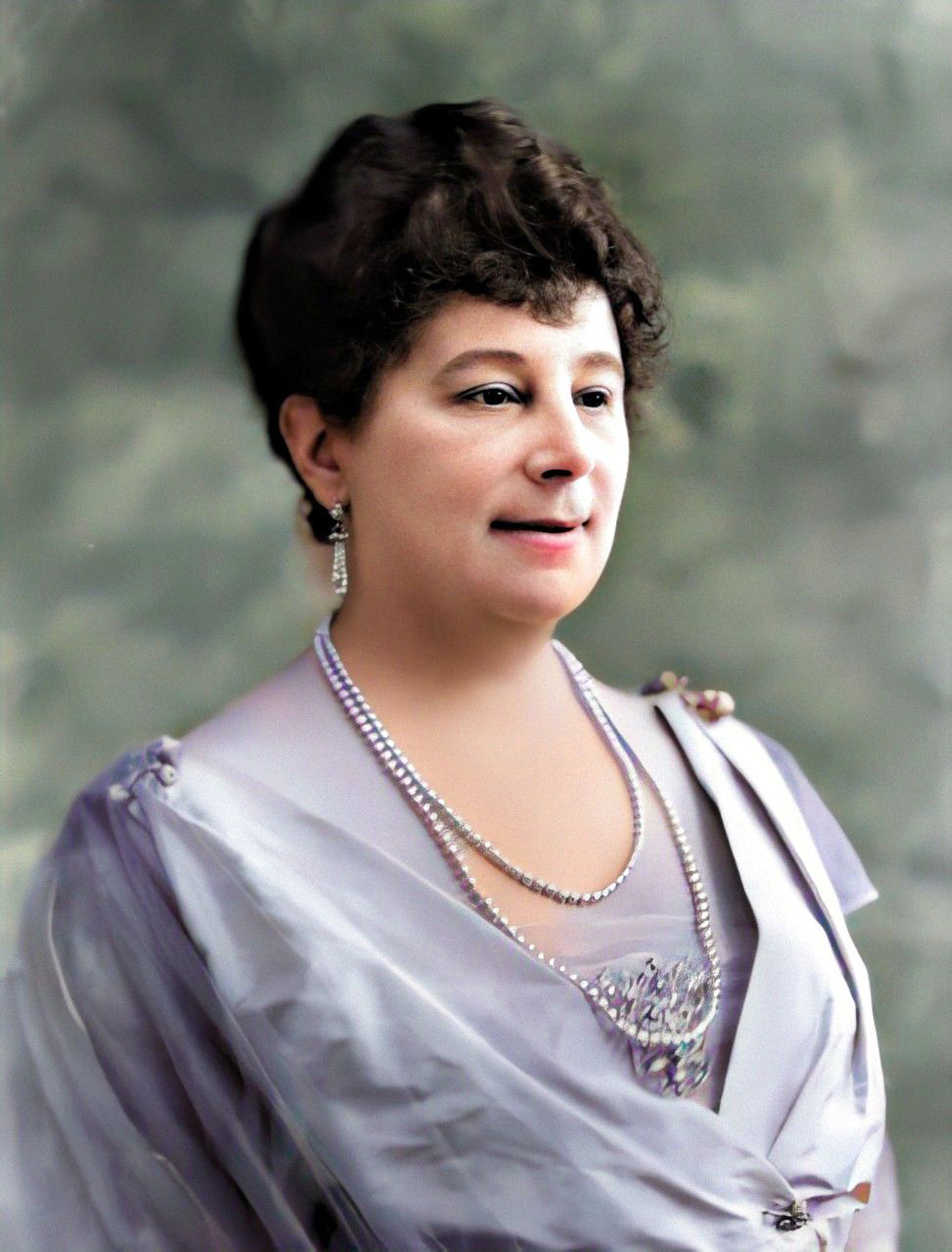
Attr: Attr.: Bassano Ltd
| 2 Quotes | |
| Born as | Emma Magdolna Rozália Mária Jozefa Borbála Orczy de Orczi |
| Occup. | Novelist |
| From | Hungary |
| Born | September 23, 1865 Tarnaörs, Hungary |
| Died | November 12, 1947 Henley-on-Thames, England |
| Aged | 82 years |
| Cite | |
Citation Formats
APA Style (7th ed.)
Baroness orczy biography, facts and quotes. (2026, February 11). FixQuotes. https://fixquotes.com/authors/baroness-orczy/
Chicago Style
"Baroness Orczy biography, facts and quotes." FixQuotes. February 11, 2026. https://fixquotes.com/authors/baroness-orczy/.
MLA Style (9th ed.)
"Baroness Orczy biography, facts and quotes." FixQuotes, 11 Feb. 2026, https://fixquotes.com/authors/baroness-orczy/. Accessed 27 Mar. 2026.
Early Life and Background
Emma Magdolna Rozalia Maria Jozefa Borbala Orczy de Orczi was born on September 23, 1865, into the Hungarian nobility on the family estate at Tarnaorsz near Heves. Her earliest years unfolded on the late-Habsburg frontier between landed privilege and rural volatility - a world of horses, stewards, and peasant labor, but also of political unease in a kingdom still defining itself after the 1867 Ausgleich.In the early 1870s a peasant rising and local unrest around the Orczy holdings - remembered in her family as a shock of disorder pressing against aristocratic security - helped push the family into a long, itinerant exile through European cities before settling in England. That childhood dislocation mattered: it gave her, long before she wrote about revolutions, the intimate sensation of a protected life suddenly exposed, and it trained her to observe class, costume, and code as if they were languages one had to learn to survive.
Education and Formative Influences
Orczy was educated privately on the Continent and in Britain, then trained as an artist in London, studying at the West London School of Art and later at Heatherley School of Fine Art. Painting disciplined her eye for silhouette and scene-setting, while the London of the 1890s - imperial, theatrical, and hungry for popular fiction - supplied a practical education in entertainment as craft; she absorbed melodrama, operetta, and historical romance, and learned how quickly a character could be made legible by a gesture, a hat, or a line of dialogue.Career, Major Works, and Turning Points
In 1894 she married Montagu Barstow, an English illustrator and translator who became her creative partner, and she began publishing stories and plays while raising a family. Her decisive breakthrough came when her stage piece about an aristocratic rescuer in Revolutionary France was reshaped into a novel: The Scarlet Pimpernel (1905), which became an international sensation, spawning sequels such as I Will Repay (1906), El Dorado (1913), and The Triumph of the Scarlet Pimpernel (1932), as well as adaptations for stage and screen. The Pimpernel cycle made her one of the key architects of the modern masked-hero narrative - a double life, a signature calling card, a network, and a blend of suspense with wit - and its success enabled a long career in historical fiction, detective work (including her interest in the "Old Man in the Corner" stories), and essays. Later decades were spent largely in Britain, with public prominence fading but the core creation remaining constantly republished; she died on November 12, 1947.Philosophy, Style, and Themes
Orczy wrote as a conservative romantic in an age that had watched ideologies turn violent: her imagination was magnetized by the French Revolution not as abstraction but as a theater where private loyalties and public terror collide. She could turn a crowd into a moral weather system, a force that strips individuals of nuance; her famous description of Paris as “A surging, seething, murmuring crowd of beings that are human only in name, for to the eye and ear they seem naught but savage creatures, animated by vile passions and by the lust of vengeance and of hate”. is not only scene painting, but a window into her psychology - the child of a shaken estate transmuting fear of disorder into a lifelong suspicion of mass politics.Against that threatening collective she set the cultivated performance of the hero: Sir Percy Blakeney survives by acting, by being underestimated, by making identity elastic. The nursery-rhyme doggerel that chases him - “We seek him here, we seek him there, Those Frenchies seek him everywhere. Is he in heaven? - Is he in hell? That damned, elusive Pimpernel?” - captures her tonal signature: lightness as camouflage, humor as armor, and romance as an ethic of rescue. Her style is swift and visual, built from sharp contrasts (silk versus blood, ballroom versus tribunal), and her themes return to honor under pressure, the ethics of loyalty, and the paradox that true power may look like frivolity until the moment it saves a life.
Legacy and Influence
Orczy endures less as a chronicler of Hungary than as a foundational engineer of popular heroism in the 20th century: the Scarlet Pimpernel prefigured later alter-ego champions in literature and comics, and her blend of intrigue, disguise, secret networks, and catchphrase mythology became a template for swashbuckling adventure. While her politics and her harsh portrait of revolutionary crowds have drawn critique, her narrative invention remains unmistakable - a proof that a single character, sharply conceived, can migrate across media and generations, carrying with him the pleasures of wit, speed, and the moral fantasy of delivering the innocent from history's machinery.Our collection contains 2 quotes written by Baroness, under the main topics: Witty One-Liners - Anger.
Frequently Asked Questions
- What is Baroness Orczy most known for? Baroness Orczy is most known for her novel 'The Scarlet Pimpernel' which she later developed into a series due to its success.
- The Scarlet Pimpernel book series: The Scarlet Pimpernel is a series of adventure novels written by Baroness Orczy. The series is set during the Reign of Terror following the start of the French Revolution.
- The Elusive Pimpernel: 'The Elusive Pimpernel' is a novel by Baroness Orczy, published in 1908. It's one of the sequels to her popular novel 'The Scarlet Pimpernel'.
- Was there a real scarlet pimpernel? No, the character of the Scarlet Pimpernel is a fictional creation by Baroness Orczy.
- The emperor's candlesticks Baroness Orczy: 'The Emperor's Candlesticks' is one of the early novels written by Baroness Orczy, published in 1899. It is a spy adventure that lays the groundwork for her later works.
- How did Baroness Orczy feel about the poor? Baroness Orczy’s views on the poor are not explicitly documented, however, in her novels she often portrayed the poor with sympathy.
- How did Baroness Orczy die? Baroness Orczy died of natural causes in November 1947.
- How old was Baroness Orczy? She became 82 years old
Baroness Orczy Famous Works
- 1913 The Laughing Cavalier (Novel)
- 1913 Eldorado (Novel)
- 1908 The Elusive Pimpernel (Novel)
- 1906 I Will Repay (Novel)
- 1905 The Scarlet Pimpernel (Novel)
Source / external links