
Beatrice Webb Biography Quotes 1 Report mistakes
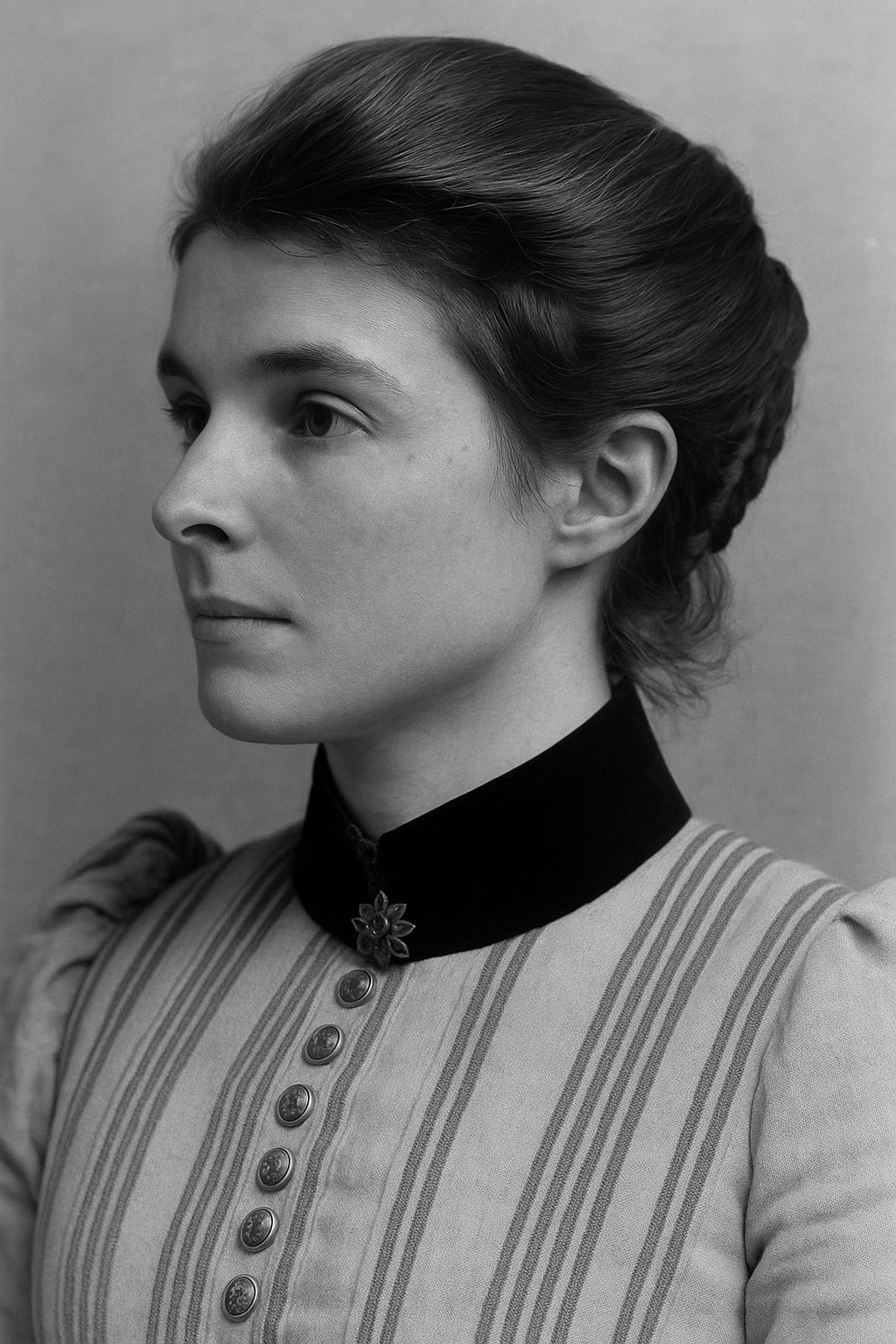
Attr: Elliott & Fry
| 1 Quotes | |
| Born as | Beatrice Potter |
| Occup. | Sociologist |
| From | United Kingdom |
| Spouse | Sidney Webb |
| Born | January 22, 1858 Gloucestershire, England |
| Died | April 30, 1943 Liphook, Hampshire, England |
| Aged | 85 years |
| Cite | |
Citation Formats
APA Style (7th ed.)
Beatrice webb biography, facts and quotes. (2026, February 11). FixQuotes. https://fixquotes.com/authors/beatrice-webb/
Chicago Style
"Beatrice Webb biography, facts and quotes." FixQuotes. February 11, 2026. https://fixquotes.com/authors/beatrice-webb/.
MLA Style (9th ed.)
"Beatrice Webb biography, facts and quotes." FixQuotes, 11 Feb. 2026, https://fixquotes.com/authors/beatrice-webb/. Accessed 25 Mar. 2026.
Early Life
Beatrice Webb, born Beatrice Potter in 1858 in the United Kingdom, grew up in a prosperous industrial family that expected public-minded responsibility and thrift as much as comfort. As the youngest of several daughters, she had access to informal tutors, family libraries, and the lively political talk of business and reform-minded guests who visited the household. Early on she developed the habit of keeping a rigorous diary, a practice that would become central to the way she trained herself as a researcher: observing, testing, and revising her own beliefs against the evidence she encountered.Apprenticeship in Social Investigation
In the 1880s she began the empirical social work that shaped her career, assisting and then independently scrutinizing efforts to map urban poverty. Her association with Charles Booth's pioneering survey of London life taught her how to connect moral concern with methodical inquiry. She immersed herself in the day-to-day operations of charities and local institutions, concluding that relief organized by scattered benevolence could not substitute for a system directed by public authority. By the early 1890s she had published a study of the cooperative movement and was already known as a gifted, severe analyst whose conclusions were grounded in field notes rather than rhetoric.Partnership with Sidney Webb
In 1892 she married Sidney Webb, forging one of the most productive intellectual partnerships in modern British social thought. The Webbs treated social problems as solvable with carefully gathered facts, institutional design, and gradual reform. Together they produced The History of Trade Unionism (1894) and Industrial Democracy (1897), works that gave the labor movement an analytic history and a vocabulary of policy, helping to popularize terms such as "collective bargaining". Their books fused documentary research with clear proposals about how unions, employers, and the state might structure fairer industrial relations.Fabianism and the London School of Economics
Beatrice was a leading figure in the Fabian Society, which advocated democratic socialism through incremental, evidence-based legislation rather than revolution. In 1895 she and Sidney, alongside Graham Wallas and George Bernard Shaw, helped found the London School of Economics and Political Science. The school institutionalized the Fabian idea that public service should rest on disciplined study. At LSE, networks formed among scholars and reformers who would shape 20th-century British policy. Debates with fellow Fabians such as H. G. Wells, who pressed for mass appeal and bolder rhetoric, sharpened Beatrice's own preference for administrative realism over charismatic politics.Poor Law Reform and Public Policy
Between 1905 and 1909, Beatrice served on the Royal Commission on the Poor Laws. The Commission's Minority Report, largely drafted by her, called for replacing the patchwork Poor Law with coordinated public services built around a "national minimum" of income and welfare. Although not immediately enacted, her ideas guided later reforms and provided a conceptual route from Victorian relief to a modern welfare state. Over subsequent years she and Sidney published the multi-volume English Local Government, reconstructing the history and structure of municipal administration and arguing for professional standards, accountability, and clear lines of authority in public bodies.Method, Beliefs, and Debates
Her method combined immersion in documentary sources with interviews and organizational case studies. She believed in social experiments conducted by local authorities and evaluated against measurable outcomes. Beatrice was skeptical of laissez-faire economics and saw the state, advised by expert administrators, as the guarantor of basic security and industrial fairness. She was a sharp critic as well as an ally of those nearest to her, debating with George Bernard Shaw about strategy, jousting with H. G. Wells over Fabian direction, and urging labor leaders to value research as a tool of advocacy. Her diaries reveal a mind conscious of its own biases, often revisiting judgments in light of new evidence.Networks and Influence
Beatrice Webb was a crucial node in overlapping circles of reformers. She and Sidney worked closely with trade unionists whose federations were taking national shape. Scholars connected to LSE, including R. H. Tawney and, later, William Beveridge, extended the research tradition she championed. Beveridge's later work on social insurance reflected environments Beatrice had helped create. Earlier in life she had been courted by Joseph Chamberlain, whose blend of municipal activism and imperial politics she admired technically but rejected philosophically; the choice symbolized her lifelong commitment to social, not imperial, priorities. Through Fabian colleagues such as Graham Wallas and Shaw, and through correspondence networks reaching into local councils and Whitehall departments, her analyses circulated widely among policymakers.Later Years and the Soviet Question
In the 1930s, she and Sidney turned their gaze abroad, studying the Soviet Union. Their two-volume Soviet Communism: A New Civilization? (1935) reported aspects of planning and social services they believed to be transformative. The books, controversial in their day and afterward, reflected both their admiration for large-scale organization and the limits of outside observation during a closed, repressive period. Critics within Britain, including some at LSE, challenged their optimism. Beatrice's response remained consistent with her method: she insisted on evaluating systems by institutional outputs while acknowledging the difficulty of getting reliable data from authoritarian regimes.Writing, Memoir, and the Record of a Life
Beatrice's diaries, kept from youth into old age, are among her most significant legacies. They capture the making of policies as well as the making of a marriage devoted to public service. Her memoir, My Apprenticeship, distilled the lessons she drew from the cooperative movement, from trade union research, and from the Poor Law battles. Across all these writings, she argued that administration is a moral craft: one must define objectives clearly, gather facts patiently, and build institutions that protect the vulnerable without condescension or chaos.Death and Legacy
Beatrice Webb died in 1943, in wartime Britain, after more than half a century at the center of social reform. She left behind an institutional monument in LSE; foundational studies that gave the labor movement historical and analytical confidence; and a blueprint for public welfare that influenced later generations, including architects of comprehensive social insurance. Remembered alongside Sidney Webb, and associated with figures such as George Bernard Shaw, Graham Wallas, H. G. Wells, Charles Booth, R. H. Tawney, and William Beveridge, she stands as a principal engineer of the evidence-based approach to policymaking that reshaped the British state.Our collection contains 1 quotes written by Beatrice, under the main topics: Writing.
Frequently Asked Questions
- Beatrice Webb children: Beatrice and Sidney Webb had no children; they instead devoted their lives to public service, research, and political and social reform.
- Beatrice Webb Socialism: Beatrice Webb was a leading British socialist and Fabian, advocating gradual, democratic social reform, state welfare, and planned economics rather than revolutionary socialism.
- Beatrice Webb LSE: Beatrice Webb co‑founded the London School of Economics and Political Science (LSE) in 1895 with Sidney Webb and other Fabians to promote research‑based social reform.
- Sidney Webb: Sidney Webb (1859–1947) was Beatrice Webb’s husband, a fellow Fabian socialist, co‑author on many of her works, and a co‑founder of the London School of Economics and Political Science (LSE).
- Beatrice Webb House: Beatrice Webb House was an adult education and conference centre in Holmbury St Mary, Surrey, named in her honour and linked to the Labour movement and the Fabian Society.
- Beatrice Webb books: Beatrice Webb wrote influential works such as "The Co-operative Movement in Great Britain" (1891), co‑authored "Industrial Democracy" (1897), "The History of Trade Unionism" (1894), and "English Poor Law History" with Sidney Webb, as well as her published diaries.
- How old was Beatrice Webb? She became 85 years old
Source / external links