
Beatrice Webb Biography Quotes 1 Report mistakes
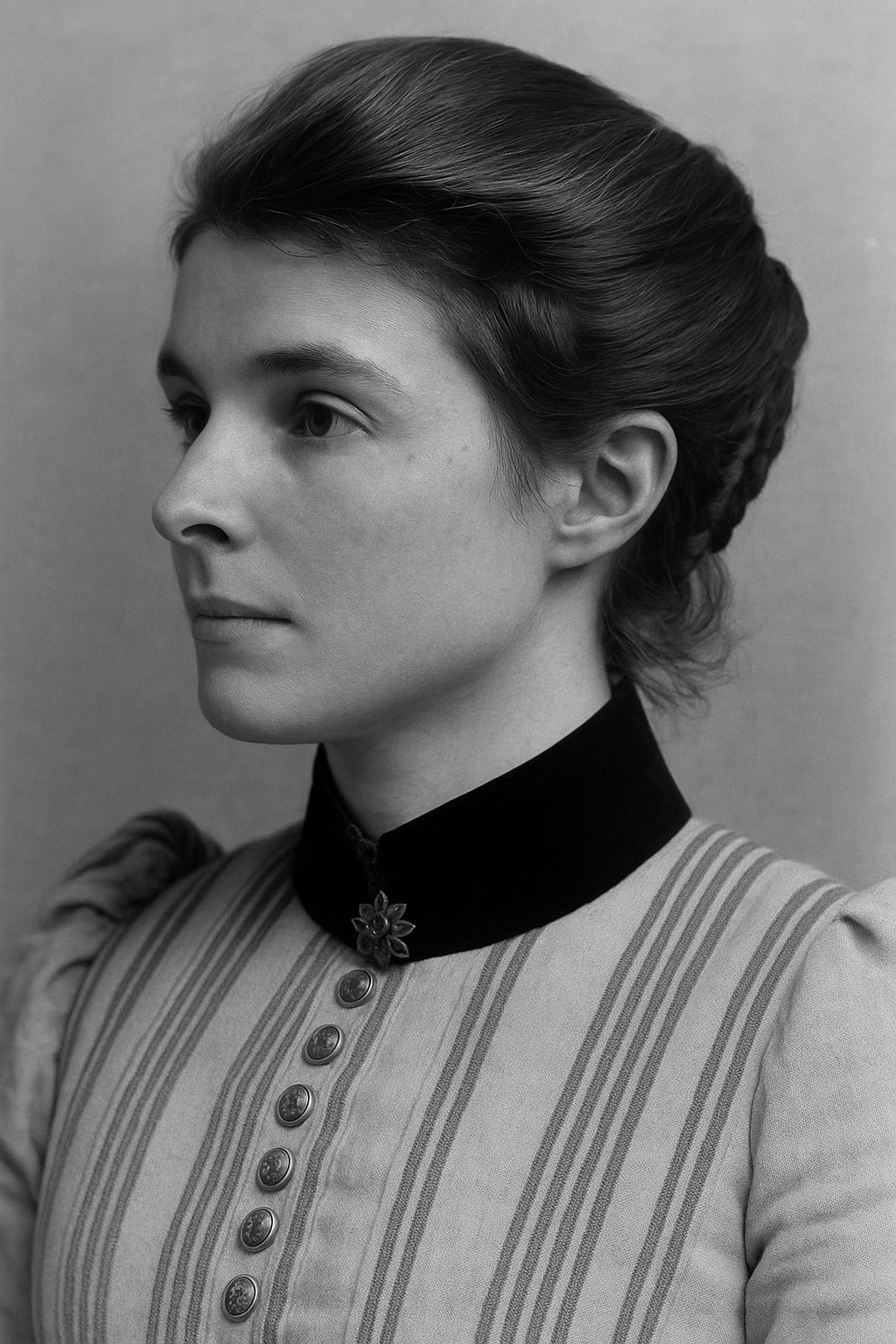
Attr: Elliott & Fry
| 1 Quotes | |
| Born as | Beatrice Potter |
| Occup. | Sociologist |
| From | United Kingdom |
| Spouse | Sidney Webb |
| Born | January 22, 1858 Gloucestershire, England |
| Died | April 30, 1943 Liphook, Hampshire, England |
| Aged | 85 years |
| Cite | |
Citation Formats
APA Style (7th ed.)
Beatrice webb biography, facts and quotes. (2026, April 1). FixQuotes. https://fixquotes.com/authors/beatrice-webb/
Chicago Style
"Beatrice Webb biography, facts and quotes." FixQuotes. April 1, 2026. https://fixquotes.com/authors/beatrice-webb/.
MLA Style (9th ed.)
"Beatrice Webb biography, facts and quotes." FixQuotes, 1 Apr. 2026, https://fixquotes.com/authors/beatrice-webb/. Accessed 1 Apr. 2026.
Early Life and Background
Beatrice Potter was born on 22 January 1858 into a wealthy, intellectually restless family in Gloucestershire, one of the daughters of Richard Potter, a powerful railway investor and Liberal politician, and Laurencina Heyworth Potter. She grew up amid Victorian abundance, domestic hierarchy, and constant adult conversation about commerce, Parliament, religion, and reform. The Potter household was not conventionally aristocratic, but it was deeply connected - a world of capital, administration, and public affairs. That environment gave her unusual access to serious debate while also exposing the contradictions of industrial Britain: vast private comfort beside urban poverty, female intelligence constrained by custom, and a governing class confident in its moral authority yet uncertain about the social effects of capitalism.
Her early life combined privilege with emotional strain. She was largely educated at home, expected to become accomplished rather than professionally useful, and pushed toward the social role of a cultivated Victorian daughter. Yet she possessed a combative, analytical temperament and a severe habit of self-scrutiny that set her apart from the ornamental femininity around her. Family travels and visits to industrial districts sharpened her awareness of class structure, but the decisive pressure came from within: a need to convert observation into system and feeling into work. By youth she was already testing herself against inherited assumptions about marriage, religion, and duty, developing the disciplined inwardness that later made her both a formidable investigator and one of the most revealing diarists of modern public life.
Education and Formative Influences
Denied a university education because of her sex, Potter educated herself through voracious reading, conversation, and field inquiry. Herbert Spencer, a family associate, offered an early model of systematic social thought, though she would later move beyond his individualism toward collectivist analysis. More important were direct encounters with the East End and with Charles Booth's inquiry into London poverty, for which she worked as an investigator in the 1880s, studying sweating, dock labor, and Jewish tailoring with close empirical attention. She also undertook a pioneering study of the cooperative movement, published as The Cooperative Movement in Great Britain in 1891, which trained her to link statistics, institutional history, and moral judgment. A broken engagement to the statesman Joseph Chamberlain and an intense but unresolved attachment to Spencer deepened her skepticism about conventional domestic destiny. By the time she met Sidney Webb in 1890, she had forged the habits that defined her mature mind: relentless note-taking, institutional curiosity, distrust of sentiment untested by evidence, and a conviction that social reform required organized knowledge rather than benevolent impulse.
Career, Major Works, and Turning Points
Her marriage to Sidney Webb in 1892 created one of the great intellectual partnerships in British public life. Together they became central figures in the Fabian Society, arguing for gradual, expert-led social transformation through the state, municipalities, and administrative reform rather than revolutionary rupture. Beatrice brought observational rigor and psychological penetration; Sidney supplied legislative mastery and bureaucratic drive. Their joint works - including The History of Trade Unionism (1894), Industrial Democracy (1897), English Local Government, and numerous Fabian tracts - helped found the empirical study of labor institutions and public administration. She played a major role in the minority report of the 1905-1909 Royal Commission on the Poor Laws, a landmark attack on the old Poor Law and a blueprint for coordinated social services. In 1895 the Webbs were among the founders of the London School of Economics, designed to train citizens and officials in the scientific study of society. Later they entered Labour politics, advised reformers, and traveled to the Soviet Union, producing Soviet Communism: A New Civilization? - a work now inseparable from the grave misjudgment of their admiration for Stalinist planning. That late error does not erase her achievement, but it remains a crucial turning point, revealing both the strengths and dangers of her faith in administration.
Philosophy, Style, and Themes
Beatrice Webb's cast of mind was investigative, managerial, and morally exacting. She distrusted improvisation and romantic politics; what moved her was the architecture of institutions - trade unions, cooperatives, school boards, local authorities, welfare agencies - and the way they disciplined collective life. Her sociology was never detached description. It was an attempt to discover how modern societies could replace charity with rights, caprice with planning, and class paternalism with public provision. Yet she was not cold in the simple sense. Beneath the famous steel was an acute unease about motive, performance, and self-division. Her diaries, among the great documents of intellectual self-examination, show a woman who studied herself with nearly the same severity she brought to the poor law or municipal finance.
That inward habit illuminates the psychology behind her public creed. “It would be curious to discover who it is to whom one writes in a diary. Possibly to some mysterious personification of one's own identity?” The sentence captures her lifelong doubling of observer and observed: she made the self into a case study, then used that discipline to master public complexity. Her prose, especially in the diaries and memoirs, often moves between clinical detachment and hunger for significance. She sought impersonality in method because she knew the force of private ambition, vanity, loneliness, and desire. This is why her social thought can seem both humane and austere. She believed personality was unreliable unless organized by duty; she believed freedom without structure decayed into waste. The same inner severity that gave her the power to anatomize institutions also made her vulnerable to systems that promised coherence on a national scale.
Legacy and Influence
Beatrice Webb died on 30 April 1943, leaving behind not merely books but a governing tradition. She helped invent the language and machinery of British social democracy: labor research, policy commissions, municipal socialism, welfare planning, and the ideal of expert administration in the public interest. Through the Fabian Society and the London School of Economics, her influence entered academic sociology, economics, civil service training, and Labour politics. Her studies of unions and poverty shaped later historians and social investigators; her poor law work anticipated the welfare state consolidated after 1945. At the same time, her reputation remains productively unsettled because her admiration for Soviet planning exposed a technocratic blind spot - an underestimation of coercion when exercised by a state she thought socially purposeful. That tension is central to her legacy. She endures not as a saint of reform but as one of the master builders of modern social inquiry: brilliant, disciplined, unsentimental, and permanently relevant wherever democratic societies ask how knowledge, power, and justice should be joined.
Our collection contains 1 quotes written by Beatrice, under the main topics: Writing.
Frequently Asked Questions
- Beatrice Webb children: Beatrice and Sidney Webb had no children; they instead devoted their lives to public service, research, and political and social reform.
- Beatrice Webb Socialism: Beatrice Webb was a leading British socialist and Fabian, advocating gradual, democratic social reform, state welfare, and planned economics rather than revolutionary socialism.
- Beatrice Webb LSE: Beatrice Webb co‑founded the London School of Economics and Political Science (LSE) in 1895 with Sidney Webb and other Fabians to promote research‑based social reform.
- Sidney Webb: Sidney Webb (1859–1947) was Beatrice Webb’s husband, a fellow Fabian socialist, co‑author on many of her works, and a co‑founder of the London School of Economics and Political Science (LSE).
- Beatrice Webb House: Beatrice Webb House was an adult education and conference centre in Holmbury St Mary, Surrey, named in her honour and linked to the Labour movement and the Fabian Society.
- Beatrice Webb books: Beatrice Webb wrote influential works such as "The Co-operative Movement in Great Britain" (1891), co‑authored "Industrial Democracy" (1897), "The History of Trade Unionism" (1894), and "English Poor Law History" with Sidney Webb, as well as her published diaries.
- How old was Beatrice Webb? She became 85 years old
Source / external links