
Ben Linder Biography Quotes 4 Report mistakes
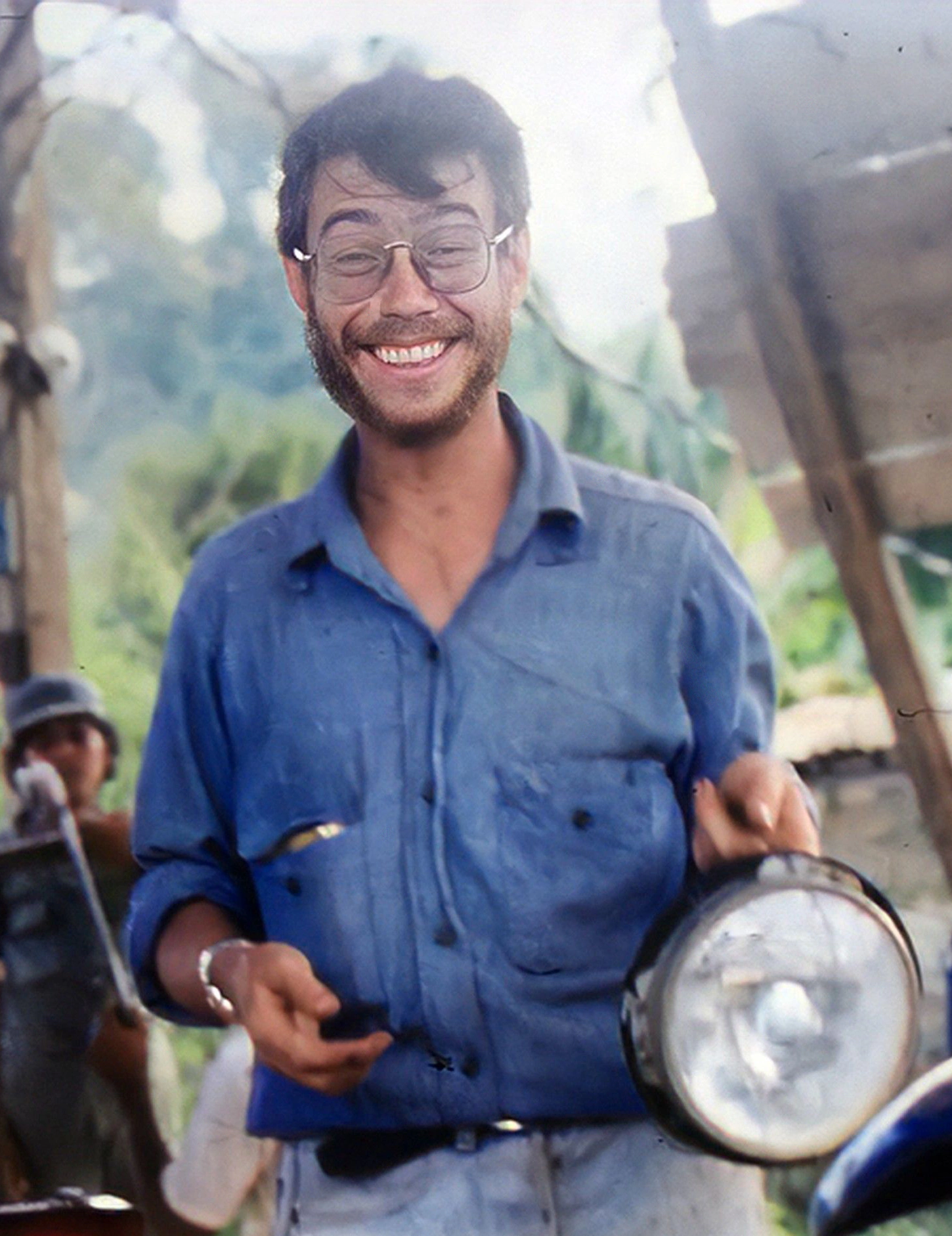
| 4 Quotes | |
| Born as | Benjamin Ernest Linder |
| Occup. | Engineer |
| From | USA |
| Born | July 7, 1959 USA |
| Died | April 28, 1987 Nicaragua |
| Cause | Killed by Contras |
| Aged | 27 years |
| Cite | |
Citation Formats
APA Style (7th ed.)
Ben linder biography, facts and quotes. (2026, February 11). FixQuotes. https://fixquotes.com/authors/ben-linder/
Chicago Style
"Ben Linder biography, facts and quotes." FixQuotes. February 11, 2026. https://fixquotes.com/authors/ben-linder/.
MLA Style (9th ed.)
"Ben Linder biography, facts and quotes." FixQuotes, 11 Feb. 2026, https://fixquotes.com/authors/ben-linder/. Accessed 6 Mar. 2026.
Early Life and Education
Benjamin Ernest Linder was born in 1959 in the United States and grew up in a family that encouraged public service, curiosity, and creativity. From an early age he showed a knack for tinkering and a fascination with how things worked, interests that naturally steered him toward engineering. He was equally drawn to performance and play, learning to ride a unicycle and juggle, skills he later treated not as a pastime but as a way to connect with people across language and cultural barriers. After high school he studied mechanical engineering, completing rigorous coursework in thermodynamics, machine design, and energy systems. In college he also encountered the ideas of appropriate technology, small-scale, locally maintainable solutions that could meet basic needs in communities with limited resources. Those ideas, and friendships formed with classmates and mentors who believed that technical skill should serve human dignity, shaped his path after graduation.Commitment to Appropriate Technology and International Service
Linder came of age when engineers and public health workers were rethinking development around community participation and sustainability. He absorbed that ethos and resolved to work where engineering could have immediate, tangible impact. In the early 1980s he set his sights on Nicaragua, a country emerging from dictatorship and striving to expand basic services in rural areas even as conflict spread. Family members supported his wish to serve while worrying about the dangers; friends from university encouraged him to follow his convictions and offered contacts among volunteers already in Central America. Linder's decision reflected not only a professional direction but a personal one: he believed that the tools of his trade, pencils, surveying equipment, and wrenches, could help light homes, power clinics, and strengthen communities if placed directly in the hands of local people.Work in Nicaragua
Arriving in Nicaragua around 1983, Linder joined a network of local technicians, community leaders, and international volunteers focused on rural electrification and public health. He based much of his work in the mountainous north, in and around towns such as El Cua and San Jose de Bocay. With Nicaraguan engineers and villagers, he surveyed streams, measured head and flow, and designed small hydroelectric systems suited to steep terrain and modest budgets. He helped plan intakes and penstocks, selected robust impulse turbines, and devised simple control systems that local operators could maintain. He scrounged parts, standardized hardware where possible, and trained apprentices so that knowledge would remain in the community. The people who worked most closely with him, fellow technicians and community organizers, remembered both his meticulous notebooks and his willingness to shoulder heavy pipe alongside everyone else.Linder also brought to his work the same flair for performance that had energized him in the United States. Teaming up with Nicaraguan health workers, he rode his unicycle and juggled to draw families to vaccination days and health talks. Nurses and doctors appreciated how he turned a clinic courtyard into a place where children laughed before lining up for shots. His colleagues observed that the clown nose he sometimes wore and the hard hat he always carried were two sides of the same commitment: to meet people where they were and make essential services more accessible.
Conflict, Risk, and Resolve
By the mid-1980s the Contra war brought ambushes, sabotage, and mines to the very regions where rural electrification was underway. Community projects and the people associated with them became targets, and movement along mountain trails grew perilous. Linder, together with his Nicaraguan coworkers, weighed these dangers against the urgency of bringing light and power to isolated towns. Villagers, local officials, and fellow engineers advised caution, adjusted schedules, and took measures to reduce risk, but they also pressed on. Linder chose to remain with his team, convinced that abandoning the work would mean years of delay for communities that had already invested sweat and hope in the projects.Death and Immediate Aftermath
On April 28, 1987, while working on a small hydroelectric project in the El Cua, Bocay area, Linder was traveling with Nicaraguan colleagues Sergio Hernandez and Pablo Rosales. The three were ambushed by Contra fighters and killed. News of their deaths spread rapidly through nearby communities, where villagers and coworkers mourned the loss of men they knew not by headlines but by the footprints of their work: survey stakes along a creek, a foundation poured for a powerhouse, poles ready for stringing wire. Local leaders and health workers who had collaborated with Linder honored him and his companions in memorial gatherings, recounting how the team had taught welding techniques, trained meter readers, and helped establish maintenance routines that would allow systems to endure.In the United States, Linder's family and friends grieved and called attention to the circumstances that had made rural development work so dangerous. His death reverberated in Oregon and among solidarity groups nationwide. Members of Congress from his home state, along with other lawmakers who had criticized funding for the Contra war, cited his case in debates over U.S. policy. The incident crystallized for many observers the human stakes of a conflict that often appeared only in abstract terms on the evening news.
Legacy
Linder's legacy took shape along two intertwined paths. In Nicaragua, his coworkers and the communities they served resolved to finish the projects he had helped start. Technicians carried forward his design notes and training methods; villagers continued to organize work brigades and set up local electricity committees. In subsequent years, some of those collaborators joined together in organizations dedicated to rural electrification and community development that commemorated him by name. The small hydropower model he championed, grounded in local capacity, simple mechanics, and community ownership, continued to prove itself as a practical way to bring reliable energy to remote areas.In the United States, family members, friends, and colleagues worked to keep the lessons of his life visible. Lectures, exhibits, and community events in Oregon and elsewhere highlighted both his engineering and his human connection to the people he served. Students encountered his story in classrooms and campus talks that linked technical training with ethics and public purpose. Writers and journalists chronicled his work and the circumstances of his death, ensuring that the people who labored alongside him, especially Nicaraguan coworkers like Sergio Hernandez and Pablo Rosales, were remembered not as footnotes but as central figures.
Perhaps the most enduring measure of Benjamin Ernest Linder's influence is the combination of competence and compassion he modeled. He did not separate calculation from community or design from dignity. He treated engineering as a way to widen opportunity, and he treated performance, as a clown on a unicycle, laughing with children, as a way to build trust. The people around him, from his family and university friends to the rural technicians and health workers who shared his days in the northern highlands, shaped his choices and amplified his impact. Their work, continued in his absence, remains a testament to the belief that practical skill, applied with humility in partnership with local communities, can change lives even in the harshest conditions.
Our collection contains 4 quotes written by Ben, under the main topics: Motivational - Hope - Equality - War.
Source / external links