
Ben Nicholson Biography Quotes 24 Report mistakes
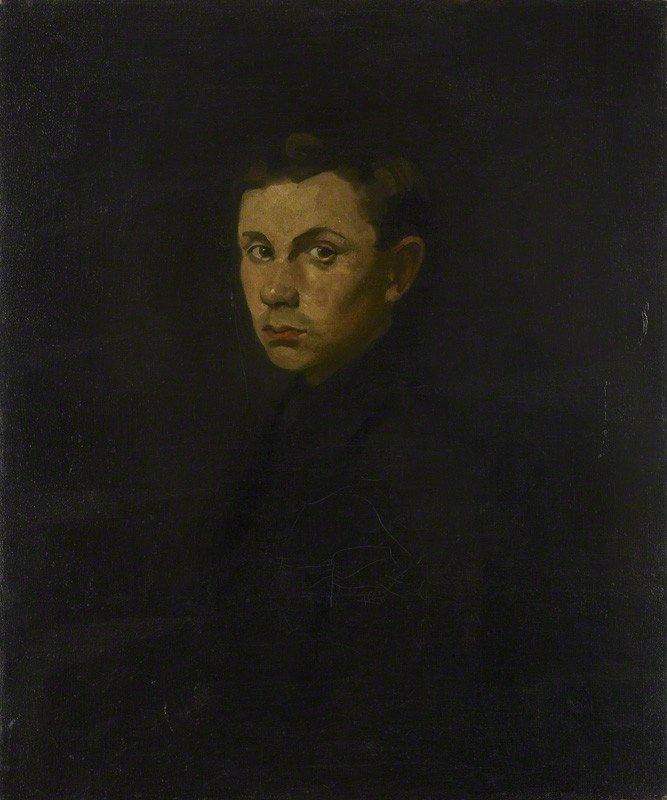
Attr: Mabel Pryde
| 24 Quotes | |
| Born as | Benjamin Lauder Nicholson |
| Occup. | Artist |
| From | United Kingdom |
| Born | April 10, 1894 Denham, Buckinghamshire, England, UK |
| Died | February 6, 1982 London, England, UK |
| Cause | Natural Causes |
| Aged | 87 years |
| Cite | |
Citation Formats
APA Style (7th ed.)
Ben nicholson biography, facts and quotes. (2026, February 11). FixQuotes. https://fixquotes.com/authors/ben-nicholson/
Chicago Style
"Ben Nicholson biography, facts and quotes." FixQuotes. February 11, 2026. https://fixquotes.com/authors/ben-nicholson/.
MLA Style (9th ed.)
"Ben Nicholson biography, facts and quotes." FixQuotes, 11 Feb. 2026, https://fixquotes.com/authors/ben-nicholson/. Accessed 11 Mar. 2026.
Early Life and Background
Ben Nicholson was born Benjamin Lauder Nicholson on 10 April 1894 in Denham, Buckinghamshire, into a household where art was both vocation and atmosphere. His father, Sir William Nicholson, was a prominent painter and printmaker associated with the New English Art Club, and his mother, Mabel Pryde, was also an artist; the home he shared with siblings included the painter Nancy Nicholson and the architect Christopher Nicholson. From the beginning, Ben grew up amid studio talk, visitors from London art circles, and the practical disciplines of drawing, paper, and pigment.That privilege carried its own pressure. Nicholson developed early a temperament that distrusted showmanship and searched for a quieter authority - a way to make modern art that did not rely on spectacle. The pre-1914 world he entered as a young man still believed in stable hierarchies, yet it was already fractured by new machines, new cities, and new visual languages. This tension between inherited culture and the need to start again would become one of the motors of his life.
Education and Formative Influences
He studied at the Slade School of Fine Art in London (1910-1914), where rigorous drawing coexisted with debates about post-impressionism and the shock of continental modernism. After the First World War, travel and looking became his real education: he absorbed Cezanne and Cubism, learned from the structural calm of early Italian painting, and gradually exchanged descriptive naturalism for an art of relationships - plane against plane, line against line. By the 1920s and early 1930s, the examples of Picasso and Braque, and Nicholson's own encounters with European abstraction, helped harden his instinct that order could be built without narrative.Career, Major Works, and Turning Points
Nicholson emerged in the 1920s with still lifes and landscapes that simplified form while keeping a human scale, then moved decisively toward abstraction in the early 1930s. A turning point came through his partnership and later marriage with the sculptor Barbara Hepworth; together they worked in London and, later, in St Ives, Cornwall, where the coastal light and the community of modernists (including Naum Gabo) reinforced Nicholson's commitment to clarity. He became central to British abstraction, helped shape the language of Constructive art in Britain, and made his most distinctive objects: the white reliefs of the 1930s, shallow carved paintings whose geometry is intimate rather than monumental, as well as rigorously structured paintings that kept returning to the still-life idea even when representation fell away.Philosophy, Style, and Themes
Nicholson's mature art is a discipline of restraint - not a lack of feeling, but a belief that emotion could be carried by proportion, touch, and the measured interval. His carved reliefs and pared-down canvases pursue an exacting economy, an approach that aligns with the ambition to find essentials: “I'm interested in locating the holy grail of the minimum means to express the most complex ideas”. In his best work, the surface becomes a site of decisions: incisions that read like drawn thought, whites that hold multiple temperatures, and a geometry that never quite becomes mechanical because the hand is always present.That hand, however, was not casual. Nicholson's practice suggests a personality wary of grand systems and suspicious of coercive certainty; the moral dimension of his formalism lies in the refusal to bully the viewer with effects. The modernist dream of a total language could easily harden into dogma, and Nicholson's quieter, provisional constructions resonate with the warning that “Any ideal system is its own worst enemy, and as soon as you start to implement these visions of grandeur, they just fall apart and turn into a complete tyranny”. His abstractions are thus less utopian blueprints than lived arrangements - order tested against perception, with a continual studentlike seriousness in the effort to get it right: “I'm not an expert, but I want to be”. The theme beneath the forms is integrity: a self that stays alert, revising, and unwilling to let purity become oppression.
Legacy and Influence
Nicholson died on 6 February 1982, having become one of the defining figures of 20th-century British modernism. His influence runs through the St Ives school and beyond it, offering later painters a model of abstraction grounded in craft, light, and the scale of domestic life rather than the rhetoric of machines. He helped make it possible for British art to be both international and local - conversant with European modernism yet rooted in specific places and materials - and his reliefs remain touchstones for artists who want structure without rigidity, and austerity without coldness.Our collection contains 24 quotes written by Ben, under the main topics: Ethics & Morality - Funny - Art - Sarcastic - Writing.
Source / external links