
Ben Shahn Biography Quotes 27 Report mistakes
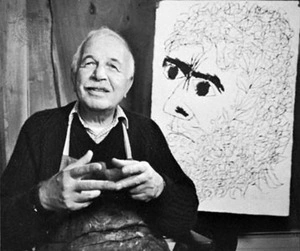
| 27 Quotes | |
| Occup. | Artist |
| From | Lithuania |
| Born | September 12, 1898 |
| Died | March 14, 1969 |
| Aged | 70 years |
| Cite | |
Citation Formats
APA Style (7th ed.)
Ben shahn biography, facts and quotes. (2026, February 11). FixQuotes. https://fixquotes.com/authors/ben-shahn/
Chicago Style
"Ben Shahn biography, facts and quotes." FixQuotes. February 11, 2026. https://fixquotes.com/authors/ben-shahn/.
MLA Style (9th ed.)
"Ben Shahn biography, facts and quotes." FixQuotes, 11 Feb. 2026, https://fixquotes.com/authors/ben-shahn/. Accessed 25 Mar. 2026.
Early Life and Background
Ben Shahn was born on September 12, 1898, in the Jewish Pale of Settlement in what is now Lithuania, then part of the Russian Empire. His childhood fell under the long shadow of Tsarist repression and periodic anti-Jewish violence, conditions that shaped many East European Jewish families into reluctant migrants and hardened in the young Shahn a suspicion of arbitrary power. He grew up amid Yiddish-speaking communal life and the practical crafts that sustained it, learning early that images could carry both memory and warning.In 1906 he emigrated with his family to the United States, settling in New York City as part of the great wave that remade the Lower East Side. The immigrant city offered safety but demanded adaptation: crowded tenements, factory rhythms, and a dense street theater of labor politics, storefront religion, and multilingual argument. Those public dramas became Shahn's first museum, and the ethical stance of his later art - attentive to the pressured face, the tense hand, the moment of accusation - can be traced to what he saw and absorbed there.
Education and Formative Influences
Shahn left school early and apprenticed as a lithographer, training that gave him a lifelong respect for line, lettering, and reproducible images aimed at ordinary viewers rather than elites. He studied at night and later at New York University and the Art Students League, where he encountered modernist form, the Ashcan legacy of urban realism, and the era's renewed debate about whether art should serve social witness. He traveled to Europe in the late 1920s, absorbing the directness of early Renaissance fresco narrative and the moral urgency of European political art, influences that he would filter through the American vernacular of posters, newspapers, and storefront signs.Career, Major Works, and Turning Points
Shahn emerged in the early 1930s as one of the defining voices of American Social Realism, marrying modern composition to explicit civic content. His breakthrough came with the Sacco and Vanzetti paintings (1931-32), a cycle that turned a contested trial into a modern martyr narrative and announced his central subject: the individual caught in the gears of institutions. During the New Deal he became a leading artist in federal cultural programs, collaborating with Diego Rivera on the Rockefeller Center mural project and then producing his own mural commissions; the decade also pushed him toward documentary practice. Hired within the Roosevelt administration and drawn to the Farm Security Administration milieu, he photographed across the country in the 1930s, later returning to painting with a sharpened eye for gesture and environment. After World War II he taught, wrote influential essays and lectures on art and society, designed posters and book work, and continued painting major works such as Allegory (1948) and the deeply felt Lucky Dragon series (1959-60), responding to nuclear anxiety with a moral clarity that kept his art publicly legible.Philosophy, Style, and Themes
Shahn's style is recognizable for its spare, calligraphic line, flattened space, and the deliberate incorporation of text, signage, and emblem - a visual language that reads like testimony. He favored faces over landscapes, not because he lacked interest in place, but because place mattered to him chiefly as the stage on which pressure reveals character. As he put it, “I was primarily interested in people, and people in action, so that I did nothing photographically in the sense of doing buildings for their own sake or a still life or anything like that”. This focus on action - on the moment a person is judged, displaced, hired, fired, wounded, or stubbornly enduring - made his images feel less like scenes than like moral cross-examinations, with the viewer implicated as witness.His inner life, by his own account, resisted virtuoso technique in favor of lived comprehension, even at the cost of missing certain opportunities. “It's a little bit like my inability to read a guide book before I go anywhere. I can read it after I've been there and by the same logic I refuse to accept any technical stunts from anybody. I refused to learn more than I knew and I confess I missed a great deal”. That confession reveals a psychology of principled limitation: he distrusted polish that could anesthetize feeling, and he preferred an earned, sometimes rough directness that kept the work emotionally porous. The same temperament explains his capacity for sustained civic engagement; “Whatever I get involved in, I'm totally involved, you see”. In Shahn, total involvement did not mean propaganda without nuance - it meant refusing the shelter of aesthetic detachment when history was demanding attention.
Legacy and Influence
Ben Shahn died on March 14, 1969, leaving a body of work that continues to define the possibility of art as public conscience in the United States. He influenced later generations of politically alert painters, illustrators, photographers, and graphic designers by proving that modernist economy could coexist with narrative clarity and moral urgency. In an era when debates over "art for art's sake" versus social responsibility remain unresolved, Shahn endures as a model of the artist-citizen: an immigrant craftsman turned modern master who insisted that images belong in the public square, where the fate of strangers is never merely someone else's story.Our collection contains 27 quotes written by Ben, under the main topics: Witty One-Liners - Art - Learning - Work Ethic - Gratitude.
Other people related to Ben: Walker Evans (Photographer)
Source / external links