
Benjamin Britten Biography Quotes 4 Report mistakes
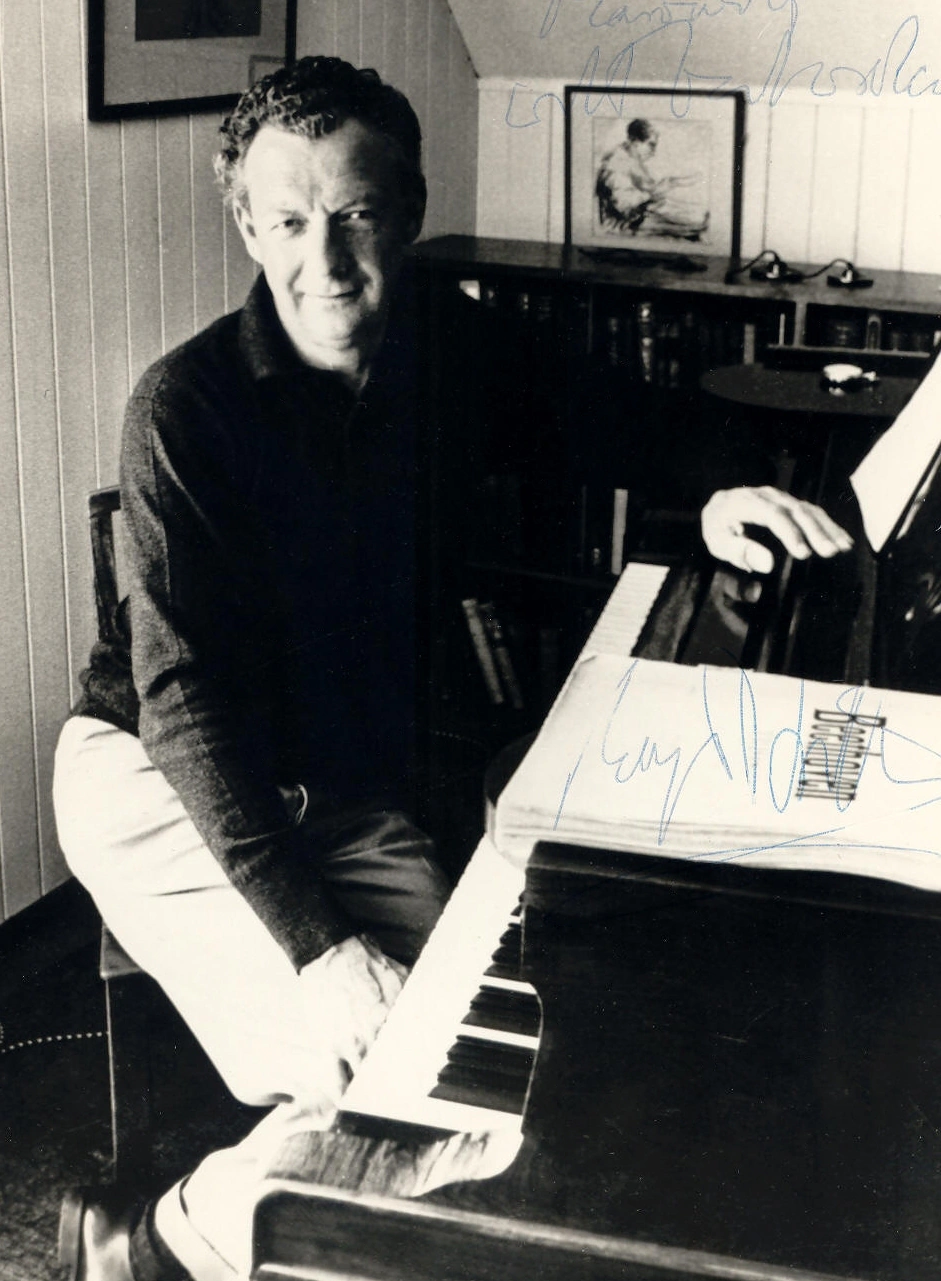
| 4 Quotes | |
| Occup. | Composer |
| From | England |
| Born | November 22, 1913 Lowestoft, Suffolk, UK |
| Died | December 4, 1976 Aldeburgh, Suffolk, East Anglia, England |
| Cause | Heart failure |
| Aged | 63 years |
| Cite | |
Citation Formats
APA Style (7th ed.)
Benjamin britten biography, facts and quotes. (2026, February 11). FixQuotes. https://fixquotes.com/authors/benjamin-britten/
Chicago Style
"Benjamin Britten biography, facts and quotes." FixQuotes. February 11, 2026. https://fixquotes.com/authors/benjamin-britten/.
MLA Style (9th ed.)
"Benjamin Britten biography, facts and quotes." FixQuotes, 11 Feb. 2026, https://fixquotes.com/authors/benjamin-britten/. Accessed 28 Mar. 2026.
Early Life and Education
Edward Benjamin Britten was born on 22 November 1913 in Lowestoft, a coastal town in Suffolk, England. The youngest of four children, he showed an exceptional musical aptitude from early childhood, composing prolifically as a schoolboy and learning the piano and viola. A decisive influence came in 1927 when he met the composer Frank Bridge, who became his mentor and gave him rigorous private instruction in craft, clarity, and expressive economy. Bridge's insistence on technical discipline and modern sensibility left a permanent mark on Britten's voice. In 1930 Britten entered the Royal College of Music in London, where he studied composition with John Ireland. Although he found some academic routines frustrating, he honed his skill in orchestration and ensemble writing and began to develop the clean textures, tonal clarity, and psychological directness that would characterize his mature work.Early Professional Work and Key Collaborations
In the mid-1930s Britten joined the General Post Office Film Unit, writing scores for documentaries. The collaboration brought him into close contact with the poet W. H. Auden, whose sharp intellect and cosmopolitan outlook challenged the young composer. Together they produced music for films and radio and created concert works such as On This Island. Britten also wrote the Variations on a Theme of Frank Bridge, a tribute to his mentor that quickly established his international reputation. During these years he met the tenor Peter Pears; their artistic partnership and lifelong personal relationship became central to Britten's work. Pears's voice and musicality shaped many of Britten's greatest roles, cycles, and dramatic conceptions, giving the composer a distinctive vocal muse.War, Exile, and Return
In 1939 Britten and Pears traveled to the United States, where Britten worked intensively, composed the Violin Concerto and Sinfonia da Requiem, and collaborated with Auden on the operetta Paul Bunyan. The outbreak of war sharpened Britten's pacifist convictions. Feeling the pull of home and English culture, he and Pears returned to Britain in 1942. Britten registered as a conscientious objector, a choice he defended with characteristic calm and moral seriousness. In these years he composed the Hymn to St Cecilia and began searching for a powerful operatic subject suited to contemporary English life. The result, germinating just as the war ended, would transform British opera.Operatic Breakthrough: Peter Grimes
Peter Grimes, premiered in 1945 at Sadler's Wells to a libretto by Montagu Slater based on George Crabbe, made Britten a dominant force in postwar music. Its sea imagery, raw social tensions, and complex portrait of the outsider announced a new operatic language: dramatic, vivid, and unmistakably English. Peter Pears sang the title role, and Joan Cross, an important colleague and advocate, took the role of Ellen Orford. The opera's success demonstrated that modern opera in English could be both psychologically acute and popular with audiences, and it placed Britten at the center of national cultural life.The English Opera Group and Aldeburgh
Eager to control the conditions of performance and to nurture new work, Britten co-founded the English Opera Group in 1947 with colleagues including Peter Pears and the producer-librettist Eric Crozier. They created a repertory and touring model suited to intimate, text-focused music theater. In 1948 Britten, Pears, and Crozier launched the Aldeburgh Festival near Britten's Suffolk home, a venture that grew into one of Britain's most distinctive musical institutions. With the later development of the Snape Maltings Concert Hall, the festival acquired a striking home; when a devastating fire struck shortly after its opening, the hall was rebuilt with remarkable speed, a testament to the community and to Britten's stature. Imogen Holst, daughter of Gustav Holst, worked closely with Britten from the early 1950s as a trusted musical assistant and colleague, strengthening the festival's artistic core.Exploration of Human Character on Stage
Britten's operas probe moral ambiguity, innocence and corruption, and the pressures of community. The Rape of Lucretia introduced a chamber-opera scale that the English Opera Group could tour; Albert Herring offered comedy with humane bite; and Billy Budd, adapted by E. M. Forster and Eric Crozier from Herman Melville, set masculine authority against individual conscience on the high seas. Myfanwy Piper, another crucial collaborator, wrote the libretti for The Turn of the Screw, Owen Wingrave, and Death in Venice. The Turn of the Screw's tight, twelve-note theme-and-variations structure and Death in Venice's spare, luminous palette show Britten integrating formal ingenuity with psychology and atmosphere. He also wrote works for and about young performers and audiences, such as The Little Sweep and Noye's Fludde, treating community performance as an ethical and artistic mission rather than a sideline.Orchestral and Vocal Mastery
Alongside opera, Britten produced a body of vocal and orchestral music that became central to 20th-century repertoire. The Serenade for Tenor, Horn and Strings and the Nocturne show his highly personal approach to English poetry and the tenor voice, often with Peter Pears in mind. Les Illuminations reveals his fascination with French verse and brilliant string writing. The Young Person's Guide to the Orchestra, based on a theme by Henry Purcell, and the earlier Simple Symphony and Variations on a Theme of Frank Bridge display his gift for clarity, invention, and teaching by delight. He revitalized the English Baroque legacy through Purcell realizations while remaining unmistakably modern.International Friendships and the War Requiem
After 1945 Britten and Yehudi Menuhin performed for survivors of Nazi camps, a gesture emblematic of Britten's humane commitments. His circle widened to include the Russian composer Dmitri Shostakovich, with whom he felt deep artistic kinship, and the cellist Mstislav Rostropovich, for whom he wrote a Cello Sonata, a Cello Symphony, and three solo Cello Suites. The soprano Galina Vishnevskaya, Rostropovich's wife, was intended as a soloist in the War Requiem, the monumental work Britten composed for the reconsecration of Coventry Cathedral in 1962. Combining the Latin Mass for the Dead with the war poetry of Wilfred Owen, the piece brought together voices from former enemy nations; at the premiere, when Vishnevskaya could not appear, Heather Harper stepped in alongside Peter Pears and Dietrich Fischer-Dieskau. The War Requiem became an international emblem of reconciliation and sealed Britten's global reputation.Choreography, Ceremony, and Public Life
Britten engaged fully with national ceremonial and stagecraft. Gloriana, written for the 1953 coronation celebrations of Queen Elizabeth II, offered a nuanced portrait of power and private feeling that initially met mixed reception but later gained esteem. His collaboration with choreographer Frederick Ashton on the ballet The Prince of the Pagodas broadened his theatrical reach. Britten recorded extensively, often conducting his own works, and he shaped performance practice through disciplined rehearsal and close work with trusted performers such as Pears, Joan Cross, and Imogen Holst.Health, Honors, and Final Works
In the 1960s Britten's health began to trouble him, and major heart surgery in 1973 left lasting effects, yet he continued to compose with concentrated purpose. He completed Death in Venice in 1973, an austere meditation on beauty and mortality tailored to Pears's artistry. Late works include the opera Owen Wingrave, the Canticles, and Phaedra for mezzo-soprano. Public recognition followed his achievement: he was appointed to the Order of Merit and, in 1976, created a life peer as Baron Britten of Aldeburgh, the first British composer to receive such a distinction. He spent his final years at The Red House in Aldeburgh, working and overseeing the festival he had nurtured.Death and Legacy
Benjamin Britten died on 4 December 1976 in Aldeburgh. Peter Pears survived him and remained a steadfast advocate for his music. Britten's legacy rests on the renewal of opera in English, on his integration of text and music, and on his ethical seriousness, his belief that composition serves community as much as art itself. Works like Peter Grimes and the War Requiem speak both to their moment and to enduring human concerns. Through the English Opera Group, the Aldeburgh Festival, and the disciplined collaborations he sustained with figures such as W. H. Auden, Eric Crozier, Myfanwy Piper, Imogen Holst, Mstislav Rostropovich, Dmitri Shostakovich, Dietrich Fischer-Dieskau, Galina Vishnevskaya, Joan Cross, and Yehudi Menuhin, Britten reshaped Britain's musical life and left a global imprint that continues to guide performers and audiences.Our collection contains 4 quotes written by Benjamin, under the main topics: Music - Work Ethic - Soulmate.
Other people related to Benjamin: Arvo Part (Composer), Dimitri Shostakovich (Composer), Peter Hall (Director), Michael Tippett (Composer)
Source / external links