
Bernard Berenson Biography Quotes 13 Report mistakes
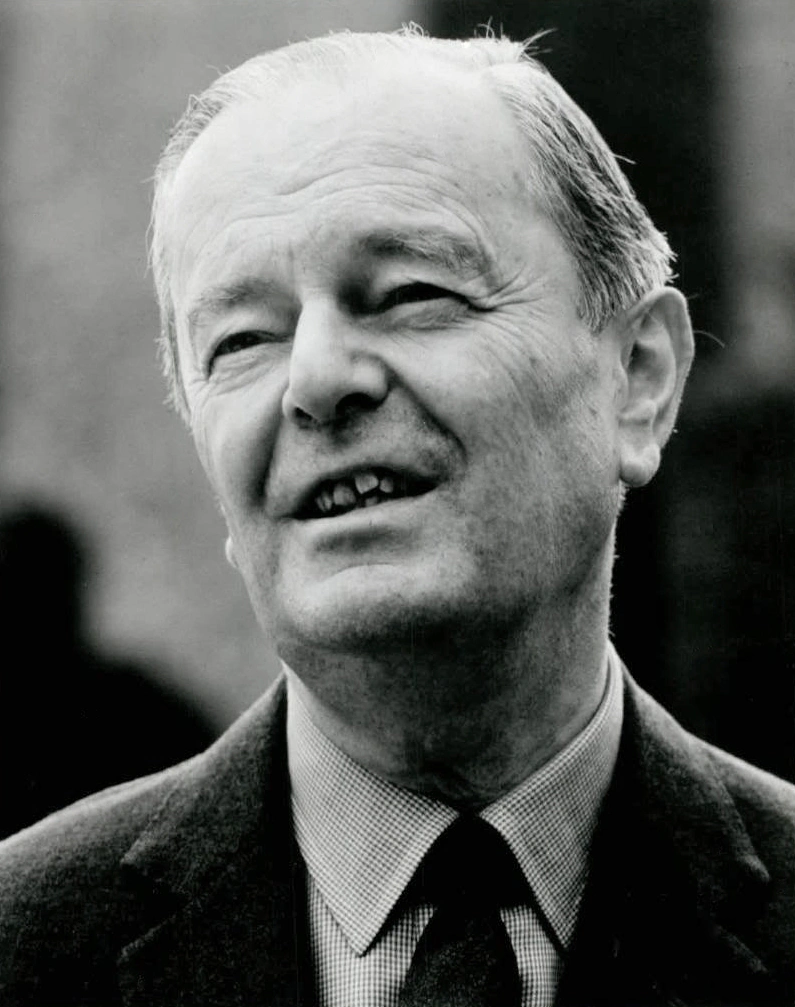
| 13 Quotes | |
| Born as | Bernhard Valvrojenski |
| Occup. | Historian |
| From | USA |
| Born | June 26, 1865 Butrimonys, Lithuania |
| Died | October 6, 1959 New York City, USA |
| Aged | 94 years |
| Cite | |
Citation Formats
APA Style (7th ed.)
Bernard berenson biography, facts and quotes. (2026, February 11). FixQuotes. https://fixquotes.com/authors/bernard-berenson/
Chicago Style
"Bernard Berenson biography, facts and quotes." FixQuotes. February 11, 2026. https://fixquotes.com/authors/bernard-berenson/.
MLA Style (9th ed.)
"Bernard Berenson biography, facts and quotes." FixQuotes, 11 Feb. 2026, https://fixquotes.com/authors/bernard-berenson/. Accessed 13 Feb. 2026.
Early Life and Background
Bernard Berenson was born Bernhard Valvrojenski on June 26, 1865, in Butrimonys in the Russian Empire (today Lithuania), into a Jewish family living under the pressures of late-tsarist restriction and periodic violence. In 1875 his parents emigrated to the United States, part of the vast East European Jewish migration that remade American cities and accelerated debates about assimilation, education, and cultural authority. The family settled in Boston, where the immigrant boy learned early that language and taste could be passports - and that reinvention carried its own loneliness.In the United States he reshaped himself with unusual intensity, adopting the name Bernard Berenson and cultivating an American confidence that could coexist with an outsider's watchfulness. The Gilded Age offered new fortunes and new collectors, and it also created a hunger for European cultural legitimacy. Berenson would eventually stand at the intersection of those forces: a self-made connoisseur who could speak to plutocrats, scholars, and dealers, and who built a life in which aesthetic judgment became both vocation and shield.
Education and Formative Influences
Berenson entered Harvard College in 1883, studying under Charles Eliot Norton and forming friendships in Boston's cultivated circle. Harvard in the 1880s still treated art history as a moral and civilizational education, and Berenson absorbed that seriousness while training his eye in museums and private collections. His early travels to Europe, and his immersion in Italian painting, brought him into the orbit of connoisseurship: the method of attributing authorship by close visual analysis, allied to the new discipline of art history but animated by a novelist's sensitivity to personality. That fusion - scholarship as lived perception - became his signature.Career, Major Works, and Turning Points
By the 1890s Berenson had settled into the Italian world that would define him, eventually making his home at I Tatti, a villa outside Florence that grew into a formidable library and scholarly center. His early books, including Venetian Painters of the Renaissance (1894), Florentine Painters of the Renaissance (1896), and The Drawings of the Florentine Painters (1903), codified a language of stylistic diagnosis that collectors and curators found irresistible. A decisive turning point was his long relationship with the London dealer Joseph Duveen, for whom Berenson provided opinions that helped move Old Master paintings into American collections; the partnership made him wealthy and influential, but it also shadowed his reputation with allegations of conflicts of interest and overconfident attributions. Through two world wars and shifting academic fashions, he remained a commanding presence in the art market and in the scholarly imagination, defending the primacy of the trained eye even as laboratories and archives gained status.Philosophy, Style, and Themes
Berenson's inner life was built around a hunger for intensity - for a state in which perception, ethics, and ritual could fuse. His journals and essays repeatedly frame looking as a kind of devotion, a way of granting shape to time and to the self. "From childhood on I have had the dream of life lived as a sacrament... the dream implied taking life ritually as something holy". That longing helps explain his attraction to Renaissance painting: not only for its technical mastery, but for its disciplined embodiment of belief, order, and human dignity. It also explains his personal austerities and his restlessness with mere acquisition; even when he served the market, he wanted the market to lead upward into contemplation.His critical method, famous for its talk of tactile values and the sensations of form, was psychological as much as optical. He read artists as temperaments and schools as habits of mind, and he treated connoisseurship as a lifelong apprenticeship to uncertainty. "Between truth and the search for it, I choose the second". That preference illuminates both his brilliance and his liabilities: he could move faster than documentation, trusting the eye's educated intuition, and later generations would challenge some conclusions even while learning from his rigor. Old age did not diminish his faith in art as sustenance; he wrote with a late, almost stoic tenderness about how attention outlasts vigor. "When everything else physical and mental seems to diminish, the appreciation of beauty is on the increase". In Berenson, the cultivated gaze becomes a survival strategy - a way to stay porous to life when history, politics, and the body close in.
Legacy and Influence
Berenson died on October 6, 1959, at I Tatti, having lived long enough to see the academic discipline he helped shape grow skeptical of his market entanglements and yet increasingly dependent on his fundamental insights. His influence persists in the continuing authority granted to close looking, in the organization of Renaissance studies around questions of authorship and style, and in the institutional afterlife of I Tatti as a major center for Italian Renaissance scholarship. He remains a complicated emblem of his era: an immigrant intellectual who mastered elite codes, a scholar who navigated capitalism without escaping its compromises, and a writer who insisted that beauty is not decoration but a mode of knowledge.Our collection contains 13 quotes written by Bernard, under the main topics: Witty One-Liners - Wisdom - Truth - Freedom - Meaning of Life.
Other people related to Bernard: Logan Pearsall Smith (Critic), Kenneth Clark (Author)