
Bernardo Bertolucci Biography Quotes 7 Report mistakes
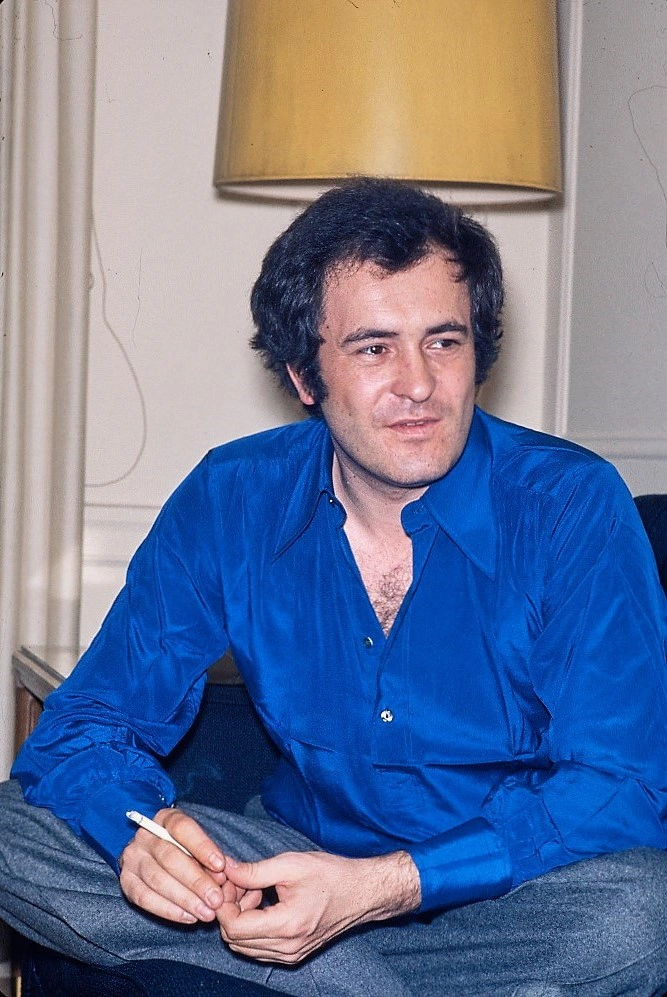
| 7 Quotes | |
| Occup. | Director |
| From | Italy |
| Born | March 16, 1941 Parma, Italy |
| Died | November 26, 2018 |
| Aged | 77 years |
| Cite | |
Citation Formats
APA Style (7th ed.)
Bernardo bertolucci biography, facts and quotes. (2026, March 5). FixQuotes. https://fixquotes.com/authors/bernardo-bertolucci/
Chicago Style
"Bernardo Bertolucci biography, facts and quotes." FixQuotes. March 5, 2026. https://fixquotes.com/authors/bernardo-bertolucci/.
MLA Style (9th ed.)
"Bernardo Bertolucci biography, facts and quotes." FixQuotes, 5 Mar. 2026, https://fixquotes.com/authors/bernardo-bertolucci/. Accessed 31 Mar. 2026.
Early Life and Background
Bernardo Bertolucci was born on March 16, 1941, in Parma, in the north of an Italy being reshaped by war, partisan memory, and the long aftershock of Fascism. His childhood unfolded amid the rural edges and bourgeois rooms of Emilia-Romagna, a landscape that would later reappear as both cradle and trap in his cinema - fertile, classical, and haunted by politics. Parma gave him a particular Italian double vision: the lyricism of fields and seasons alongside the stern, public life of parties, unions, and ideology.He grew up inside language. His father, Attilio Bertolucci, was a major poet and critic; the household was frequented by writers and intellectuals, and the young Bernardo absorbed the sense that art was not ornament but a way of taking a moral temperature. That intimacy with literature made him unusually alert to tone and interiority, yet it also placed him under a gentle tyranny of expectation. Early on, he learned to translate private feeling into form, and to suspect every form of being a mask.
Education and Formative Influences
In his late teens he moved to Rome, studied modern literature at Sapienza University, and published poetry, winning the Viareggio Prize (opera prima) in 1962 for In cerca del mistero. Rome in those years was both Cinecitta glamour and political laboratory; Bertolucci arrived as postwar neorealism was giving way to more subjective modernism. A decisive apprenticeship came with Pier Paolo Pasolini, for whom he worked as assistant director on Accattone (1961), learning how sacred and profane could share the same street corner, and how the camera could be both witness and provocation.Career, Major Works, and Turning Points
He directed his first feature, La commare secca (1962), and quickly turned toward psychologically dense political cinema: Before the Revolution (1964) mapped youthful Marxist yearning onto erotic confusion, while The Conformist (1970) fused Moravia, Fascism, and baroque visual control into an international breakthrough. Last Tango in Paris (1972) brought scandal, prosecution, and a censorship battle that would scar him; its notoriety also intensified his fixation on bodies as sites of power. He expanded to epic history with 1900 (1976), then to exile and identity in The Last Emperor (1987), which won nine Academy Awards including Best Director and placed his sensibility inside a global production scale. Later films such as The Sheltering Sky (1990), Little Buddha (1993), Stealing Beauty (1996), and The Dreamers (2003) kept returning to youth, desire, and politics as mutually contaminating forces. In his final years, health problems limited his mobility, yet he continued to write and supervise, shaping a legacy defined as much by risk as by recognition. He died in Rome on November 26, 2018.Philosophy, Style, and Themes
Bertolucci distrusted propaganda, even when his sympathies were clear. His films are built less like arguments than like climates: sensual, ideological, and contradictory at once. He insisted, “I don't film messages. I let the post office take care of those”. That refusal was not evasive; it was an aesthetic ethics. He believed meaning should arise from the friction between image and desire, between historical forces and private fantasy. Hence his recurring attraction to ambiguity, the way The Conformist makes collaboration feel seductively orderly before revealing its moral void, or how Before the Revolution treats political commitment as inseparable from erotic panic.Censorship, empire, and exported certainties became personal obsessions because they touched his own experience of being judged. “I am still against any kind of censorship. It's a subject in my life that has been very important”. He linked the policing of images to the policing of nations, wary of any system that called itself universal while erasing difference: “A monoculture is not only Hollywood, but Americans trying to export democracy”. Stylistically he fused operatic camera movement, painterly light, and choreographed bodies with sudden ruptures of intimacy, as if the grandest history were always trying - and failing - to contain the unruly self.
Legacy and Influence
Bertolucci helped redefine what an Italian director could be: at once formally audacious and internationally scaled, politically literate yet erotically unbuttoned. He influenced generations of filmmakers in how to stage ideology as mise-en-scene, not lecture - from the architecture of The Conformist to the cross-cultural spectacle of The Last Emperor. His career remains a case study in the costs of artistic freedom: celebrated for expanding cinema's emotional and historical vocabulary, and permanently scrutinized for the ethical breaches surrounding Last Tango in Paris. Yet his enduring impact lies in a rarer achievement - making history feel like something that moves through breath, skin, and memory, not just through dates and slogans.Our collection contains 7 quotes written by Bernardo, under the main topics: Witty One-Liners - Justice - Life - Freedom - Peace.
Other people related to Bernardo: Eva Green (Actress), Liv Tyler (Actress), Joan Chen (Actress), Donald Sutherland (Actor), Sergio Leone (Director), Alberto Moravia (Novelist), Jean-Louis Trintignant (Actor)
Source / external links