
Berthold Auerbach Biography Quotes 5 Report mistakes
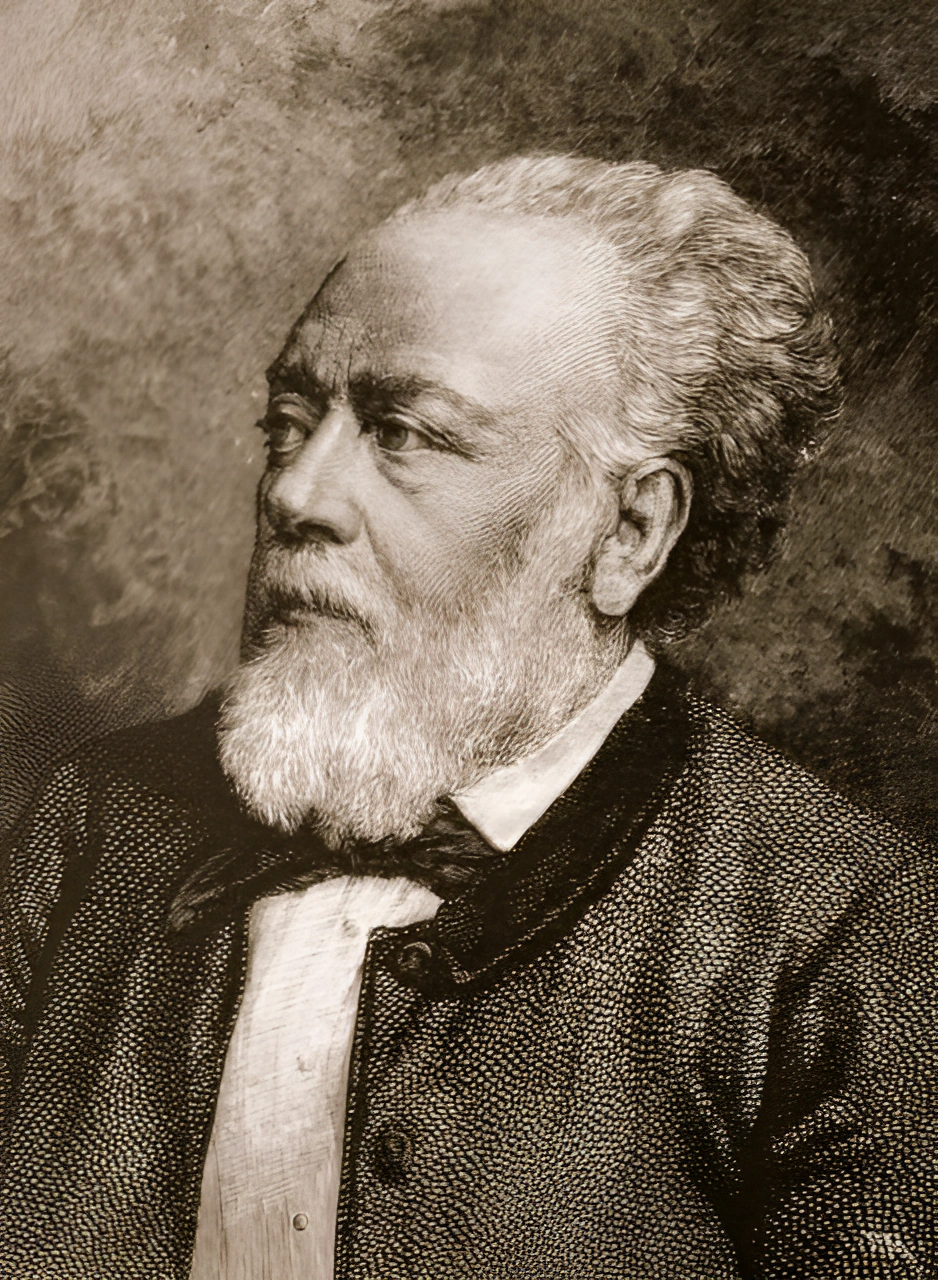
| 5 Quotes | |
| Born as | Moses (Moyses) Baruch Auerbach |
| Occup. | Author |
| From | Germany |
| Born | February 28, 1812 Germany |
| Died | February 8, 1882 Germany |
| Cause | Natural Causes |
| Aged | 69 years |
| Cite | |
Citation Formats
APA Style (7th ed.)
Berthold auerbach biography, facts and quotes. (2026, February 11). FixQuotes. https://fixquotes.com/authors/berthold-auerbach/
Chicago Style
"Berthold Auerbach biography, facts and quotes." FixQuotes. February 11, 2026. https://fixquotes.com/authors/berthold-auerbach/.
MLA Style (9th ed.)
"Berthold Auerbach biography, facts and quotes." FixQuotes, 11 Feb. 2026, https://fixquotes.com/authors/berthold-auerbach/. Accessed 5 Mar. 2026.
Early Life and Background
Berthold Auerbach was born Moses (Moyses) Baruch Auerbach on February 28, 1812, in Nordstetten near Horb am Neckar in the Kingdom of Wuerttemberg, a rural corner of southwest Germany where Jewish life was shaped as much by village custom as by rabbinic law. He grew up amid the cadences of Swabian speech, peasant labor, and the tight moral economy of small communities - an environment that later became the raw material for his most influential fiction, even as he wrote it for a largely urban, middle-class readership.His childhood unfolded under the long aftershock of Napoleonic restructuring and the uneven path toward Jewish civil emancipation in the German states. In the countryside, legal toleration did not automatically translate into social equality; the young Auerbach absorbed, early, the double consciousness of being both at home in German culture and marked as Jewish. That tension - between belonging and scrutiny, intimacy and distance - would become the emotional engine of his portraits of everyday people, where dignity is hard-won and moral judgment arrives through community rather than doctrine.
Education and Formative Influences
Auerbach was educated first within traditional Jewish learning and then, in the spirit of the Haskalah and the German Enlightenment, turned outward to secular study. He encountered modern philosophy and literature as a liberating but also destabilizing force, and he spent formative years in university settings (notably in the southwest, including Tuebingen), where the intellectual prestige of German Idealism and the new philological-historical methods pressed young writers to reconcile inherited faith with modern critical reason. His early ambition leaned toward scholarship and translation, yet his sensibility - precise, empathetic, and attuned to spoken life - steadily pulled him toward narrative.Career, Major Works, and Turning Points
After early literary experiments and essays, Auerbach found his decisive public voice with the "Schwarzwaelder Dorfgeschichten" (Black Forest Village Tales), published beginning in the 1840s, which helped define the German genre of Dorfgeschichte by giving village life psychological depth rather than pastoral ornament. He followed with novels such as "Auf der Hoehe" (1865), a wide social panorama that tested whether the moral intelligence of ordinary people could survive the pressures of modern class life. Across the revolutions of 1848 and the later rise of national unification, he remained committed to liberal-humanist ideals while resisting both romantic mythmaking and crude political slogan, preferring to show history working through kitchens, fields, parish rooms, and the private bargains of conscience.Philosophy, Style, and Themes
Auerbachs realism was less a technique than an ethics: he treated provincial detail as a gateway to universal feeling, trusting that character is formed by time, labor, and custom more than by abstract argument. His work insists on the authority of lived experience, a stance captured in the maxim, “Years teach us more than books”. In his best village narratives, the sentence rhythm often mimics oral telling, while the structure quietly exposes how pride, envy, generosity, and fear circulate through a community like weather - altering everyone, sparing no one.His inner life, as reflected in his themes, circles repeatedly around self-judgment and the need for social recognition. The warning “Of all afflictions, the worst is self-contempt”. reads like a key to many Auerbach protagonists, who suffer less from poverty than from being made to feel unworthy - and who recover, if they recover at all, through work, love, and the slow repair of reputation. Writing itself appears in his thought as an unfinished moral practice: “The little dissatisfaction which every artist feels at the completion of a work forms the germ of a new work”. That dissatisfaction suited a writer determined to keep revising the boundaries of sympathy, extending it beyond confession or class to the stubborn particularity of individuals.
Legacy and Influence
Auerbach helped establish a German realist tradition that could look at rural society without condescension and without turning it into nationalist folklore; later village and regional writers drew on his method of making local speech and custom carry philosophical weight. He also left a model of liberal Jewish authorship in the German language: neither renouncing Jewish origins nor allowing them to be reduced to stereotype, he wrote as a mediator between worlds, showing how identity is lived through daily institutions, loyalties, and injuries. By the time of his death on February 8, 1882, his fame had begun to shift as literary fashions moved toward Naturalism and then Modernism, yet his central achievement endured: a compassionate realism that makes the moral drama of ordinary lives impossible to dismiss.Our collection contains 5 quotes written by Berthold, under the main topics: Art - Music - Knowledge - Faith - Self-Love.
Berthold Auerbach Famous Works
- 1865 Auf der Höhe (Novel)
Source / external links