
Bess Truman Biography Quotes 10 Report mistakes
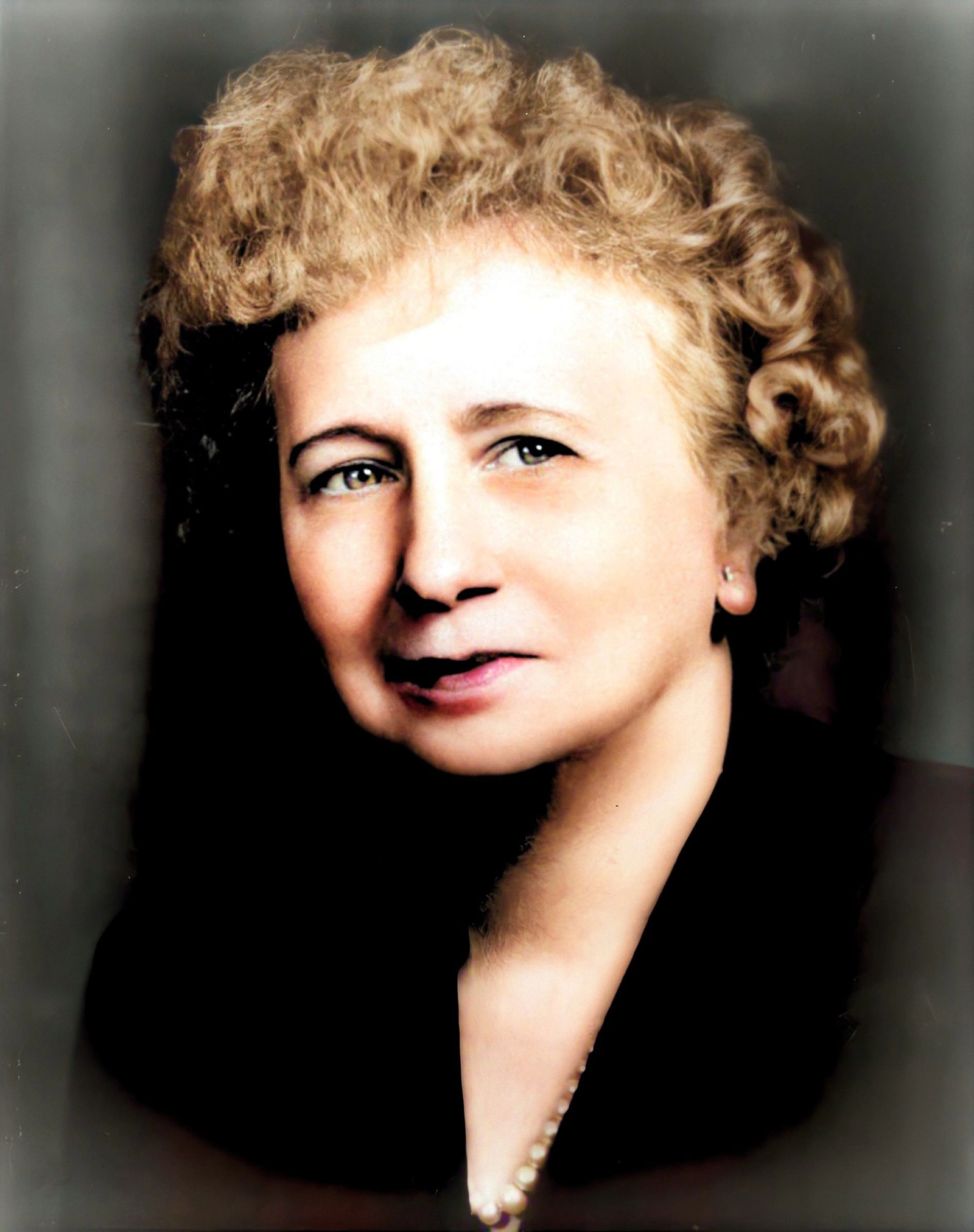
Attr: Harris & Ewing
| 10 Quotes | |
| Occup. | First Lady |
| From | USA |
| Born | February 13, 1885 |
| Died | October 18, 1982 |
| Aged | 97 years |
| Cite | |
Citation Formats
APA Style (7th ed.)
Bess truman biography, facts and quotes. (2026, February 15). FixQuotes. https://fixquotes.com/authors/bess-truman/
Chicago Style
"Bess Truman biography, facts and quotes." FixQuotes. February 15, 2026. https://fixquotes.com/authors/bess-truman/.
MLA Style (9th ed.)
"Bess Truman biography, facts and quotes." FixQuotes, 15 Feb. 2026, https://fixquotes.com/authors/bess-truman/. Accessed 6 Mar. 2026.
Early Life and Background
Elizabeth Virginia "Bess" Wallace was born on February 13, 1885, in Independence, Missouri, into a town that still carried the manners of the border states and the ambitions of the Gilded Age Midwest. Her father, David Willock Wallace, was a successful businessman and county figure; her mother, Margaret Gates Wallace, guarded family respectability with an iron sense of what was proper. When Bess was a teenager, her father died by suicide after business reversals, a private catastrophe that tightened the household and taught her early how social standing could be both armor and burden.In Independence she met Harry S. Truman, a neighbor boy a few years older, earnest and bespectacled, who never quite stopped courting her in his imagination even when life separated them. Bess grew up with a deep attachment to home - not only to people, but to place: the Wallace house at 219 North Delaware, the rhythms of church, and a community small enough that gossip could feel like law. That instinct for privacy, and a learned discipline about what one shows the world, became the keynote of her adulthood.
Education and Formative Influences
Bess attended local schools in Independence and then spent time at finishing schools, including a period in Kansas City, absorbing the era's expectations for a well-bred young woman: sociability, poise, music, and the ability to preside without appearing to strive. Her formative influences were less ideological than situational - the lingering shock of her father's death, the precariousness of family finances, and the constant calculation required of women whose reputations were treated as family property. From this she developed an inner life that was observant and wry, with a practical suspicion of performance.Career, Major Works, and Turning Points
Bess Wallace Truman did not have "major works" in the conventional sense; her public role was inseparable from her husband's rise, and her power lay in gatekeeping, counsel, and restraint. After Harry Truman returned from World War I - where he commanded Battery D of the 35th Division - they married in 1919 and raised their daughter Margaret. As Truman moved from county judge to U.S. senator, then vice president, and suddenly president in April 1945, Bess became First Lady during an age of seismic decisions: the end of World War II, the dawn of the atomic era, early Cold War crises, and the rough birth of the national security state. Through it she insisted on normalcy - spending as much time as possible in Independence, protecting her daughter from the press, and serving as a private sounding board for a husband who relied on her steadiness more than on Washington's flatteries.Philosophy, Style, and Themes
Bess Truman's philosophy was shaped by two competing loyalties: devotion to her husband and devotion to her own boundaries. She was not a reformist First Lady in the mold of Eleanor Roosevelt, and she did not pretend to be; her style was reticence sharpened by humor, a way of keeping public life from consuming the self. She could puncture sentimental ideas about companionship with a single line - “I've liked lots of people 'til I went on a picnic jaunt with them”. - a joke that also reveals her psychology: intimacy tested in close quarters, ideals humbled by lived reality, and a preference for controlled distance.That distance did not mean small-mindedness. She could be briskly egalitarian about rules and status, as in her librarian's truth that “I'm no different from anybody else. If I don't have a card, I can't check out these books”. And she was capable of moral clarity on culture and prejudice, especially striking for a woman raised in a conservative Missouri milieu: “I deplore any action which denies artistic talent an opportunity to express itself because of prejudice against race origin”. Taken together, these statements sketch a temperament that distrusted fuss, disliked hypocrisy, and clung to order - not as cruelty, but as a defense against chaos, grief, and the intrusive glare that came with the presidency.
Legacy and Influence
Bess Truman left an influence that is easiest to underestimate because it was deliberately quiet. She helped define a model of the modern First Lady as a chosen role rather than a compulsory crusade, asserting the legitimacy of privacy even at the pinnacle of visibility. Her insistence on returning to Independence after the White House, and her long widowhood there after Truman's death in 1972, reinforced the idea that political life is a season, not an identity. In an era that increasingly demanded confession and spectacle from leaders' families, Bess Truman's lasting legacy is the disciplined, sometimes controversial claim that dignity can be maintained by saying less, guarding one's own, and letting history judge the work without constant self-advertisement.Our collection contains 10 quotes written by Bess, under the main topics: Witty One-Liners - Victory - Sports - Equality - Husband & Wife.
Source / external links