
Beth Henley Biography Quotes 26 Report mistakes
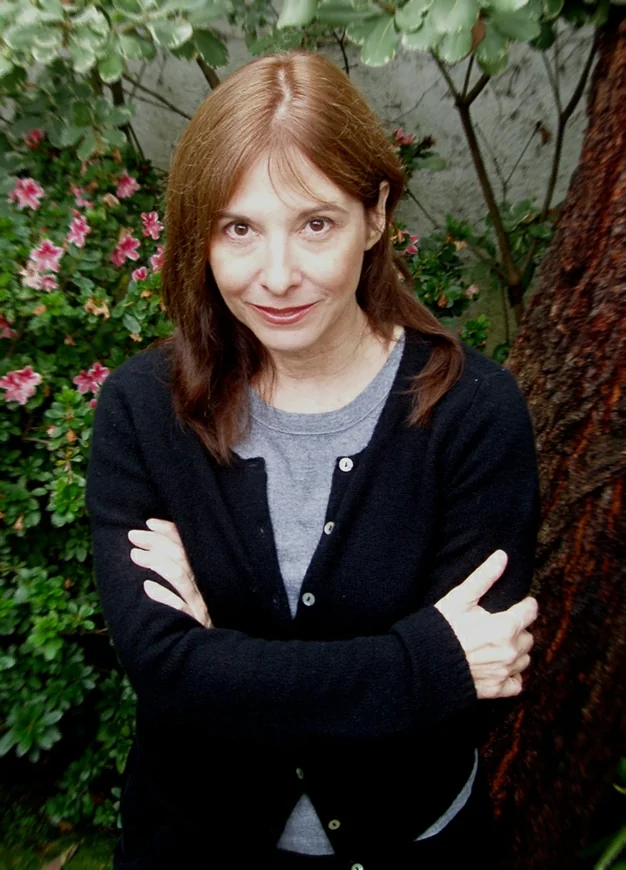
| 26 Quotes | |
| Occup. | Playwright |
| From | USA |
| Born | August 8, 1952 Jackson, Mississippi, USA |
| Age | 73 years |
| Cite | |
Citation Formats
APA Style (7th ed.)
Beth henley biography, facts and quotes. (2026, February 11). FixQuotes. https://fixquotes.com/authors/beth-henley/
Chicago Style
"Beth Henley biography, facts and quotes." FixQuotes. February 11, 2026. https://fixquotes.com/authors/beth-henley/.
MLA Style (9th ed.)
"Beth Henley biography, facts and quotes." FixQuotes, 11 Feb. 2026, https://fixquotes.com/authors/beth-henley/. Accessed 12 Feb. 2026.
Early Life and Background
Elizabeth Becker "Beth" Henley was born on August 8, 1952, in Jackson, Mississippi, and grew up in a web of small-town Southern textures that would later become her most reliable dramatic weather: church social codes, family mythmaking, and the sly violence of politeness. The state she absorbed was still living in the long aftershock of segregation and the civil rights movement, a place where public life and private life rarely matched, and where comedy could be both camouflage and critique. That double-vision - what people say versus what they mean, what they endure versus what they admit - became the inner engine of her stage worlds.Henley was also formed by the particular intensity of Mississippi female experience as she observed it: women expected to perform stability, men granted room for drift, and everyone trained to narrate pain as if it were gossip. Her later heroines do not simply "survive" - they improvise, romanticize, and sometimes sabotage, because those are the available tools in an environment that prizes appearances over honesty. The result, even early on, was a sensibility that could laugh without softening the bruise, and could stage cruelty without turning it into a sermon.
Education and Formative Influences
She attended Southern Methodist University in Dallas, Texas, studying theater at a moment when American drama was splitting between psychological realism and the brash new energy of regional theaters and Off-Broadway experimentation. Restless with academic life and drawn to the broader cultural machinery of performance, she moved to Los Angeles in the 1970s, working in film-related jobs while writing plays on the side and absorbing the industrys rhetoric of reinvention. The tension between screen polish and stage intimacy stayed with her: Hollywood offered scale and speed, but the theater offered the sharper instrument - a room, a body, a line, and no escape.Career, Major Works, and Turning Points
Henleys breakthrough came with Crimes of the Heart, first produced in 1979 and quickly recognized for its uneasy fusion of wit, menace, and tenderness; it won the 1981 Pulitzer Prize for Drama and established her as a central voice in contemporary American playwriting. Set in Hazlehurst, Mississippi, and revolving around the McGrath sisters in the wake of a family crisis, the play made her signature clear: tragedy filtered through comic timing, and family as both refuge and trap. She followed with works including The Miss Firecrackers Contest (1980), The Wake of Jamey Foster (1982), and Abundance (1990), and she also wrote for film, including the adaptation of Crimes of the Heart (1986), which brought her ear for stage dialogue into a different medium without diluting its bite.Philosophy, Style, and Themes
Henleys art is built on the moral comedy of repression. She repeatedly dramatizes what happens when people trained to be "nice" run out of performance and say the unsayable. "It's really interesting that whenever you do something that is so out of character, like having an emotional outburst, that you don't get in trouble". In her plays, that observation becomes a pressure valve: the outburst is not merely catharsis, it is a temporary amnesty from the rules - and a revelation of how arbitrary those rules were. Her characters often discover that the community will forgive the spectacle more readily than it will forgive quiet deviation.Place functions as psychology. Henley does not use the South as postcard or indictment; she uses it as an emotional climate where memory is sticky and the past is always in the room. "My first few plays took place in the South and even The Lucky Spot was in the thirties but in Louisiana". The implication is less regional pride than artistic method: by returning to a specific geography, she can track how class, gender, and faith structure the smallest choices, how the local becomes the fate. Her humor, often labeled "Southern Gothic", is really an ethics of attention - listening closely enough to hear pain hiding inside a joke, and desire hiding inside piety.
Legacy and Influence
Henley helped widen the mainstream American stage for women-centered stories that were neither genteel nor programmatic, proving that domestic life could carry the voltage of high drama without abandoning laughter. Crimes of the Heart in particular became a touchstone for playwrights interested in tonal hybridity - the ability to let affection and horror share the same kitchen table - and it remains widely produced because its conflicts feel both culturally specific and emotionally portable. Her enduring influence lies in craft as much as subject: the musicality of her dialogue, the architecture of scenes that pivot on a sudden confession, and the insistence that family is not a theme but a weather system, shaping every life inside it.Our collection contains 26 quotes written by Beth, under the main topics: Art - Writing - Failure - New Beginnings - Movie.
Other people related to Beth: Bruce Beresford (Director)
Beth Henley Famous Works
- 1990 Abundance (Play)
- 1987 The Lucky Spot (Play)
- 1985 The Debutante Ball (Play)
- 1982 The Wake of Jamey Foster (Play)
- 1980 The Miss Firecracker Contest (Play)
- 1979 Crimes of the Heart (Play)
- 1974 Nobody's Family Is Going to Change (Novel)
Source / external links