
Betty Ford Biography Quotes 15 Report mistakes
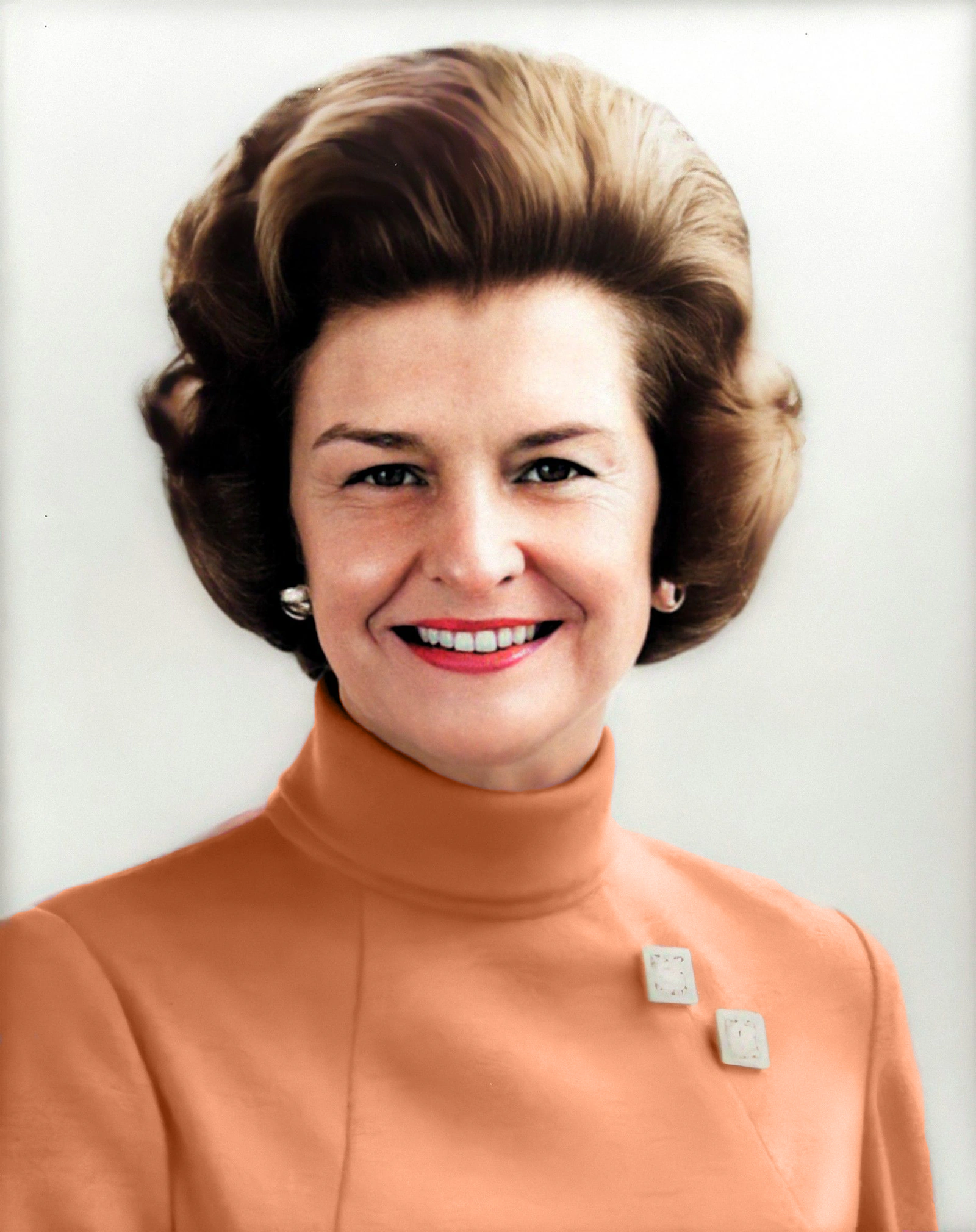
| 15 Quotes | |
| Born as | Elizabeth Ann Bloomer |
| Occup. | First Lady |
| From | USA |
| Born | April 8, 1918 Chicago, Illinois, U.S. |
| Died | July 8, 2011 Rancho Mirage, California, U.S. |
| Aged | 93 years |
| Cite | |
Citation Formats
APA Style (7th ed.)
Betty ford biography, facts and quotes. (2026, February 11). FixQuotes. https://fixquotes.com/authors/betty-ford/
Chicago Style
"Betty Ford biography, facts and quotes." FixQuotes. February 11, 2026. https://fixquotes.com/authors/betty-ford/.
MLA Style (9th ed.)
"Betty Ford biography, facts and quotes." FixQuotes, 11 Feb. 2026, https://fixquotes.com/authors/betty-ford/. Accessed 12 Feb. 2026.
Early Life
Elizabeth Ann Bloomer, later known to the world as Betty Ford, was born on April 8, 1918, in Chicago, Illinois, and grew up in Grand Rapids, Michigan. The youngest child in her family, she showed early talent and determination, especially in dance. Her father died when she was a teenager, and the loss forced an early maturity that shaped her empathy and resilience. As a young woman, she pursued modern dance in New York, studying with renowned choreographer Martha Graham and performing with a student company before returning to Grand Rapids to support her family. Back home, she taught dance to children, organized community performances, and worked as a fashion coordinator at a local department store, learning public poise and organizational skills that would later serve her in national life.First Marriage and Return to Michigan
Before entering public life, she experienced a brief first marriage that ended in divorce. Practical and determined, she resumed work in Grand Rapids, teaching and choreographing and immersing herself in civic activities. The experience of independence and self-reliance during these years would inform the candor and grounded common sense that became her trademark in the White House.Marriage to Gerald R. Ford and Family
In 1948 she married Gerald R. Ford, a Navy veteran and lawyer about to begin a long career in public service. Their partnership was both personal and political; they created a stable family life while he served first as a congressman from Michigan and later in national leadership. The couple raised four children, Michael, John (known as Jack), Steven, and Susan, and Betty balanced household responsibilities with community work in Grand Rapids and in the Washington, D.C., area. She was active in local charities, the PTA, and hospital volunteer programs, and she became adept at the social duties expected of a congressional spouse without ever losing her independent voice.
From Second Lady to First Lady
When Gerald Ford became Vice President in 1973, Betty assumed the role of Second Lady. Less than a year later, after President Richard Nixon resigned on August 9, 1974, she became First Lady of the United States. From the outset, she brought an unusually open style to the role. Only weeks into her tenure, she underwent a mastectomy following a breast cancer diagnosis. By frankly sharing her medical condition, she broke a powerful taboo and placed breast cancer awareness at the center of public conversation. Her decision to disclose details encouraged women across the country to seek examinations and treatment and won admiration from physicians, advocates, and families confronting the disease.Candor, Culture, and Public Stances
Betty Ford believed the White House should reflect contemporary American life. She welcomed artists and performers, supported the cultural vitality of the nation, and included her children in the public dimension of family life; during her recovery, her daughter Susan assisted with White House hosting duties. In a widely discussed 1975 interview on 60 Minutes with Morley Safer, she spoke with remarkable directness about premarital sex, marijuana, and her views on family life, signaling to many Americans that political families could address real issues openly. A Republican who supported women's rights, she publicly backed the Equal Rights Amendment and defended a woman's right to choose as a matter of individual liberty and privacy. She phoned legislators in key states, addressed civic groups, and used her platform to argue that equality under the law was consistent with American principles and with the values she and her husband shared.Health Challenges and Advocacy
Her experience with cancer and chronic pain sensitized her to the health struggles facing many Americans. She supported early detection programs, encouraged honest dialogue about illness, and later applauded other public figures, including First Ladies, who revealed their own diagnoses. Her voice helped reduce stigma and brought practical information to millions of families.Addiction, Recovery, and the Betty Ford Center
After the Fords left the White House in 1977, she confronted another health challenge: dependence on alcohol and prescription medications. In 1978, with the help of Gerald and their children, she entered treatment and began a lifelong commitment to recovery. Turning her experience into public service, she co-founded the Betty Ford Center in 1982 in Rancho Mirage, California, together with businessman and philanthropist Leonard Firestone and medical partners affiliated with the local Eisenhower Medical Center. The center became a nationally respected institution for treating addiction, notable for its emphasis on dignity, family involvement, and the understanding that substance use disorders can affect anyone. Betty Ford spoke candidly around the country, urging people to seek help and offering a prominent example of recovery. She authored books about her life and sobriety, including a memoir that described her White House years and later A Glad Awakening, which deepened public understanding of addiction as a treatable illness.Later Years and Honors
In the decades after leaving Washington, she and Gerald Ford lived primarily in Rancho Mirage. They remained active in public life, supporting the Gerald R. Ford Presidential Library and Museum and appearing at civic events. Her advocacy earned broad recognition: she received major national honors, including the Presidential Medal of Freedom, and, together with her husband, the Congressional Gold Medal. Beyond formal awards, the esteem of people helped by the Betty Ford Center and by her example of forthrightness became a central part of her legacy.Family, Passing, and Legacy
Gerald Ford died in 2006, and Betty Ford continued to guide the center that bore her name and to champion the causes she had made her own. She died on July 8, 2011, in Rancho Mirage, California. Services in California and in Michigan drew an outpouring of tributes from national leaders, friends, and former First Ladies, including Rosalynn Carter, who praised her courage and compassion. She was laid to rest beside her husband at the Gerald R. Ford Presidential Museum in Grand Rapids.Betty Ford transformed expectations of what a First Lady could do by combining candor with compassion. She helped change the national conversation on breast cancer, women's rights, and addiction, demonstrating that personal honesty can become a force for public good. For countless families who found help and hope through the Betty Ford Center, and for generations who saw dignity in confronting illness without shame, her life remains a model of service grounded in humanity.
Our collection contains 15 quotes written by Betty, under the main topics: Witty One-Liners - Parenting - Equality - Health - Mental Health.
Other people related to Betty: Dakota Fanning (Actress)
Source / external links