
Betty Friedan Biography Quotes 10 Report mistakes
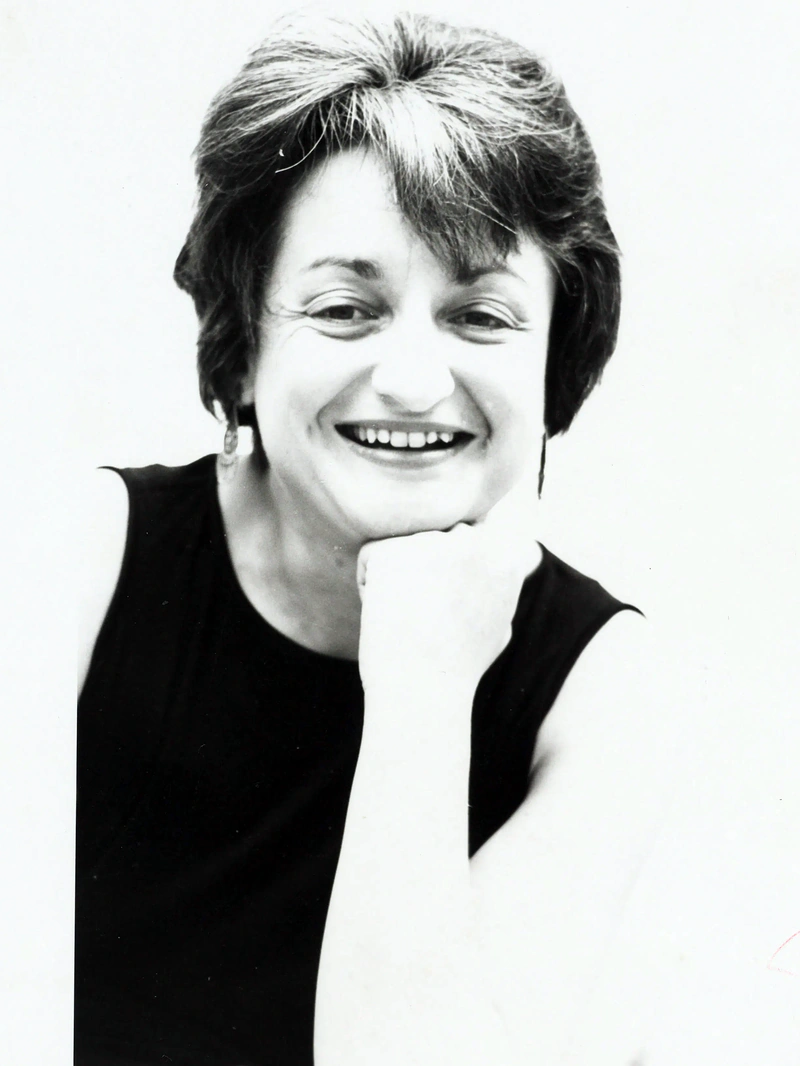
| 10 Quotes | |
| Born as | Bettye Naomi Goldstein |
| Occup. | Activist |
| From | USA |
| Born | February 4, 1921 Peoria, Illinois, United States |
| Died | February 4, 2006 Washington, D.C., United States |
| Cause | congestive heart failure |
| Aged | 85 years |
| Cite | |
Citation Formats
APA Style (7th ed.)
Betty friedan biography, facts and quotes. (2026, February 11). FixQuotes. https://fixquotes.com/authors/betty-friedan/
Chicago Style
"Betty Friedan biography, facts and quotes." FixQuotes. February 11, 2026. https://fixquotes.com/authors/betty-friedan/.
MLA Style (9th ed.)
"Betty Friedan biography, facts and quotes." FixQuotes, 11 Feb. 2026, https://fixquotes.com/authors/betty-friedan/. Accessed 12 Feb. 2026.
Early Life and Background
Bettye Naomi Goldstein was born on February 4, 1921, in Peoria, Illinois, a Midwestern river-and-factory town where propriety and ambition lived side by side. Her parents, Harry Goldstein, a jewelry-store owner, and Miriam Horwitz Goldstein, whose own journalistic aspirations were narrowed by marriage and illness, gave her an early education in both striving and constraint. In the Depression and wartime years, the family moved within a culture that prized assimilation and respectability, yet carried the low hum of insecurity familiar to many Jewish families of that era.She grew up watching how a capable woman could be slowly edited out of her own life, and she stored that lesson with a reporter's memory. The gap between what women could do and what they were permitted to want became, for her, less a private grievance than a social fact begging to be named. That interior tension - between dutiful roles and suppressed appetite for meaningful work - would later become the raw material she translated into public argument.
Education and Formative Influences
Friedan attended Smith College, editing the campus newspaper and graduating in 1942. Awarded a fellowship for graduate study in psychology at the University of California, Berkeley, she left after a year, turning instead to journalism in New York City - a choice that placed her at the intersection of labor politics, intellectual debate, and the postwar remaking of American domestic ideals. In the 1940s she wrote for left-leaning publications and absorbed the era's arguments about democracy, work, propaganda, and mass culture, learning how institutions manufacture "normal" and how quickly dissent can be stigmatized, especially for women.Career, Major Works, and Turning Points
After marrying Carl Friedan in 1947 and raising three children in suburban New York, she returned to writing with the investigative habits of a political reporter and the intimacy of a participant-observer. A Smith reunion survey and interviews with suburban housewives sharpened her central diagnosis, published in 1963 as The Feminine Mystique, a book that catalyzed second-wave feminism by linking private malaise to public policy and media-driven ideology. She became a national organizer and strategist: co-founding the National Organization for Women (NOW) in 1966 and serving as its first president, helping push enforcement of Title VII employment protections and broader legal equality; later she helped found the National Women's Political Caucus (1971) and helped frame the 1970 Women's Strike for Equality. Her later books widened the lens: The Second Stage (1981) wrestled - controversially - with balancing work and family; The Fountain of Age (1993) challenged cultural scripts of decline; Life So Far (2000) offered a self-critical memoir of movement-building, conflict, and compromise. She died on February 4, 2006, in Washington, D.C., on her 85th birthday.Philosophy, Style, and Themes
Friedan's signature move was to treat "women's problems" as evidence of a broader civic failure: wasted talent, distorted intimacy, and a consumer culture that sold identity as decor. Her prose blended magazine clarity with polemic urgency, converting interviews, statistics, and case histories into a readable indictment of what she argued was a postwar ideology of feminine fulfillment. "The feminine mystique has succeeded in burying millions of American women alive". The sentence reads like a headline and a eulogy at once - revealing a mind that experienced domestic confinement not as individual sadness but as mass social injury, something done to people, not merely felt by them.Psychologically, her work tracks a fear of diminishment and a countervailing insistence on adult agency. She rejected a gender war model in favor of a systems diagnosis that implicated women and men in inherited scripts: "Men are not the enemy, but the fellow victims. The real enemy is women's denigration of themselves". The line exposes her blend of empathy and impatience - empathy for how masculinity can also be coercive, impatience with self-erasure disguised as virtue. At the same time, she prized individuation over vicarious living, warning that dependence could masquerade as love: "It is easier to live through someone else than to become complete yourself". Across her career, the theme is completion - not perfection, but the right to develop a self with work, voice, and responsibility in public life.
Legacy and Influence
Friedan endures as both a founder and a foil: a central architect of American liberal feminism and a figure whose blind spots - especially around race, class, and sexuality - later generations have interrogated while still borrowing her toolkit of consciousness-raising through plainspoken diagnosis. Yet her lasting impact is concrete: she helped turn diffuse discontent into organizations, lawsuits, policy agendas, and a language of equality that entered workplaces, universities, and living rooms. By naming a felt but unspoken crisis and insisting it was political, she altered how Americans interpret marriage, work, and selfhood - and made the private life of women a legitimate subject of democratic argument.Our collection contains 10 quotes written by Betty, under the main topics: Equality - Aging - Self-Improvement.
Other people related to Betty: Dorothy Height (Activist), Florynce R. Kennedy (Lawyer), Bella Abzug (Lawyer), Letty Cottin Pogrebin (Writer), Liz Carpenter (Writer), Alice S. Rossi (Sociologist)