
Bill Blass Biography Quotes 6 Report mistakes
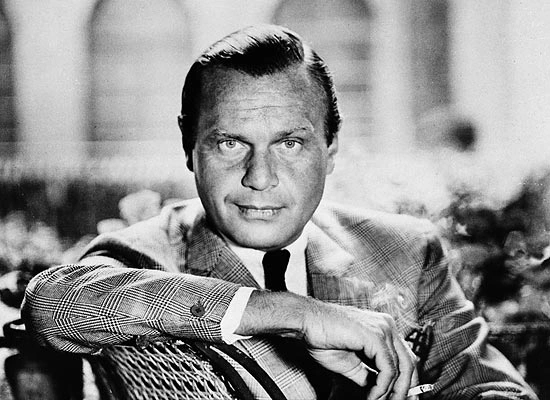
| 6 Quotes | |
| Born as | William Ralph Blass |
| Occup. | Designer |
| From | USA |
| Born | June 22, 1922 Fort Wayne, Indiana |
| Died | June 12, 2002 New Preston, Connecticut |
| Aged | 79 years |
| Cite | |
Citation Formats
APA Style (7th ed.)
Bill blass biography, facts and quotes. (2026, February 11). FixQuotes. https://fixquotes.com/authors/bill-blass/
Chicago Style
"Bill Blass biography, facts and quotes." FixQuotes. February 11, 2026. https://fixquotes.com/authors/bill-blass/.
MLA Style (9th ed.)
"Bill Blass biography, facts and quotes." FixQuotes, 11 Feb. 2026, https://fixquotes.com/authors/bill-blass/. Accessed 6 Mar. 2026.
Early Life and Background
William Ralph Blass was born June 22, 1922, in Fort Wayne, Indiana, into a Midwestern world of thrift, propriety, and clear social rules. His father, a traveling salesman, left the family early; his mother, a dressmaker, supported him and his siblings, and the household learned to make do while still caring about appearances. That tension between limited means and a hunger for polish stayed with him, sharpening his eye for what reads as "expensive" even when it is simply well-cut.As a boy he drew incessantly, sketching women and evening scenes that felt like escape hatches from small-city routine. The Depression years and the approach of war made glamour both distant and magnetic, and he learned to treat clothes as social armor - a way to signal confidence, status, and joy even when circumstances were constricted. The inner drive was not merely to decorate, but to conjure an atmosphere: a life that looked effortless.
Education and Formative Influences
Blass left high school early and pursued fashion training at the Parsons School of Design in New York, arriving in a city where American ready-to-wear was becoming an industry rather than a cottage trade. He absorbed the discipline of pattern, proportion, and fabrication while also studying how Broadway, magazines, and Fifth Avenue storefronts manufactured desire. During World War II he served in the U.S. Army, working in camouflage and deception; that experience reinforced his belief that surfaces matter, that illusion can be engineered, and that craft is a tool for persuasion as much as beauty.Career, Major Works, and Turning Points
After the war he joined the New York fashion world and became head designer at Anna Miller and Co., then rose through the manufacturer Maurice Rentner, ultimately taking control and renaming the house Bill Blass, Inc. in the early 1960s. His timing was surgical: as American sportswear matured, he offered a rarer hybrid - relaxed ease with evening-level finish - and built a signature of clean lines, impeccable tailoring, and fabrics that moved. He expanded aggressively into licenses (from accessories to home goods), became a fixture of the international runway circuit, and won multiple Coty Awards, helping define what "American designer" meant in the era of department-store power and mass media. In 1970 he also stepped into national culture as a designer for the Ford administration, and his long relationship with high-society clients and gala dressing made him a shorthand for Upper East Side confidence. In 1999 he sold his company and stepped back as his health declined; he died June 12, 2002, leaving a brand and a template for designer-as-businessman.Philosophy, Style, and Themes
Blass designed for women who wanted to look decisive, not fussy. He prized instinct over theory, and he treated taste as something felt in the body - the quick recognition of what energizes a face, lengthens a leg, or clarifies a silhouette. “Style is primarily a matter of instinct”. Psychologically, that instinct was his way of defending against insecurity: if you trust the eye, you do not have to over-explain the self. His work presented confidence as a learned posture, achieved by editing, restraint, and one controlled moment of drama.Color and change were his levers. He loved crisp neutrals, navy, ivory, and black, but he understood that a single vivid note could lift mood and message at once. “When in doubt wear red”. The line reads like advice, but it also reveals his empathic read of women in public life: red is a shortcut to presence, an antidote to fading into the room. He was equally frank about fashion as managed appetite rather than pure art: “Each individual piece is a calculated attempt to entice women to add to their wardrobe”. That calculation was not cynicism so much as professional honesty - he built clothes to be worn repeatedly, then refreshed through new proportions, new textiles, and subtle shifts that kept the wearer from feeling trapped in yesterday.
Legacy and Influence
Blass helped cement the postwar American ideal of polished sportswear - refined, practical, and socially fluent - and proved that a designer could be both aesthete and strategist, shaping not just garments but a whole lifestyle economy through licensing. His influence persists in the American preference for quiet luxury: tailoring that reads clean, fabrics that signal quality, and color used as a psychological switch. More than a logo, his name stands for a particular promise: that elegance can be made approachable without losing its charge, and that glamour, properly edited, can become an everyday habit.Our collection contains 6 quotes written by Bill, under the main topics: Art - Embrace Change - Confidence - Marketing - Happiness.
Other people related to Bill: Geoffrey Beene (Designer), Stephen Sprouse (Designer)
Source / external links