
Bill Bradley Biography Quotes 15 Report mistakes
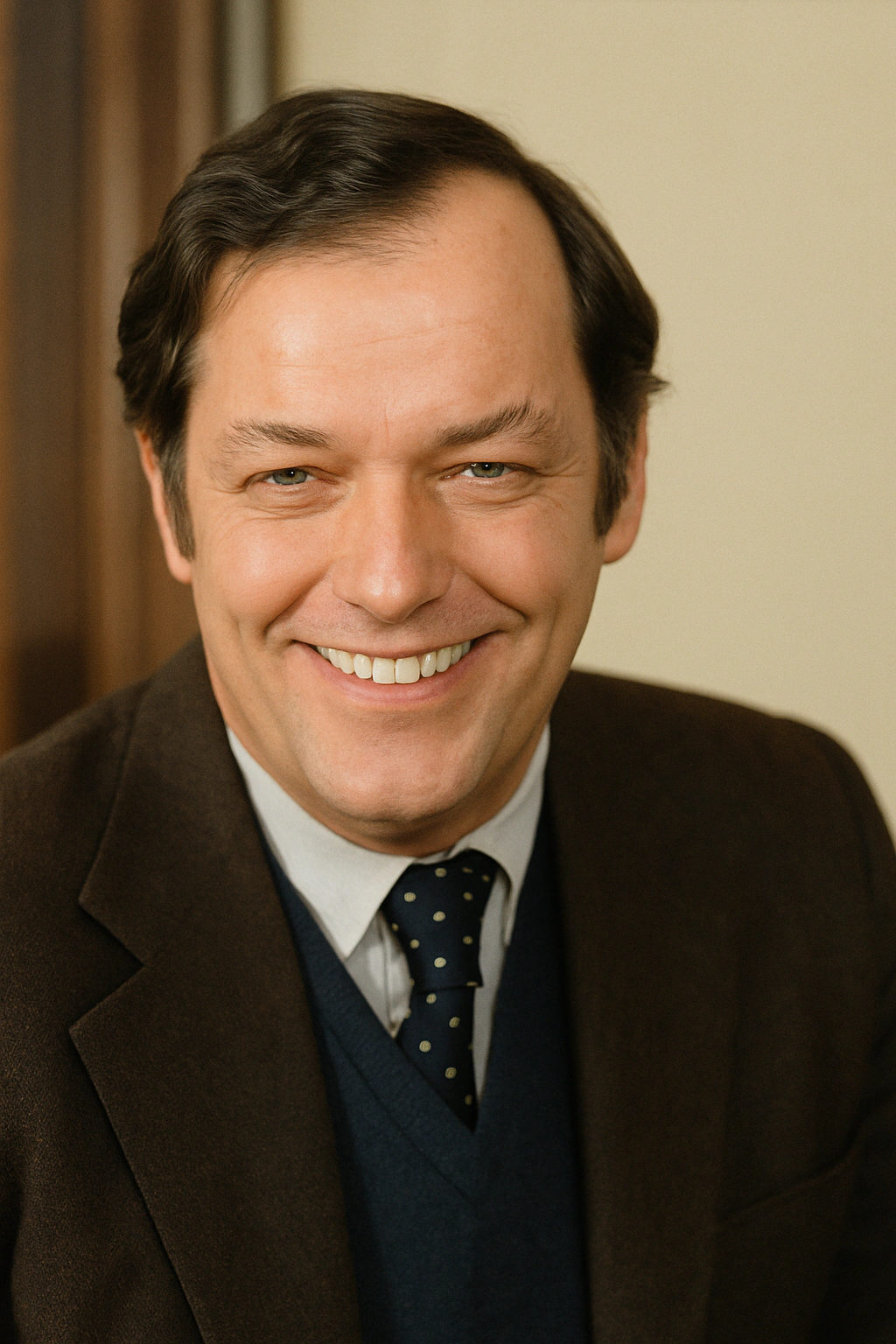
Attr: Warren K. Leffler
| 15 Quotes | |
| Born as | William Warren Bradley |
| Occup. | Politician |
| From | USA |
| Born | July 28, 1943 Crystal City, Missouri, United States |
| Age | 82 years |
| Cite | |
Citation Formats
APA Style (7th ed.)
Bill bradley biography, facts and quotes. (2026, February 11). FixQuotes. https://fixquotes.com/authors/bill-bradley/
Chicago Style
"Bill Bradley biography, facts and quotes." FixQuotes. February 11, 2026. https://fixquotes.com/authors/bill-bradley/.
MLA Style (9th ed.)
"Bill Bradley biography, facts and quotes." FixQuotes, 11 Feb. 2026, https://fixquotes.com/authors/bill-bradley/. Accessed 26 Mar. 2026.
Early Life and Background
William Warren Bradley was born on July 28, 1943, in Crystal City, Missouri, a small, tight-knit town on the Mississippi River whose rhythms were set by schools, churches, and local industry. His father, Warren Bradley, worked as a banker, and his mother, Susan "Suse" Bradley, anchored a home that prized discipline and public respectability. The postwar Midwest he grew up in offered a clear bargain: talent would be rewarded, but only if harnessed to steady effort and modest self-presentation.Bradley became a prodigy in the one arena where a boy from a river town could test himself against the world: basketball. At Crystal City High School he was a star, but he was also known for preparation - studying opponents, rehearsing shots, treating games as problems to solve. That early fusion of ambition with self-control formed a lifelong pattern: the drive to excel paired with a distrust of easy charisma, a sense that achievement demanded both detachment and pain tolerance.
Education and Formative Influences
At Princeton University he turned athletic fame into an education in institutions and ideas, winning the 1965 John R. Wooden Award and leading Princeton to a celebrated upset of defending champion UCLA in 1965. He also studied history and public affairs in a campus culture that still believed elites should serve the republic. A Rhodes Scholarship then took him to Oxford, widening his sense of politics as both moral argument and administrative craft, while travel and reading deepened an outward-looking temperament that would later surface in his writing and policy interests.Career, Major Works, and Turning Points
Bradley joined the New York Knicks in 1967 and became an intelligent, unselfish forward on teams that won NBA championships in 1970 and 1973, absorbing the daily realities of labor, ego, injury, and collective performance. Retiring in 1977, he pivoted to politics and won election as a U.S. Senator from New Jersey in 1978, serving from 1979 to 1997. In the Senate he developed a reputation for seriousness and bipartisanship, including work on tax reform (notably the 1986 reform effort), urban policy, and entitlement debates; later he sought the Democratic presidential nomination in 2000, challenging Vice President Al Gore on themes of reform and national purpose. Alongside public office he wrote books that blended reportage, reflection, and civic exhortation, including "Time Present, Time Past" (1996) and "The Journey from Here" (2008), extending his political identity beyond campaigns into the long form of argument.Philosophy, Style, and Themes
Bradley's inner life was shaped by the athlete's paradox: the public sees grace, the performer feels strain. His thought repeatedly returned to endurance as a form of truth, a belief that adversity is not merely survived but metabolized into judgment. “There has never been a great athlete who died not knowing what pain is”. For Bradley, pain was not romantic; it was clarifying. It taught limits, made preparation sacred, and created empathy for people whose struggles are less visible than a taped ankle or a bruised rib.That sensibility carried into politics as a preference for competence over spectacle and for institutions that enlarge ordinary lives. He defined leadership less as command than as development: “Leadership is unlocking people's potential to become better”. The line is revealing because it frames power as a moral obligation to cultivate others, not to dominate them - a stance consistent with his Senate persona of policy work, listening tours, and caution about promises. He also warned that words are contracts, not ornaments: “When you make speeches you elicit expectations against which you will be held accountable”. In an era of television politics and escalating partisanship, Bradley's style was deliberate, sometimes austere, and occasionally criticized as distant; yet the distance was part of his ethic, a way to keep ambition answerable to consequences.
Legacy and Influence
Bradley endures as a rare American figure who translated elite athletic success into a long public career without surrendering to celebrity's shortcuts. He helped model the modern "athlete-statesman" ideal while also exposing its limits: intelligence and rectitude do not automatically produce emotional connection at national scale. As a senator he is remembered for seriousness, for engagement with tax and urban policy, and for a civic language that treated citizenship as a demanding vocation. His larger influence lies in the example of disciplined ambition harnessed to public purpose - a life arguing that performance, whether on a court or in a legislature, is finally measured by what it enables in others.Our collection contains 15 quotes written by Bill, under the main topics: Motivational - Justice - Friendship - Nature - Leadership.
Other people related to Bill: John McPhee (Writer), Christie Todd Whitman (Politician), Anita Dunn (Public Servant), James Baker (Politician), Robert Torricelli (Politician)
Frequently Asked Questions
- What is Bill Bradley net worth? Not publicly disclosed; often estimated in the low millions.
- Where does Bill Bradley live now: New York City, New York (USA).
- Bill Bradley Stats: Career averages: ~12.4 PPG, 3.4 RPG, 3.0 APG (Knicks, 1967–77).
- Bill Bradley Hall of Fame: Inducted into the Naismith Memorial Basketball Hall of Fame in 1983.
- Bill Bradley NBA: New York Knicks forward (1967–1977); two NBA titles (1970, 1973); 1973 All-Star; 1964 Olympic gold.
- How old is Bill Bradley? He is 82 years old
Source / external links